
Have you ever wondered why certain ancient symbols still feel deeply meaningful, almost as if they’re speaking directly to your soul? The world of demeter symbols carries that exact energy. Rooted in ancient myth yet alive in modern life, these symbols represent nourishment, loss, renewal, and the powerful bond between nature and human emotion.
If you are drawn to mythology, spirituality, or symbolism, Demeter’s imagery has a way of connecting you to something timeless and deeply human.
Let’s explore the rich layers behind these symbols, their origins, and why they continue to resonate across cultures and generations.
Demeter Symbols and Meanings
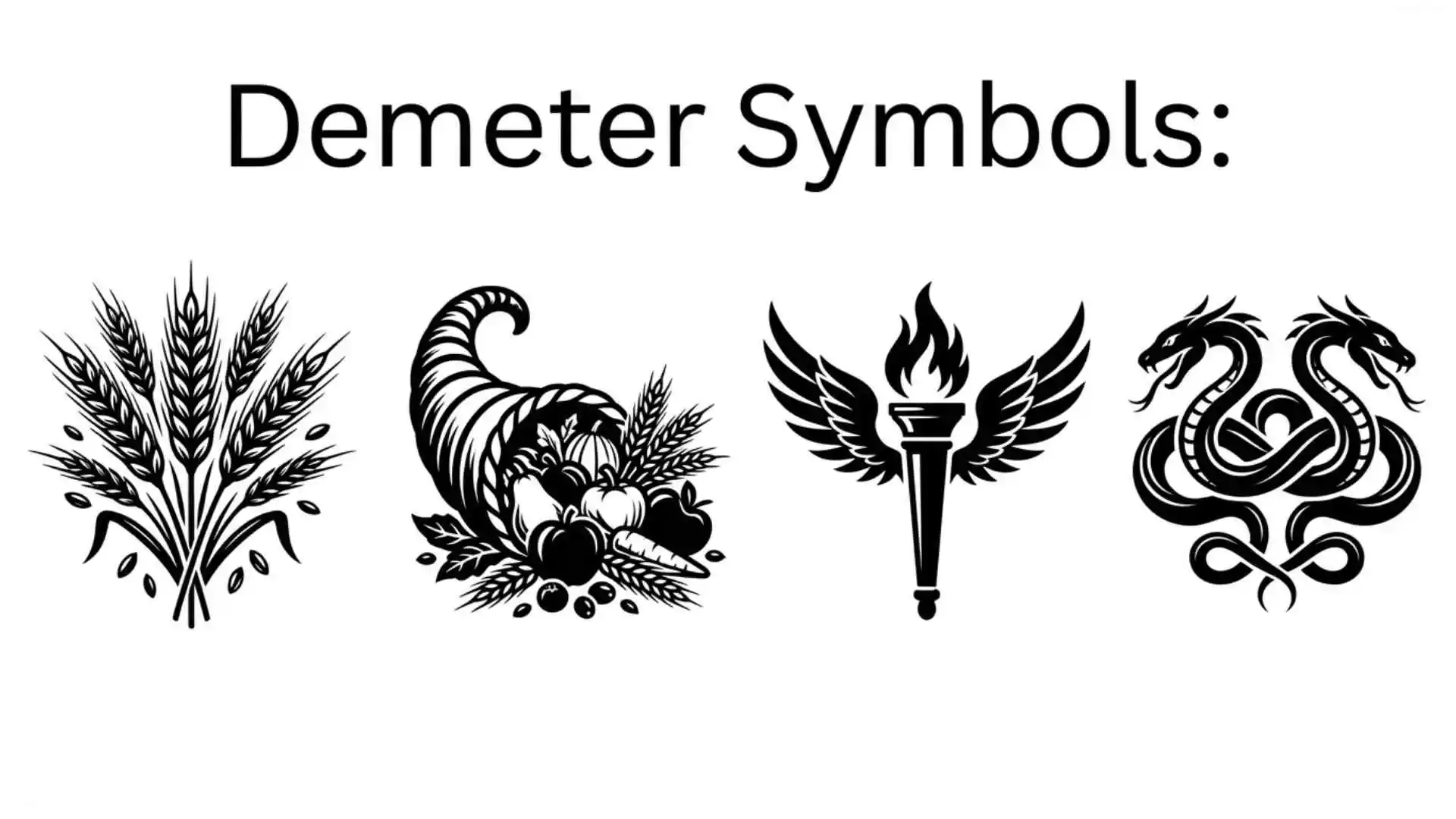
Demeter has many important symbols connected to farming, nature, and life.
Main Demeter Symbols
- Wheat – Represents harvest, food, and abundance
- Cornucopia – Symbol of prosperity and blessings
- Torch – Represents hope and the search for Persephone
- Bread – Symbol of nourishment and survival
- Poppy Flower – Connected to sleep, peace, and renewal
These symbols show Demeter’s role as a caring and life-giving goddess.
Semantic Keywords
nature goddess, farming symbol, harvest meaning, sacred agriculture, fertility symbols
Demeter Symbols and Their Meanings
Every symbol connected to Demeter carries a deeper spiritual meaning.
Spiritual Meanings of Demeter Symbols
- Golden Wheat – Success and healthy crops
- Torch Flame – Love between mother and daughter
- Basket of Grain – Wealth and community support
- Flowers and Plants – Growth and rebirth
Demeter’s symbols remind people about nature, family, and the cycle of life.
LSI Keywords
Greek goddess symbols, ancient Greece farming, mythology meanings, spiritual harvest
Demeter Powers
Demeter has powerful abilities connected to nature and agriculture.
Main Powers of Demeter
- Controlling plant growth
- Creating fertile land
- Changing the seasons
- Bringing life to crops
- Protecting farmers and harvests
- Influencing weather connected to farming
In Greek mythology, Demeter caused winter when she was sad after losing her daughter Persephone.
NLP Keywords
Demeter powers, goddess abilities, harvest powers, nature control, seasonal goddess
What Is Demeter’s Personality?
Demeter is known for being loving, protective, caring, and emotional.
Personality Traits of Demeter
- Kind and nurturing
- Loyal to family
- Protective mother
- Strong and determined
- Emotional during loss
- Caring toward humanity
Her story with Persephone shows both her gentle side and her powerful emotions.
Semantic Keywords
mother goddess, caring goddess, protective nature, emotional strength, divine motherhood
Demeter Symbols and Animals
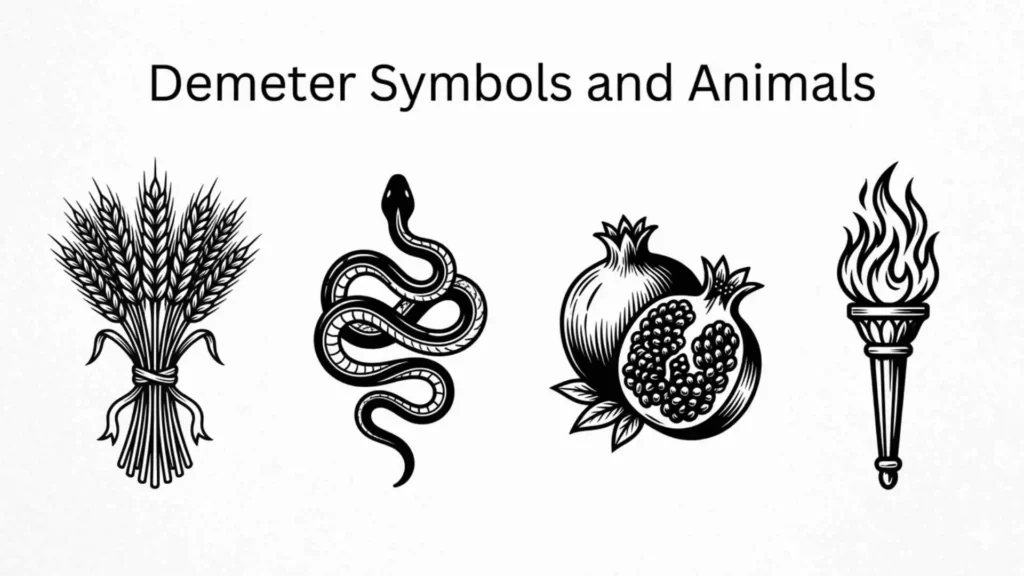
Several animals are connected to Demeter because of their links to farming and nature.
Animals Sacred to Demeter
- Snake – Renewal and earth energy
- Pig – Fertility and agriculture
- Horse – Strength and farming work
- Dolphin – Protection and divine guidance
These animals reflect Demeter’s connection to the earth and natural life.
LSI Keywords
sacred animals, Greek mythology animals, fertility animals, agricultural symbols
Demeter Facts
Here are some interesting facts about Demeter from Greek mythology.
Important Facts About Demeter
- Demeter is the daughter of Cronus and Rhea
- She is the mother of Persephone
- Demeter is one of the Twelve Olympians
- She ruled over farming and harvests
- The Eleusinian Mysteries were dedicated to her worship
- Ancient Greeks honored her for successful crops
Demeter played a major role in both religion and daily life in ancient Greece.
NLP Keywords
Demeter facts, Olympian goddess, Greek religion, mythology history, ancient Greek beliefs
Demeter Virtues
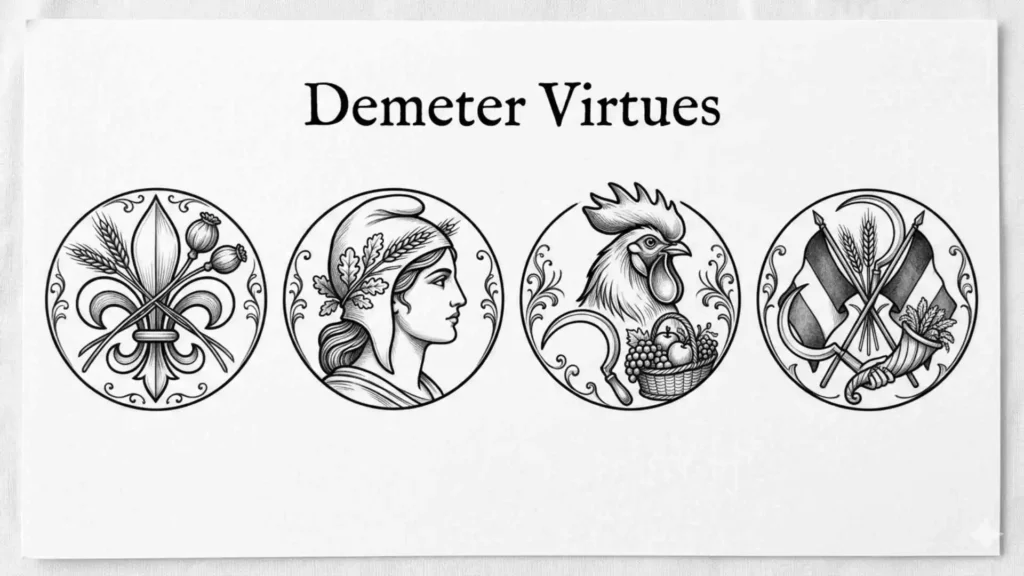
Demeter represents many positive values and virtues.
Main Virtues of Demeter
- Compassion
- Patience
- Motherly love
- Protection
- Generosity
- Dedication to family
Her virtues make her one of the most respected goddesses in Greek mythology.
Semantic Keywords
Greek virtues, divine compassion, family values, nurturing energy
Demeter Realm
Demeter’s realm is connected to nature, farming, fertility, and the earth.
What Demeter Rules Over
- Agriculture
- Harvest seasons
- Grain and crops
- Fertility of the land
- Natural growth
- Sacred farming traditions
Her realm supports human survival because food and farming depend on healthy land and seasons.
LSI Keywords
earth goddess, agriculture realm, harvest world, fertility domain, nature power
Why Demeter Still Matters Today
Demeter remains important because she represents nature, motherhood, and the importance of food and farming. Many people still admire her connection to the earth and the changing seasons.
Her story teaches lessons about love, loss, family, and renewal.
Final NLP and Semantic Keywords
Greek agriculture goddess, mythology stories, harvest traditions, ancient Greek culture, sacred nature, fertility beliefs, seasonal change
The Story Behind Demeter: Why Her Symbols Matter
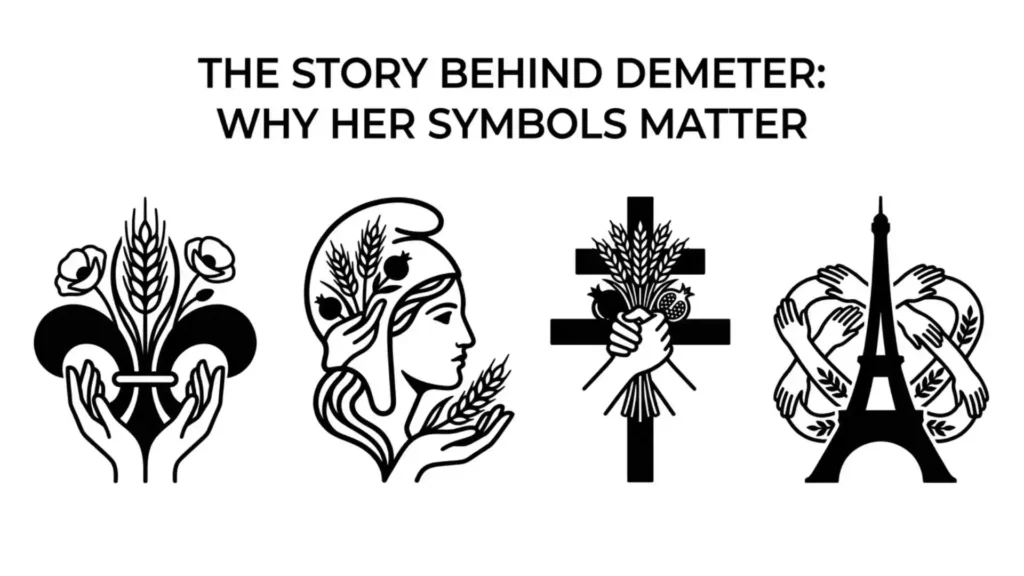
Before understanding the symbols, it helps to know the emotional story behind them.
Demeter, in ancient Greek mythology, is the goddess of agriculture, fertility, and the harvest. But her story is not just about crops and seasons. It is about love, loss, and resilience. When her daughter Persephone was taken to the underworld, Demeter’s grief caused the earth to stop producing. Crops failed, and the world faced famine.
This emotional depth is what gives symbols of Demeter their lasting power. They are not just decorative icons. They represent cycles of life, emotional healing, motherhood, and the connection between humans and nature.
The Most Important Demeter Symbols and Their Meanings
1. Wheat and Grain: The Core Symbol of Life and Abundance
Wheat is the most recognized of all Demeter symbols.
It represents:
- Nourishment and survival
- Fertility and growth
- The cycle of life and death
Emotionally, wheat symbolizes stability and care. It reflects the human need to feel safe, fed, and supported.
In different cultures:
- In Europe, wheat is tied to prosperity and harvest festivals
- In Asia, similar grain symbols represent life force and sustenance
- In Africa, crops symbolize community survival and unity
Did you know? Ancient farmers believed honoring Demeter ensured a successful harvest, showing how deeply symbolic wheat was in daily life.
2. The Cornucopia: Overflowing Abundance and Gratitude
The cornucopia, often called the horn of plenty, is another powerful symbol linked to Demeter.
It represents:
- Abundance and prosperity
- Gratitude for nature’s gifts
- Endless nourishment
Psychologically, it connects to feelings of fulfillment and contentment. It reminds us that abundance is not just material, but emotional and spiritual as well.
Across cultures:
- In the USA, it appears during Thanksgiving as a symbol of gratitude
- In Europe, it represents harvest celebrations
- In Asia, similar overflowing symbols signify wealth and blessings
3. The Torch: Light in Darkness and the Search for Truth
The torch is deeply tied to Demeter’s search for Persephone.
It represents:
- Hope during difficult times
- The search for truth and answers
- Guidance through darkness
Emotionally, the torch reflects persistence. It speaks to anyone who has gone through loss and continues to search for meaning.
Cultural meanings:
- In Western cultures, it symbolizes enlightenment
- In Asia, light represents wisdom and awakening
- In African traditions, fire often symbolizes transformation and renewal
4. The Poppy Flower: Sleep, Loss, and Emotional Healing
The poppy is one of the most emotional symbols of Demeter.
It represents:
- Sleep and rest
- Mourning and remembrance
- Healing after emotional pain
The connection comes from Demeter’s grief. The poppy became a symbol of her sorrow and eventual healing.
Psychological meaning:
It reminds us that rest and healing are essential after loss.
Across cultures:
- In Europe, poppies symbolize remembrance of the fallen
- In Asia, they can represent peace and rest
- In Africa, flowers often symbolize life cycles and renewal
5. The Serpent: Transformation and Hidden Power
The serpent is often overlooked but holds deep symbolic meaning.
It represents:
- Transformation and rebirth
- Hidden knowledge
- Earth energy
Emotionally, the serpent connects to personal growth. It reflects the idea that change, even when uncomfortable, leads to renewal.
Global interpretations:
- In Asia, serpents symbolize wisdom and protection
- In Africa, they often represent spiritual power
- In Western cultures, they can symbolize both danger and transformation
6. The Sheaf of Grain: Unity and Collective Strength
A sheaf of grain is a bundle of wheat tied together.
It represents:
- Community and unity
- Strength through togetherness
- Shared success
Psychologically, it reminds us that humans thrive in connection with others.
Cultural meanings:
- In Europe, it symbolizes harvest and teamwork
- In Africa, it reflects communal living and shared resources
- In Asia, it represents harmony and balance
7. The Earth Itself: Motherhood and Life Source
Demeter is often seen as the embodiment of the earth.
This symbol represents:
- Motherhood and nurturing
- Life cycles and renewal
- Connection to nature
Emotionally, it speaks to the deep human need for belonging and grounding.
Across cultures:
- In the USA, nature is often linked to healing and mindfulness
- In Asia, earth symbolizes balance and stability
- In Africa, land is deeply tied to identity and ancestry
8. The Pig: Fertility and Sacred Offerings
In ancient rituals, pigs were sacred to Demeter.
They represent:
- Fertility and reproduction
- Earthly abundance
- Sacrifice and devotion
Psychological meaning:
They symbolize giving and receiving, the balance of life.
Cultural perspectives:
- In Europe, pigs symbolize wealth and prosperity
- In Asia, they represent luck and fortune
- In Africa, animals often symbolize spiritual connections
Emotional and Psychological Meaning of Demeter Symbols
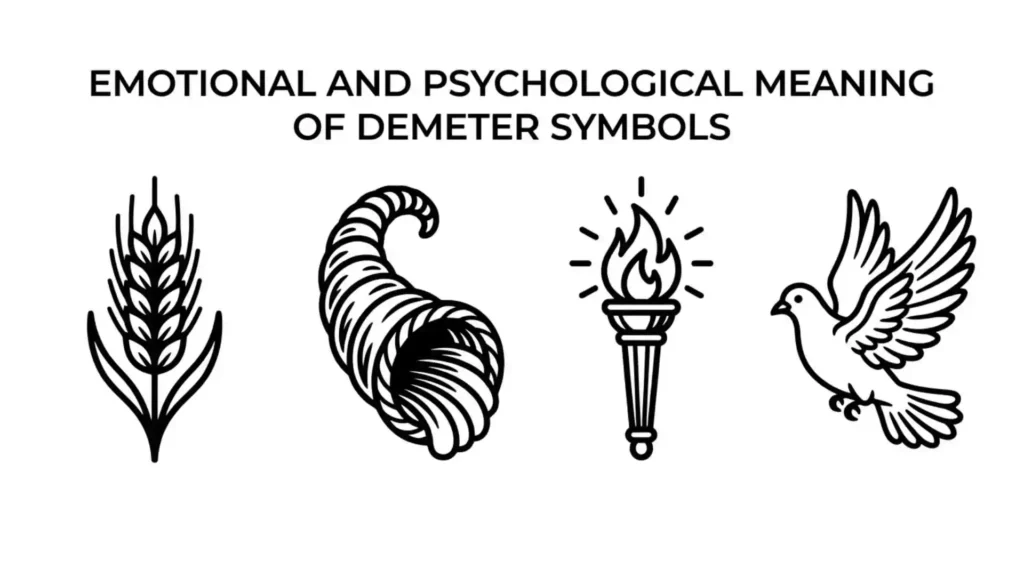
What makes demeter symbols truly powerful is their emotional depth.
They are not just about farming or mythology. They reflect:
- The pain of losing something important
- The hope of finding it again
- The cycle of growth, loss, and renewal
These symbols resonate because they mirror real human experiences. Everyone goes through seasons of life, just like the earth.
Demeter Symbols in Modern Life
You might be surprised how often these symbols appear today.
They are found in:
- Jewelry representing fertility and strength
- Tattoos symbolizing personal growth
- Art and design inspired by nature and cycles
For example:
- A wheat tattoo may represent resilience
- A torch symbol may reflect personal strength
- A poppy may symbolize healing after loss
These symbols continue to evolve, yet their core meanings remain deeply rooted.
Cultural Interpretations: How the World Sees Demeter Symbols
Even though Demeter comes from Greek mythology, her symbols have universal meaning.
In the USA
They are often linked to nature, sustainability, and gratitude. The cornucopia is especially popular.
In Europe
They are closely tied to harvest traditions and ancient rituals.
In Asia
Similar symbols focus on balance, harmony, and life energy.
In Africa
Symbols related to land and crops reflect community, survival, and ancestral connection.
This global connection shows that the meaning of symbols goes beyond culture. It touches something deeply human.
Did You Know? Fascinating Insights About Demeter Symbols
- The Eleusinian Mysteries, ancient rituals dedicated to Demeter, were among the most secretive religious ceremonies in history
- Wheat was once considered more valuable than gold in some ancient societies
- The story of Demeter and Persephone explains the changing seasons
These insights show how deeply these symbols were woven into everyday life.
How to Use Demeter Symbols in Your Personal Journey
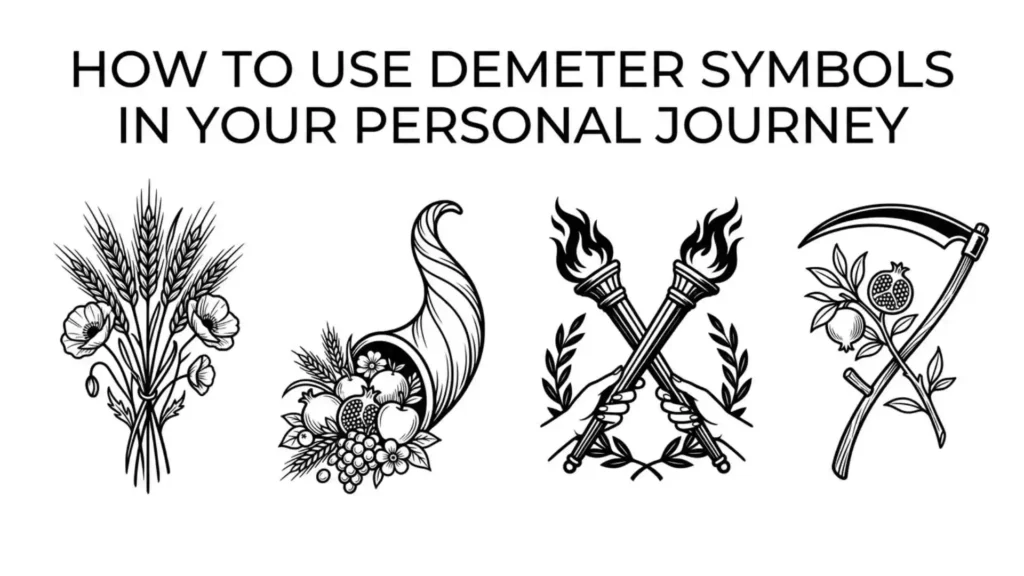
If you feel drawn to these symbols, there are meaningful ways to use them.
- Wear them as jewelry for emotional grounding
- Use them in meditation to reflect on life cycles
- Incorporate them into art or journaling
Each symbol can serve as a reminder of growth, resilience, and connection.
FAQs About Demeter Symbols
1. What are Demeter symbols mainly associated with?
They are mainly associated with agriculture, fertility, motherhood, and the cycle of life and seasons.
2. What does wheat symbolize in Demeter symbolism?
Wheat represents nourishment, growth, and abundance. It is the most important symbol linked to Demeter.
3. Why is the torch important in Demeter’s story?
The torch symbolizes her search for Persephone and represents hope, guidance, and persistence.
4. What does the poppy flower mean in this context?
It represents grief, rest, and emotional healing, reflecting Demeter’s sorrow.
5. Are Demeter symbols still relevant today?
Yes, they are widely used in art, jewelry, and personal symbolism to represent growth and resilience.
6. How do Demeter symbols connect to modern psychology?
They reflect emotional cycles like loss, healing, and renewal, which are universal human experiences.
7. Can these symbols be used for personal growth?
Absolutely. Many people use them for self-reflection, healing, and spiritual connection.
Conclusion: Why Demeter Symbols Still Speak to Us Today
The beauty of demeter symbols lies in their timeless relevance. They are not just relics of ancient mythology but living representations of human emotion, resilience, and connection to nature. From wheat fields to torchlight, each symbol tells a story of loss and renewal that feels deeply personal.
In a fast-moving world, these symbols remind us to slow down and reconnect with life’s natural cycles. They teach us that growth often comes after hardship, and abundance is more than material wealth. It is emotional, spiritual, and deeply human.
When you look at these symbols, you are not just seeing history. You are seeing reflections of your own journey.

Nicholas Allen is a passionate writer and symbolism researcher who explores the hidden meanings behind ancient signs, spiritual icons and cultural symbols from around the world. His work focuses on making complex symbolism easy to understand for modern readers.
He is the author of “Mystic Signs and Their Hidden Meanings”. Through his writing, Nicholas helps readers discover the stories, beliefs and mysteries connected to symbols across history and different cultures.