
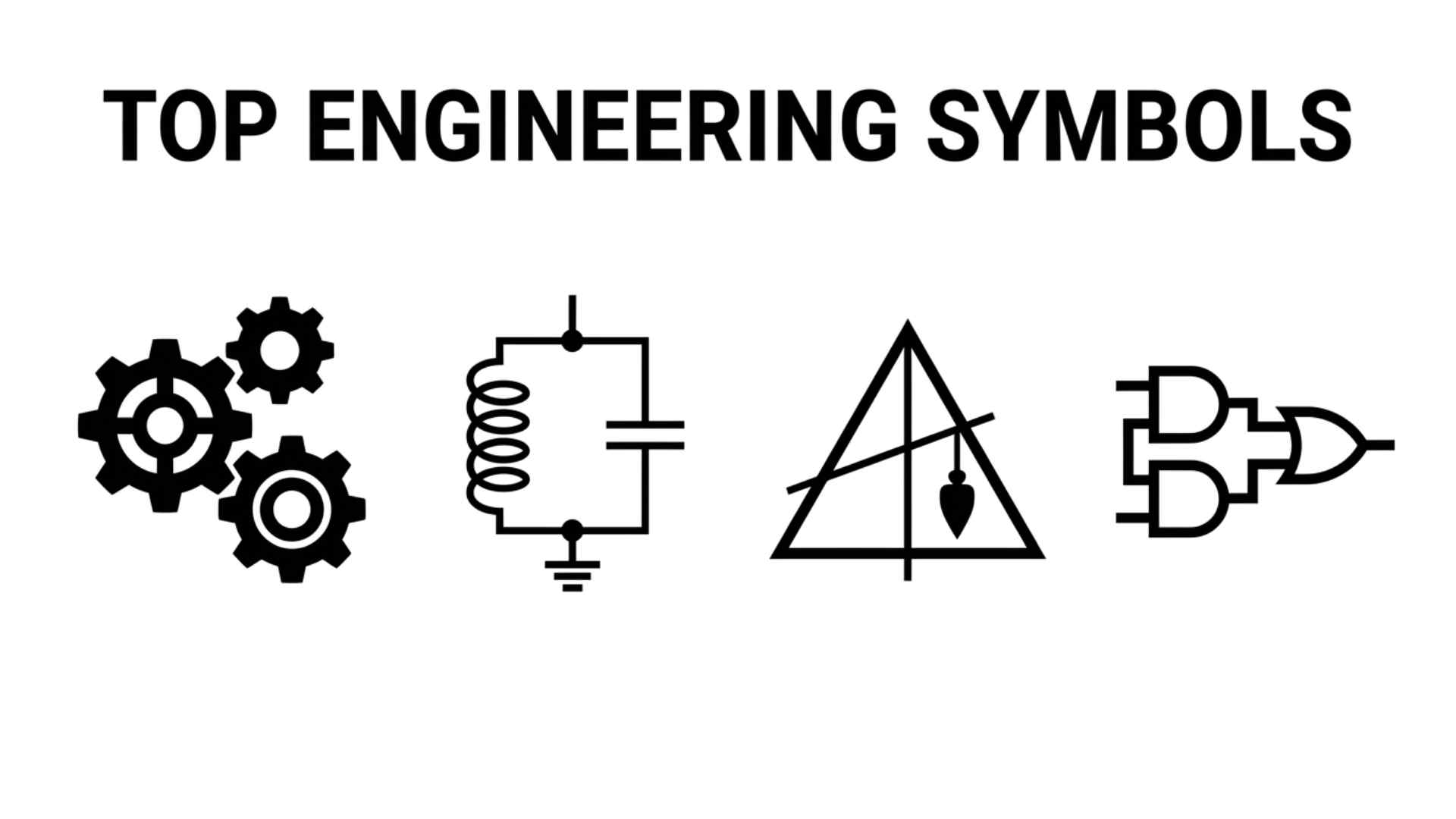
Imagine standing in front of a complex machine, a skyscraper blueprint, or a circuit board. At first glance, it looks like a maze of lines, shapes, and markings. But to an engineer, this is not chaos. It is a precise language. Engineering symbols are the silent storytellers behind every invention, every structure, and every system that shapes our modern world.
From the smallest bolt to massive bridges, these symbols carry meaning, intention, and emotion. They represent ideas, safety, precision, and creativity. Once you understand them, you begin to see the world differently. You start noticing the hidden code behind everyday life.
What Are Engineering Symbols and Why They Matter
Engineering symbols are standardized graphical representations used in technical drawings, diagrams, and schematics. They communicate complex information quickly without long explanations.
Think of them as a universal language. Whether an engineer is in the United States, Germany, India, or Nigeria, these symbols help them understand each other instantly.
Why they are important
- They save time and reduce errors
- They ensure consistency across industries
- They make communication clear across languages
- They improve safety in construction and manufacturing
Emotional meaning
At a deeper level, engineering symbols represent trust. When a builder follows a symbol, they trust it to guide them correctly. A wrong symbol can mean failure, while a correct one ensures stability and safety.
The Origins and Evolution of Engineering Symbols
Engineering symbols did not appear overnight. They evolved alongside human civilization.
Early beginnings
Ancient builders in Egypt and Mesopotamia used simple markings to guide construction. These were early forms of symbolic communication.
Industrial revolution impact
With the rise of machines in the 18th and 19th centuries, there was a need for standardized drawings. This is when modern engineering symbols began to take shape.
Standardization bodies
Organizations like ISO and ANSI helped create universal standards. This allowed engineers worldwide to work together efficiently.
Did you know
Some engineering symbols used today are over 100 years old, yet they remain unchanged because of their clarity and effectiveness.
Types of Engineering Symbols You Should Know
Engineering symbols vary depending on the field. Each category tells its own story.
Mechanical engineering symbols
These include symbols for gears, bearings, springs, and fasteners.
- A circle with teeth represents a gear
- Zigzag lines often represent springs
Emotional meaning
These symbols represent motion and power. They show how energy flows and transforms.
Electrical engineering symbols
Used in circuit diagrams and electronics.
- A zigzag line represents a resistor
- Parallel lines represent a capacitor
- A triangle with a line can represent a diode
Psychological meaning
These symbols symbolize connection and intelligence. They show how energy and information move through systems.
Civil engineering symbols
Common in construction and architecture drawings.
- Lines represent walls and structures
- Dotted lines indicate hidden elements
- Arrows show direction or flow
Emotional meaning
These symbols represent stability and safety. They are the foundation of buildings where people live and work.
Chemical engineering symbols
Used in process diagrams and industrial systems.
- Circles represent tanks
- Arrows show flow direction
- Lines indicate pipelines
Symbolic meaning
They reflect transformation, how raw materials become useful products.
Understanding Common Engineering Symbols and Their Meanings
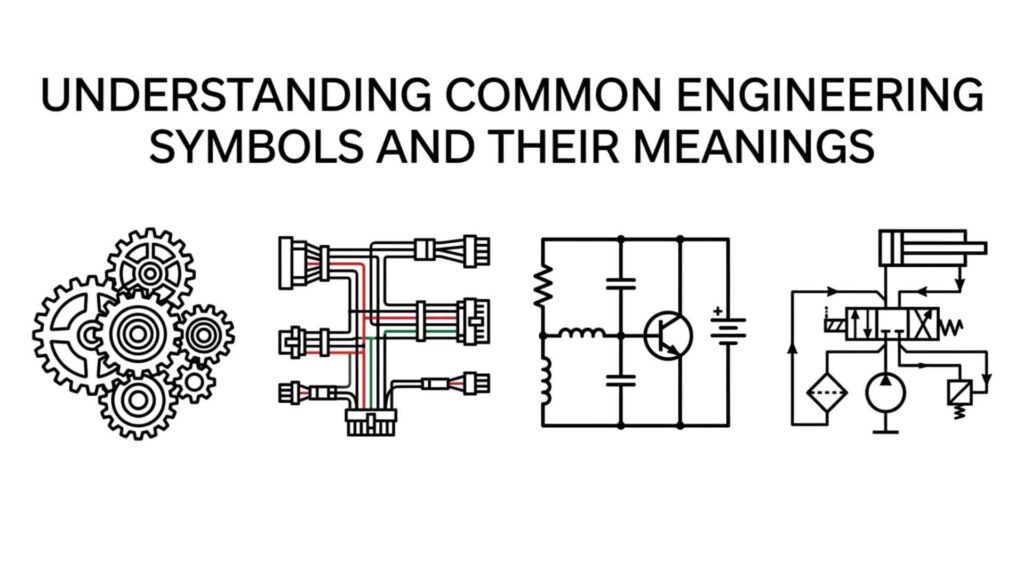
Let’s explore some widely used symbols and what they truly represent.
The resistor symbol
A zigzag line in electrical diagrams
- Function: Limits current flow
- Emotional meaning: Control and balance
- Psychological insight: Represents boundaries and regulation
The ground symbol
Three horizontal lines stacked
- Function: Provides a reference point in circuits
- Emotional meaning: Stability and grounding
- Cultural meaning: In many cultures, grounding symbolizes connection to reality
The valve symbol
Used in piping systems
- Function: Controls fluid flow
- Emotional meaning: Decision making and control
- Life connection: Just like choices we make daily
The bolt and fastener symbols
Used in mechanical drawings
- Function: Holds parts together
- Emotional meaning: Unity and strength
- Psychological insight: Represents relationships and connections
Cultural Interpretations of Engineering Symbols
Engineering symbols may be technical, but their meanings can be viewed differently across cultures.
United States and Europe
Focus on precision and efficiency
Symbols are seen as tools of innovation and progress
Asia
Often associated with harmony and balance
For example, flow symbols may be seen as energy movement similar to concepts in Feng Shui
Africa
Symbols can connect to craftsmanship and community
Structures represent collective effort and shared purpose
Middle East
Engineering designs are often linked with geometric art
Symbols can reflect beauty, symmetry, and spiritual balance
Insight
Even though engineering symbols are standardized, human interpretation adds emotional depth to them.
How to Read Engineering Symbols Like a Professional
Understanding engineering symbols is easier than it looks.
Start with basics
Learn common shapes and their meanings
Study diagrams
Look at real engineering drawings and identify symbols
Use reference charts
Keep a symbol guide handy
Practice regularly
The more you see them, the more familiar they become
Tip
Focus on patterns instead of memorizing everything. Your brain naturally recognizes repeated shapes.
The Psychological Power of Symbols in Engineering
Symbols are not just technical. They affect how we think and feel.
Clarity reduces stress
Clear symbols help engineers work confidently without confusion
Visual memory
Humans remember images better than text
Symbols make information easier to recall
Emotional connection
Even in technical fields, symbols create a sense of control and understanding
Deeper meaning
A simple line or shape can represent safety, innovation, or progress
Modern Technology and the Future of Engineering Symbols
Technology is transforming how we use engineering symbols.
Digital tools
Software like CAD uses advanced symbol libraries
Automation
Symbols are now linked with real-time data in smart systems
AI integration
Artificial intelligence can interpret and generate engineering diagrams
Virtual reality
Engineers can now interact with symbols in 3D environments
Future insight
Engineering symbols may evolve into interactive elements rather than static images
Did You Know Fascinating Facts About Engineering Symbols
- The resistor symbol differs between American and European standards
- Some symbols are designed to look like the real object they represent
- Engineers can understand complex systems using just symbols without words
- Learning symbols can improve problem-solving skills
- Symbols are used in almost every industry from aerospace to medicine
Common Mistakes People Make When Learning Engineering Symbols
Trying to memorize everything
Instead, focus on understanding patterns
Ignoring context
A symbol’s meaning can change depending on the diagram
Skipping fundamentals
Basic symbols form the foundation for advanced knowledge
Not practicing
Recognition improves with exposure
FAQs About Engineering Symbols
1. What are engineering symbols used for
They are used to represent components and systems in technical drawings and diagrams, making communication clear and efficient.
2. Are engineering symbols the same worldwide
Mostly yes, thanks to international standards, but some variations exist between regions.
3. How can beginners learn engineering symbols easily
Start with basic charts, practice reading diagrams, and use visual memory techniques.
4. Why are symbols better than text in engineering
Symbols are faster to read, reduce language barriers, and minimize errors.
5. Do engineering symbols change over time
Some evolve with technology, but many remain the same due to their effectiveness.
6. Are engineering symbols important for non engineers
Yes, understanding basic symbols can help in everyday situations like reading manuals or diagrams.
7. What is the hardest part of learning engineering symbols
Understanding context and application rather than just memorizing shapes.
Conclusion: The Silent Language That Builds the World
Engineering symbols are more than just marks on paper. They are a universal language that connects ideas, people, and innovation. They represent precision, trust, and creativity.
When you learn to understand these symbols, you unlock a new way of seeing the world. Every machine, building, and system becomes a story you can read.
In a world driven by technology, mastering engineering symbols is not just useful. It is empowering. It gives you the ability to understand how things work and how they are built.
And perhaps most importantly, it reminds us that even the simplest line or shape can hold powerful meaning.

Amelia Scott is a passionate writer and symbolism researcher who explores the hidden meanings behind ancient signs, spiritual icons and cultural symbols. She enjoys uncovering the stories and mysteries connected to symbols from around the world.
She is the author of “Mystic Marks And Secret Meanings” and “Echoes Of Forgotten Symbols”. Her work combines history, spirituality and mythology to help readers better understand the deeper meaning of symbols in everyday life.
Through her writing, Amelia aims to make the world of symbols fascinating, meaningful and easy to explore.