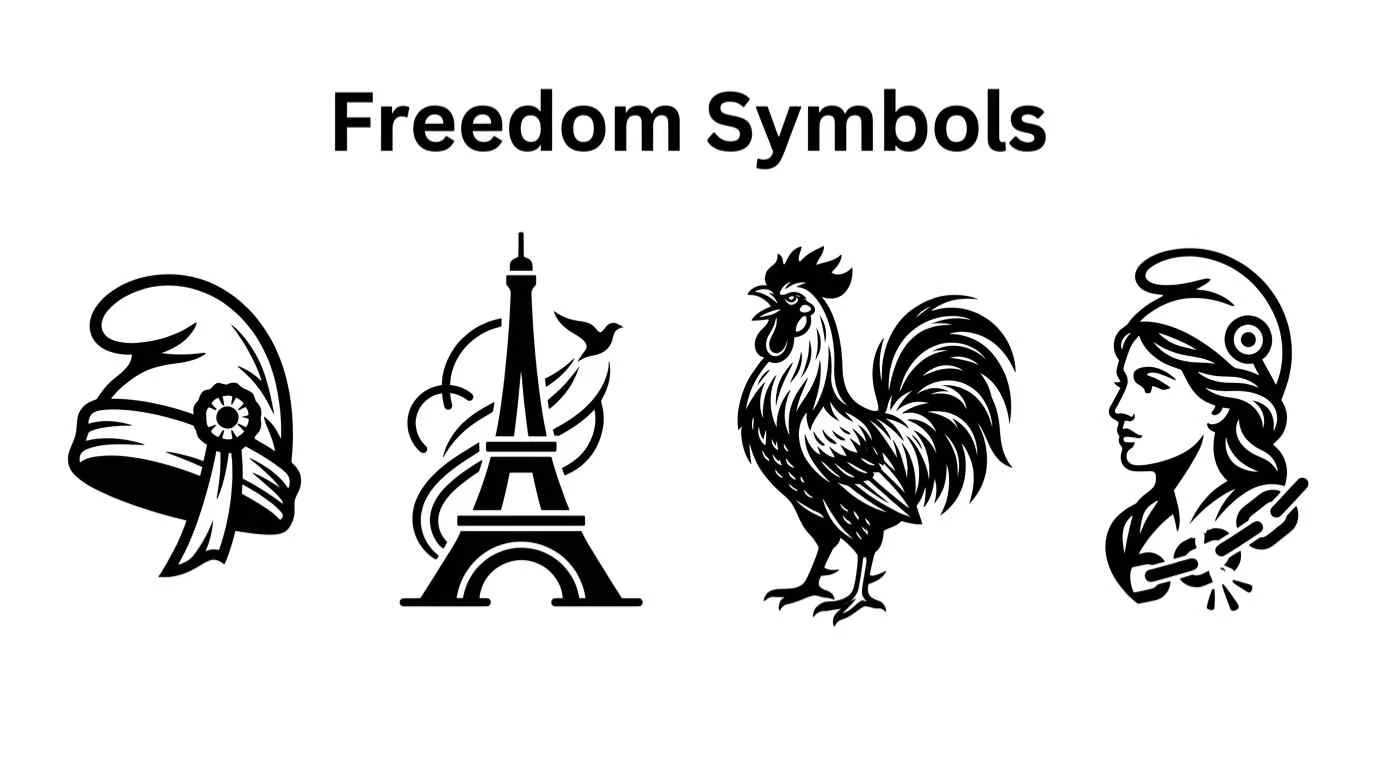
Freedom symbols have shaped human history, revolutions, art, and identity in ways we often don’t even notice. From flags waving in the wind to ancient icons carved in stone, these symbols of freedom carry deep emotional meaning. They remind us of struggle, hope, independence, and the universal desire to live without limits. Whether you see them in protests, tattoos, or cultural traditions, the meaning of freedom symbols connects to something deeply personal inside all of us.
Let’s explore the most powerful freedom symbols, their origins, and what they represent across cultures and time.
🕊️ The Deep Meaning Behind Freedom Symbols
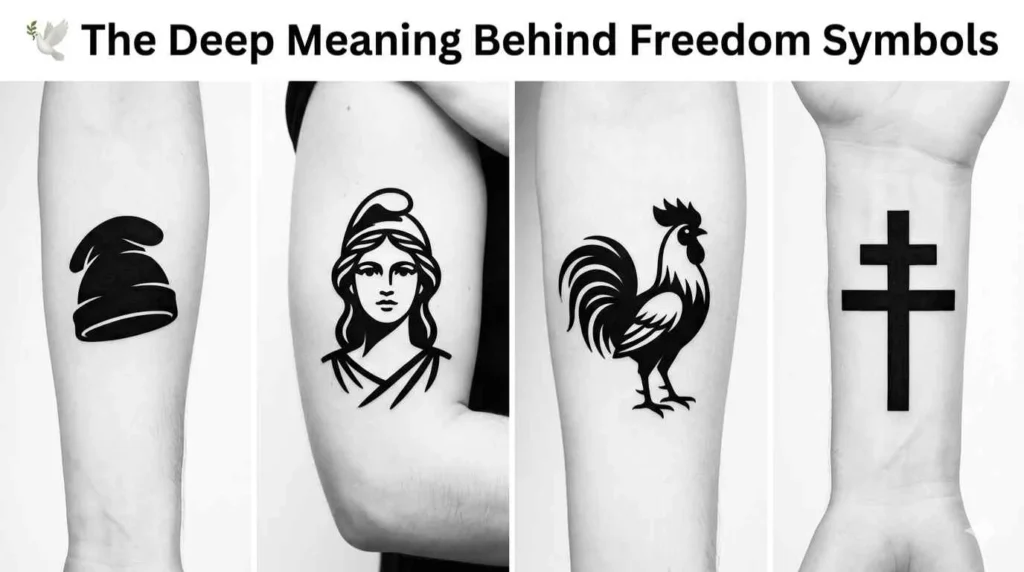
Freedom is more than just a word. It is a feeling, a right, and a universal dream. Symbols of freedom help express this idea in a visual way that words sometimes cannot.
These symbols represent:
- Independence from control or oppression
- The ability to make choices
- Personal identity and self expression
- Hope for a better future
Psychologically, freedom symbols often trigger feelings of relief, strength, and empowerment. They remind people that change is possible and that limitations can be broken.
Across cultures, the meaning of symbols may differ slightly, but the core emotion remains the same: the desire to live freely.
🗽 The Statue of Liberty: A Global Icon of Freedom
One of the most recognized freedom symbols in the world is the Statue of Liberty. Located in the United States, it represents liberty, democracy, and opportunity.
Origin and History
Gifted by France in 1886, it celebrated freedom from oppression and the friendship between nations.
Symbolic Meaning
- The torch represents enlightenment
- The broken chains symbolize freedom from tyranny
- The tablet stands for law and justice
Emotional Impact
For immigrants arriving in America, this symbol meant hope, a new life, and freedom from hardship.
Cultural Perspective
- In the USA, it stands for national pride and democracy
- In other parts of the world, it represents opportunity and human rights
Did you know? The statue’s full name is “Liberty Enlightening the World,” which perfectly captures its deeper meaning.
🕊️ The Dove: Peace and Spiritual Freedom
The dove is one of the oldest and most universal symbols of freedom.
Historical Roots
It appears in ancient religions, including Christianity, where it symbolizes the Holy Spirit and divine peace.
Meaning of the Dove
- Freedom of the soul
- Peace after conflict
- Purity and hope
Psychological Connection
Seeing a dove often creates calmness and emotional relief. It represents letting go of burdens and finding inner peace.
Cultural Variations
- In Western cultures, it symbolizes peace and harmony
- In Asian traditions, it may represent longevity and fidelity
- In African symbolism, birds often represent communication between worlds
The dove reminds us that true freedom is not just physical but also emotional and spiritual.
🦅 The Eagle: Strength, Power, and Independence
The eagle is a bold and powerful symbol of freedom, especially in countries like the United States.
Origin
Used by ancient civilizations such as Rome, the eagle symbolized authority and dominance.
Meaning
- Freedom to rise above limitations
- Courage and strength
- Vision and clarity
Emotional Significance
The eagle inspires confidence and independence. It represents the ability to soar above challenges.
Cultural Differences
- In the USA, it symbolizes patriotism and independence
- In Native American culture, it is sacred and connected to spirituality
- In Europe, it often represents imperial power
The eagle teaches us that freedom requires strength and the courage to rise.
🔥 The Flame: Eternal Freedom and Resistance
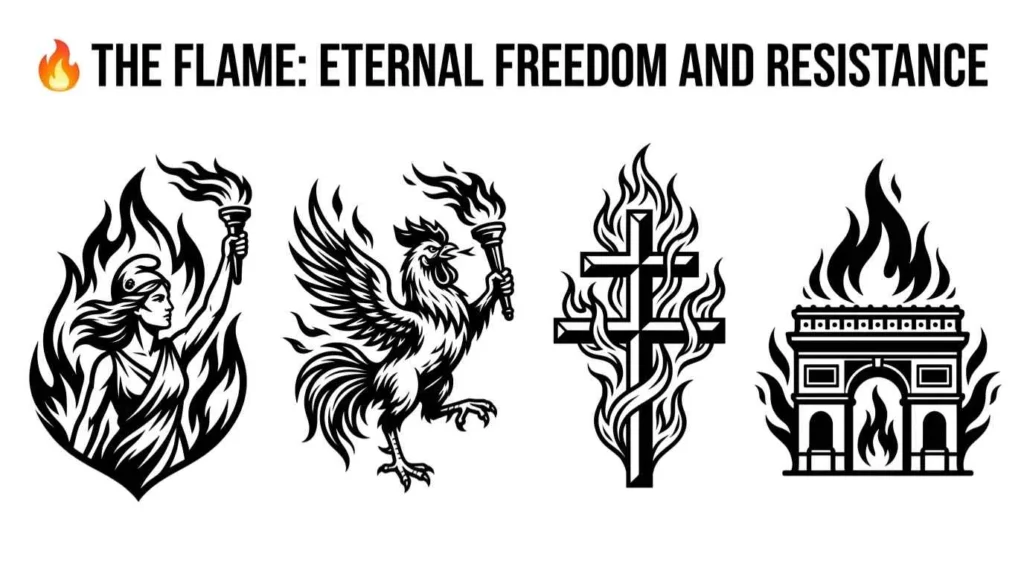
Fire has always been a symbol of transformation and freedom.
Historical Meaning
Flames have been used in revolutions and protests to symbolize resistance and the fight for liberty.
What the Flame Represents
- Passion for freedom
- Eternal spirit
- Rebirth and change
Psychological Meaning
Fire represents inner strength and the desire to break free from limitations.
Cultural Context
- In Olympic traditions, the flame represents unity and human spirit
- In many cultures, fire symbolizes purification and renewal
Did you know? Flames are often used in memorials to represent freedom that never dies.
🕊️ Broken Chains: Freedom from Oppression
Few symbols of freedom are as powerful as broken chains.
Historical Context
Used during the abolition of slavery, broken chains became a universal sign of liberation.
Meaning
- Breaking free from control
- Ending oppression
- Personal liberation
Emotional Impact
This symbol strongly connects with struggle and victory. It reminds people that freedom often comes at a cost.
Cultural Perspective
- In African history, it represents freedom from slavery
- In modern movements, it symbolizes breaking social or mental barriers
Broken chains show that freedom is often earned through resilience.
🦋 The Butterfly: Transformation and Personal Freedom
The butterfly is a softer, more personal symbol of freedom.
Origin
Used in many cultures as a symbol of transformation and rebirth.
Meaning
- Personal growth
- Freedom of identity
- Change and renewal
Psychological Meaning
It represents letting go of the past and embracing new beginnings.
Cultural Differences
- In Asia, it symbolizes love and happiness
- In Western cultures, it represents transformation
- In some African traditions, it symbolizes the soul
The butterfly reminds us that freedom often begins within.
🏳️ Flags: National Identity and Collective Freedom
Flags are powerful symbols that represent a nation’s freedom and identity.
Historical Importance
Flags have been used in wars, revolutions, and independence movements.
What Flags Represent
- National pride
- Unity and identity
- Freedom and sovereignty
Emotional Connection
People often feel a deep emotional attachment to their country’s flag. It represents shared history and sacrifice.
Cultural Perspectives
- In the USA, the flag symbolizes liberty and democracy
- In Asian countries, flags often reflect cultural values
- In Africa, many flags represent freedom from colonial rule
Flags show how freedom can unite millions under one identity.
✊ Raised Fist: Resistance and Human Rights
The raised fist is a modern symbol of freedom and resistance.
Origin
Popularized during civil rights movements and protests.
Meaning
- Solidarity
- Strength in unity
- Fighting for rights
Emotional Impact
It represents courage and collective power.
Cultural Context
- In the USA, linked to civil rights movements
- In Africa, used in anti-colonial struggles
- In Europe, associated with worker rights
The raised fist shows that freedom is often achieved together, not alone.
🌍 Freedom Symbols Across Cultures: A Global Perspective
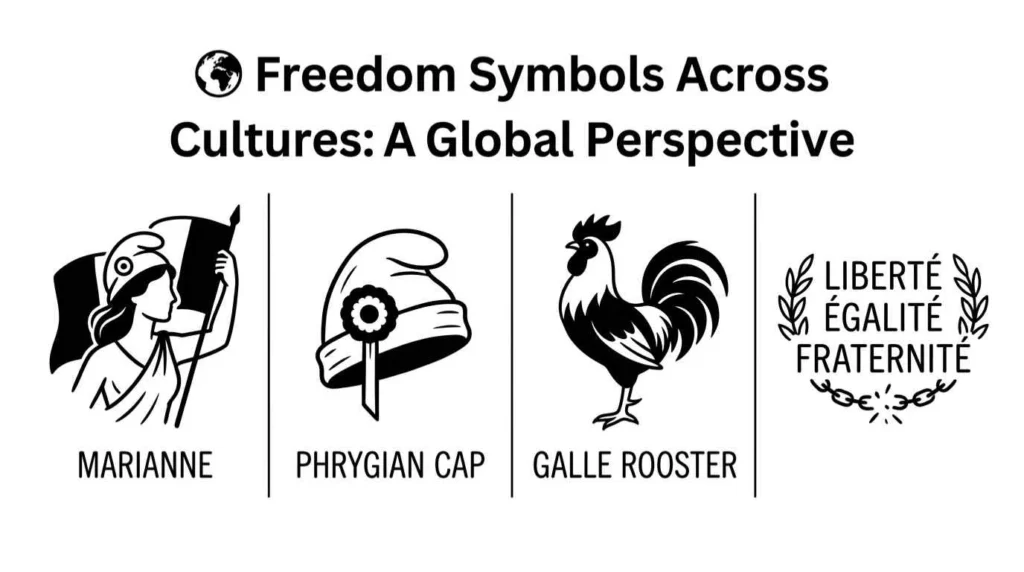
Freedom symbols exist in every part of the world, but their meanings can vary.
USA
Focus on independence, democracy, and rights
Asia
Often linked with spiritual freedom and inner peace
Africa
Strong connection to liberation from colonial rule
Europe
Associated with political freedom and human rights
Despite these differences, all cultures share one common idea: freedom is essential to human dignity.
💡 Why Freedom Symbols Still Matter Today
In today’s world, freedom symbols continue to inspire people.
They appear in:
- Social movements
- Art and tattoos
- National celebrations
- Personal expression
These symbols remind us that freedom is not guaranteed. It must be protected, valued, and understood.
❓ FAQs About Freedom Symbols
1. What are the most common symbols of freedom?
The most common include the dove, eagle, broken chains, Statue of Liberty, and flags.
2. Why are freedom symbols important?
They help express complex ideas like independence, hope, and human rights in a simple visual form.
3. What animal represents freedom the most?
The eagle is often considered the strongest symbol of freedom due to its power and ability to fly high.
4. Are freedom symbols the same in every culture?
No, meanings vary, but the core idea of liberation and independence is universal.
5. What does a butterfly symbolize in freedom?
It represents personal transformation and the freedom to become who you truly are.
6. Why are broken chains used as a symbol?
They represent liberation from oppression, especially in historical contexts like slavery.
7. Can freedom symbols be personal?
Yes, many people choose symbols like tattoos to represent their own journey toward freedom.
🌟 Conclusion: The Timeless Power of Freedom Symbols
Freedom symbols are more than just images. They carry stories of struggle, hope, and human resilience. From the soaring eagle to the delicate butterfly, each symbol represents a different side of what it means to be free. Across cultures and generations, these symbols continue to inspire people to seek independence, express themselves, and stand strong in the face of challenges. Understanding the meaning of freedom symbols helps us connect not only with history but also with our own inner desire to live freely.

Amelia Scott is a passionate writer and symbolism researcher who explores the hidden meanings behind ancient signs, spiritual icons and cultural symbols. She enjoys uncovering the stories and mysteries connected to symbols from around the world.
She is the author of “Mystic Marks And Secret Meanings” and “Echoes Of Forgotten Symbols”. Her work combines history, spirituality and mythology to help readers better understand the deeper meaning of symbols in everyday life.
Through her writing, Amelia aims to make the world of symbols fascinating, meaningful and easy to explore.