
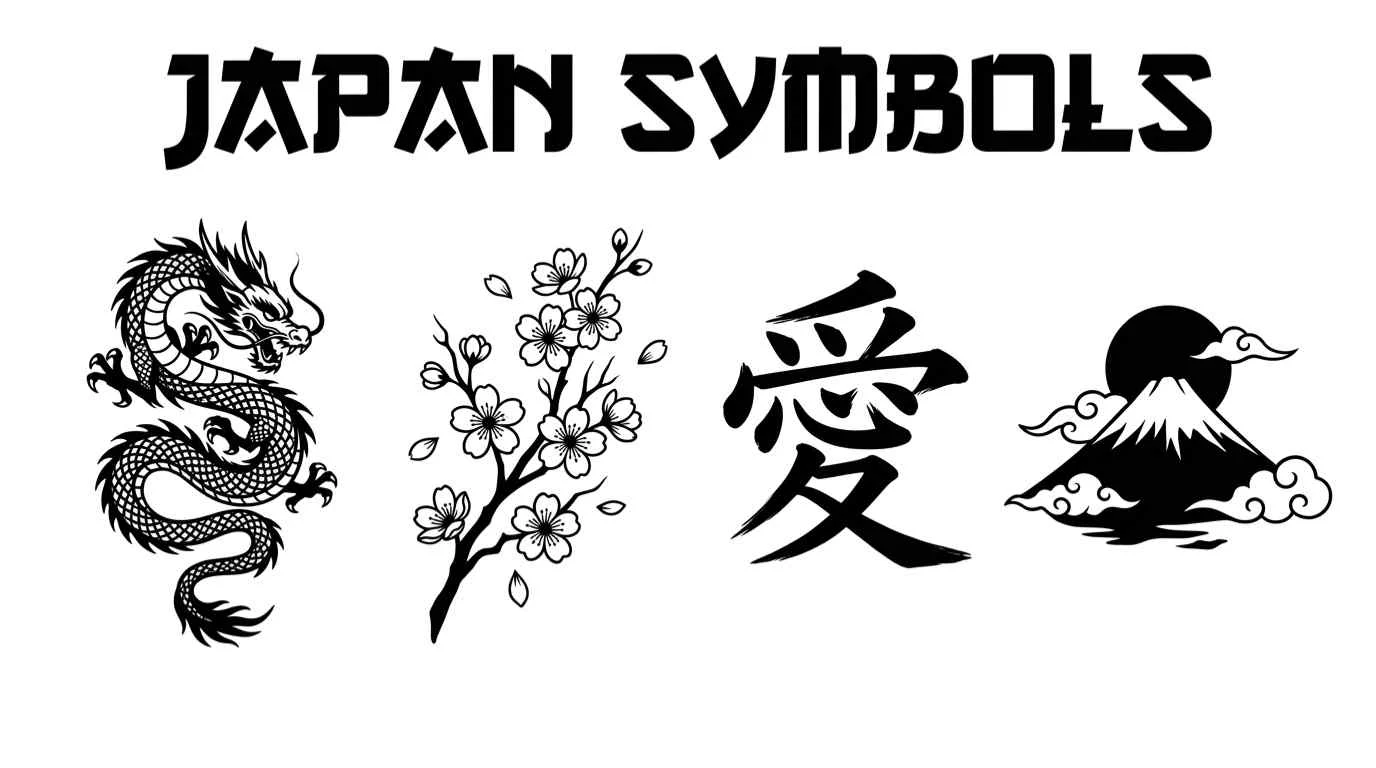
Japan symbols are not just artistic shapes or decorative icons. They are emotional storytellers, carriers of ancient wisdom, and reflections of how people in Japan see life, nature, and the human spirit. From delicate cherry blossoms to powerful dragons, every symbol holds layers of meaning that connect deeply with both personal identity and collective culture.
Imagine walking through a quiet temple garden in Japan, where a single flower, a carved stone, or even a simple brushstroke carries centuries of meaning. These symbols are everywhere, yet many people outside Japan never fully understand what they represent. This guide will take you beyond the surface and reveal the true meaning of Japan symbols in a way that feels personal, relatable, and unforgettable.
🌸 The Deep Cultural Power Behind Japan Symbols
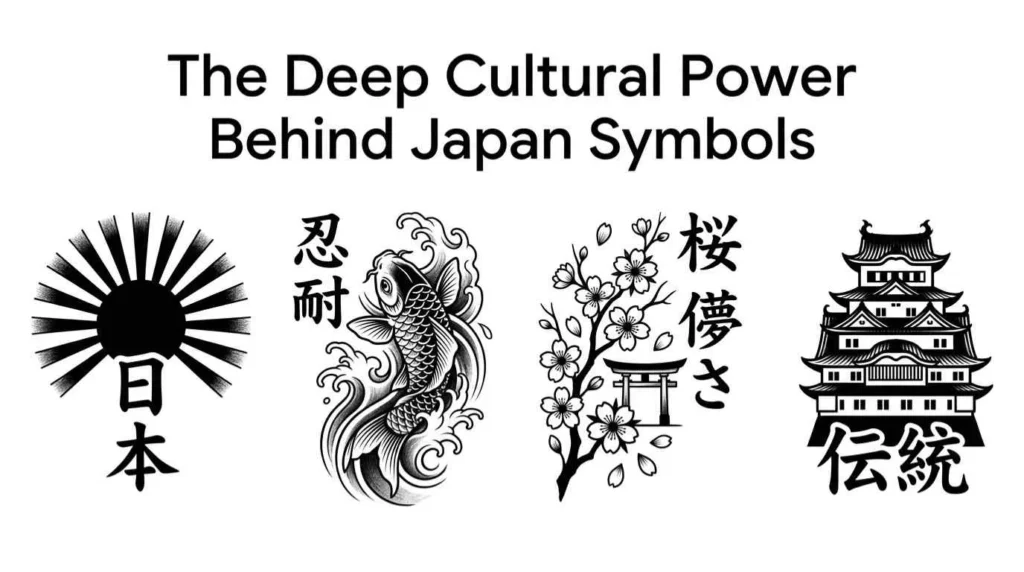
Symbols in Japan are not random. They are rooted in traditions like Shinto beliefs and Buddhist philosophy. These systems teach respect for nature, balance, and impermanence.
In Japan, a symbol is not just something you see. It is something you feel.
For example, while Western cultures often use symbols for identity or branding, Japanese symbols are more spiritual and emotional. They reflect harmony, life cycles, and inner peace.
Psychological Meaning
Japanese symbols often trigger calmness, reflection, and acceptance. They encourage people to embrace change instead of resisting it.
Cultural Comparison
- Japan: Symbols reflect nature and impermanence
- USA: Symbols often represent freedom and individuality
- Africa: Symbols like Adinkra represent moral values and community
- Europe: Symbols often tied to religion and heritage
Did you know? In Japan, even silence can be symbolic. Empty space in art represents possibility and balance.
🌸 Cherry Blossom (Sakura): Beauty, Life, and Letting Go
One of the most famous Japan symbols is the cherry blossom, known as Sakura.
Meaning of Sakura
Cherry blossoms symbolize the fleeting nature of life. They bloom beautifully, but only for a short time. This teaches a powerful lesson: enjoy the present moment.
Emotional Connection
Sakura reminds people that life is temporary, which makes it more precious. It evokes nostalgia, peace, and appreciation.
Global Comparison
- Japan: Represents impermanence and renewal
- USA: Seen as beauty and springtime
- Europe: Often linked to romance
- Asia (general): Symbol of feminine beauty
Did you know? Cherry blossom viewing, called Hanami, is not just a picnic. It is a reflection on life itself.
🐉 Dragon (Ryū): Strength, Wisdom, and Protection
In Japanese culture, dragons are very different from Western dragons.
Meaning of Dragon Symbol
The Japanese dragon symbolizes wisdom, power, and protection. Unlike Western dragons, they are not evil. They are guardians of nature and water.
Psychological Meaning
Dragons represent inner strength and control over emotions. They remind people to use power wisely.
Cultural Comparison
- Japan: Wise and protective
- Europe: Often destructive and dangerous
- China: Symbol of imperial power and luck
- Africa: Rare but often mythical forces
Did you know? Japanese dragons are often associated with rainfall and oceans, making them essential for agriculture.
🗻 Mount Fuji: Stability, Spirituality, and Identity
Mount Fuji is not just a mountain. It is a national symbol of Japan.
Meaning of Mount Fuji
It represents strength, endurance, and spiritual awakening. Many believe climbing it is a journey of self-discovery.
Emotional Meaning
Mount Fuji gives a sense of calm and grounding. It reminds people to stay strong even during difficult times.
Global Comparison
- Japan: Spiritual symbol and national pride
- USA: Mountains symbolize adventure and freedom
- Europe: Often tied to myths and legends
- Asia: Mountains represent connection between earth and heaven
Did you know? Artists have painted Mount Fuji for centuries, each time expressing a different emotional meaning.
🐟 Koi Fish: Perseverance and Transformation
The koi fish is one of the most inspiring Japan symbols.
Meaning of Koi Fish
It represents perseverance, courage, and transformation. According to legend, a koi that swims upstream becomes a dragon.
Emotional Impact
Koi fish symbolize never giving up, even when life is difficult.
Cultural Comparison
- Japan: Strength and determination
- China: Success and ambition
- USA: Often seen as decorative
- Africa: Fish often represent fertility and life
Did you know? Koi tattoos are popular because they symbolize personal growth and overcoming struggles.
🌊 The Great Wave: Power of Nature and Human Fragility
The famous Great Wave symbol comes from traditional Japanese art.
Meaning of the Wave
It represents the unstoppable force of nature and the vulnerability of human life.
Psychological Meaning
This symbol reminds people to respect nature and accept that some things are beyond control.
Cultural Comparison
- Japan: Balance between nature and humanity
- USA: Waves often symbolize freedom
- Europe: Linked to exploration and journeys
- Africa: Water symbolizes life and cleansing
Did you know? The Great Wave is one of the most recognized artworks in the world.
🏯 Torii Gate: Gateway Between Worlds
The Torii gate is a sacred symbol found at the entrance of shrines.
Meaning of Torii Gate
It marks the boundary between the physical world and the spiritual world.
Emotional Meaning
Passing through a Torii gate feels like entering a peaceful, sacred space. It encourages mindfulness.
Cultural Comparison
- Japan: Spiritual transition
- Europe: Church doors symbolize entry into holiness
- Africa: Sacred spaces often marked by natural elements
- USA: Less symbolic, more functional
Did you know? The famous floating Torii gate appears to stand on water during high tide.
🐦 Crane (Tsuru): Longevity, Hope, and Peace
The crane is one of the most meaningful Japan symbols.
Meaning of Crane
It symbolizes long life, happiness, and peace.
Emotional Connection
Cranes represent hope, especially during difficult times. Folding paper cranes is a symbol of healing.
Cultural Comparison
- Japan: Longevity and peace
- China: Immortality
- Europe: Grace and elegance
- Africa: Often associated with communication
Did you know? Folding 1,000 paper cranes is believed to grant a wish.
🌀 Enso Circle: Simplicity, Enlightenment, and Inner Peace
The Enso is a simple circle drawn with one brushstroke.
Meaning of Enso
It represents enlightenment, strength, and the beauty of imperfection.
Psychological Meaning
It teaches acceptance. Nothing in life is perfect, and that is okay.
Cultural Comparison
- Japan: Zen philosophy and mindfulness
- USA: Circles represent unity
- Europe: Symbol of eternity
- Africa: Community and connection
Did you know? Each Enso circle is unique, reflecting the artist’s state of mind.
🎎 Maneki Neko: Luck, Wealth, and Opportunity
The Maneki Neko, or waving cat, is a popular Japanese symbol.
Meaning of Maneki Neko
It brings good luck, wealth, and success.
Emotional Meaning
It creates a feeling of positivity and hope for the future.
Cultural Comparison
- Japan: Good fortune
- China: Similar lucky symbols exist
- USA: Seen as decorative charm
- Europe: Less common
Did you know? The raised paw direction has meaning. One paw invites money, the other invites people.
FAQs About Japan Symbols
1. What are the most popular Japan symbols?
Cherry blossom, dragon, koi fish, crane, Torii gate, and Mount Fuji are among the most popular.
2. Why are Japan symbols so meaningful?
They are deeply connected to nature, spirituality, and life philosophy, making them emotionally powerful.
3. What does the koi fish symbolize in Japan?
It represents perseverance, strength, and transformation.
4. Are Japanese symbols different from Chinese symbols?
Yes, while some overlap exists, Japanese symbols often focus more on simplicity and Zen philosophy.
5. What is the spiritual meaning of the Torii gate?
It marks the transition from the physical world to a sacred, spiritual space.
6. Why is the cherry blossom important in Japan?
It symbolizes the temporary nature of life and encourages living in the present moment.
7. What does the Enso circle represent?
It represents enlightenment, inner peace, and acceptance of imperfection.
🌟 Conclusion: Why Japan Symbols Still Matter Today
Japan symbols are more than cultural icons. They are life lessons hidden in simple forms. They teach us to appreciate beauty, accept change, and find strength within ourselves.
In a fast-moving world, these symbols remind us to slow down and reconnect with what truly matters. Whether it is the fleeting beauty of cherry blossoms or the quiet strength of Mount Fuji, each symbol offers wisdom that feels timeless.
Understanding these meanings does not just make you more informed. It makes you more aware, more connected, and more human.

Nicholas Allen is a passionate writer and symbolism researcher who explores the hidden meanings behind ancient signs, spiritual icons and cultural symbols from around the world. His work focuses on making complex symbolism easy to understand for modern readers.
He is the author of “Mystic Signs and Their Hidden Meanings”. Through his writing, Nicholas helps readers discover the stories, beliefs and mysteries connected to symbols across history and different cultures.