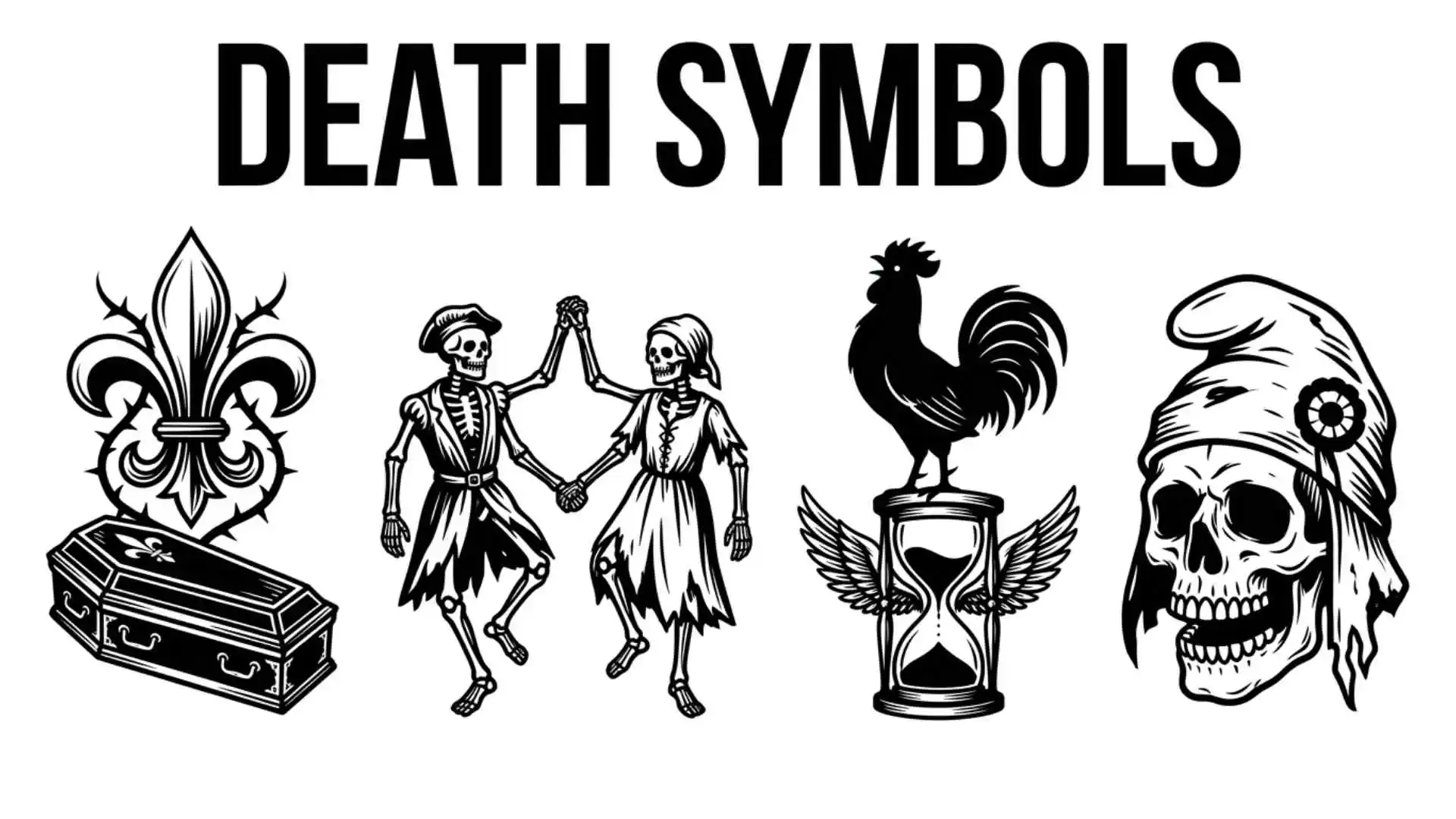
Death symbols have always been part of human life, quietly shaping how we understand loss, transformation, and the unknown. From ancient carvings to modern tattoos, these symbols are more than dark imagery. They carry deep emotional weight, cultural history, and psychological meaning that connects us all.
Think about it. Why do we instinctively recognize a skull as something linked to death? Why do certain flowers feel appropriate at funerals? These symbols are not random. They are shared human language, passed across generations, cultures, and beliefs.
In this guide, you will explore the most powerful death symbols, their origins, meanings, and how different cultures interpret them. You will also discover how these symbols influence emotions, healing, and even personal identity.
Unique Symbols of Death
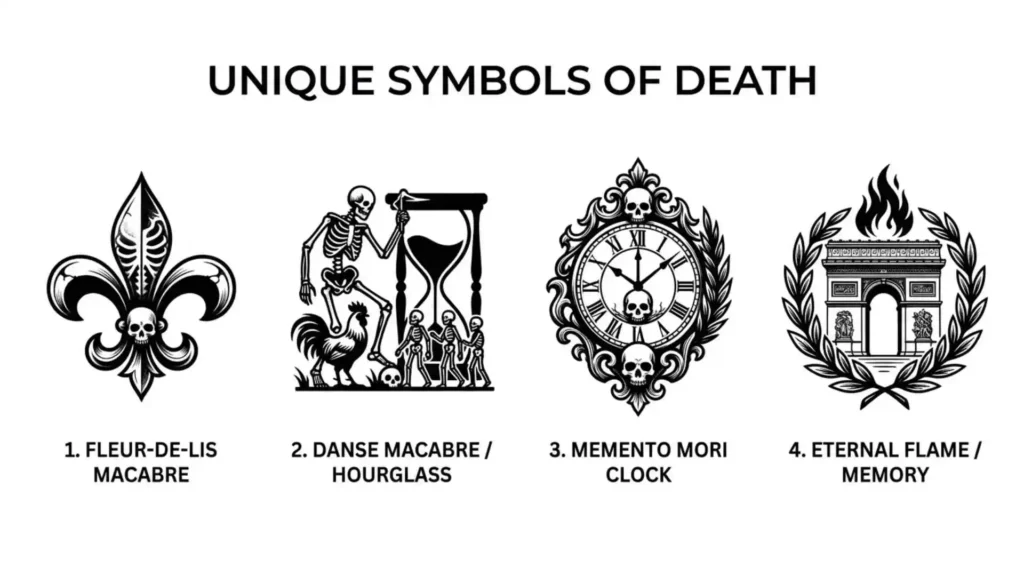
Many cultures created unique symbols to represent death and the mystery of life after death.
Popular Unique Death Symbols
- Skull – Mortality and human life
- Raven – Mystery and spiritual messages
- Hourglass – Time running out
- Black Rose – Mourning and farewell
- Coffin – Physical death and endings
- Candle Flame – Spirit and passing away
These symbols often appear in art, religion, tattoos, and literature.
Semantic Keywords
spiritual death signs, dark symbolism, life and death, mourning symbols, eternal cycle
Symbols of Death in Art
Artists often use death symbols to express emotions, history, and spiritual ideas.
Common Death Symbols in Art
- Skulls in paintings
- Wilted flowers
- Dark birds like crows or ravens
- Broken clocks
- Empty chairs
- Candles fading out
Death symbolism in art can represent sadness, remembrance, or the passage of time.
LSI Keywords
death art symbolism, gothic art, symbolic painting, dark artwork, mortality in art
Death Symbols Copy and Paste
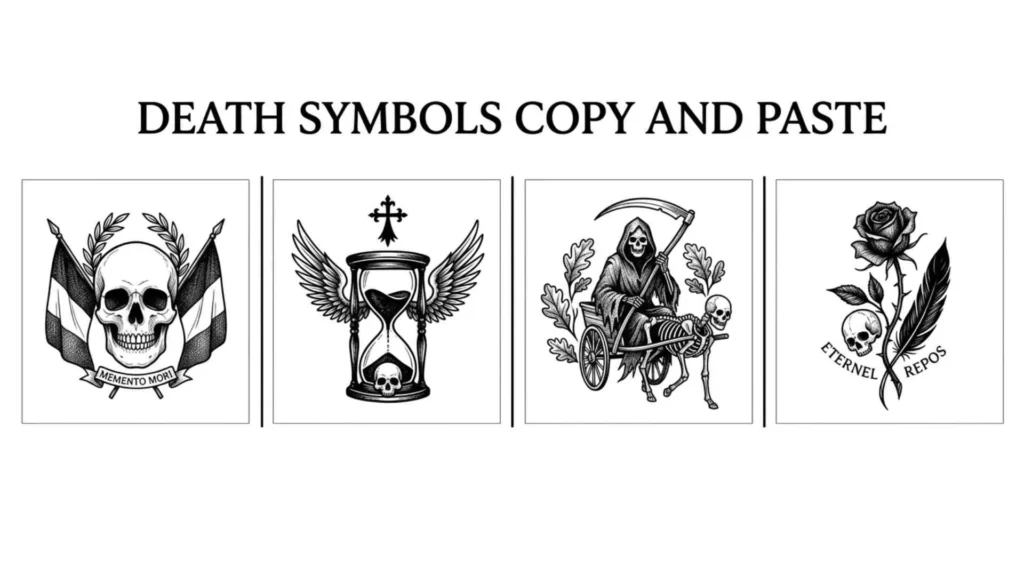
Many people search for simple death symbols they can copy and paste into messages, usernames, art, or social media.
Popular Death Symbols Text
- ☠
- ⚰
- 🕯
- 🦇
- ♱
- 🖤
- ☥
These symbols are commonly used online to represent darkness, remembrance, mystery, or gothic style.
NLP Keywords
death symbols copy and paste, gothic symbols text, dark emoji symbols, skull symbol
Death Symbols and Meanings
Each death symbol carries a different meaning depending on culture and tradition.
Common Death Symbols and Their Meanings
- Skull – Human mortality
- Grim Reaper – Death and transition
- Cross – Spiritual afterlife
- Crow – Mystery and change
- Black Butterfly – Transformation
- Obsidian Stone – Protection from negative energy
Some symbols focus on endings, while others represent rebirth and spiritual growth.
Semantic Keywords
death symbolism meanings, spiritual transformation, funeral symbols, sacred death signs
Ancient Symbol for Death
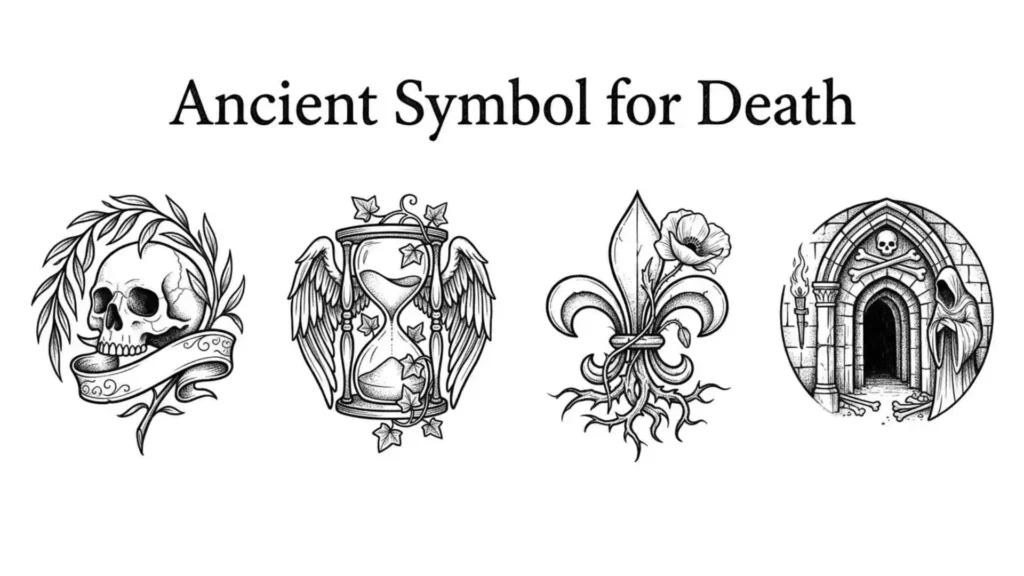
Ancient civilizations used powerful symbols to represent death and the afterlife.
Ancient Death Symbols
- Ankh – Egyptian symbol connected to eternal life
- Scythe – Harvest and death
- Funeral Masks – Passage into the afterlife
- Ouroboros – Cycle of life, death, and rebirth
- Stone Tombs – Respect for ancestors
Ancient cultures believed death was part of a larger spiritual journey.
LSI Keywords
ancient death symbols, Egyptian afterlife, mythology death signs, spiritual history
Symbols of Death in Literature
Writers often use death symbols to create emotion and deeper meaning in stories and poems.
Common Literary Death Symbols
- Storms and dark weather
- Ravens and crows
- Winter season
- Fading flowers
- Empty roads
- Midnight settings
These symbols help readers understand sadness, danger, or emotional endings.
NLP Keywords
literary symbolism, death in poetry, gothic literature, symbolic storytelling
Death Symbols Text
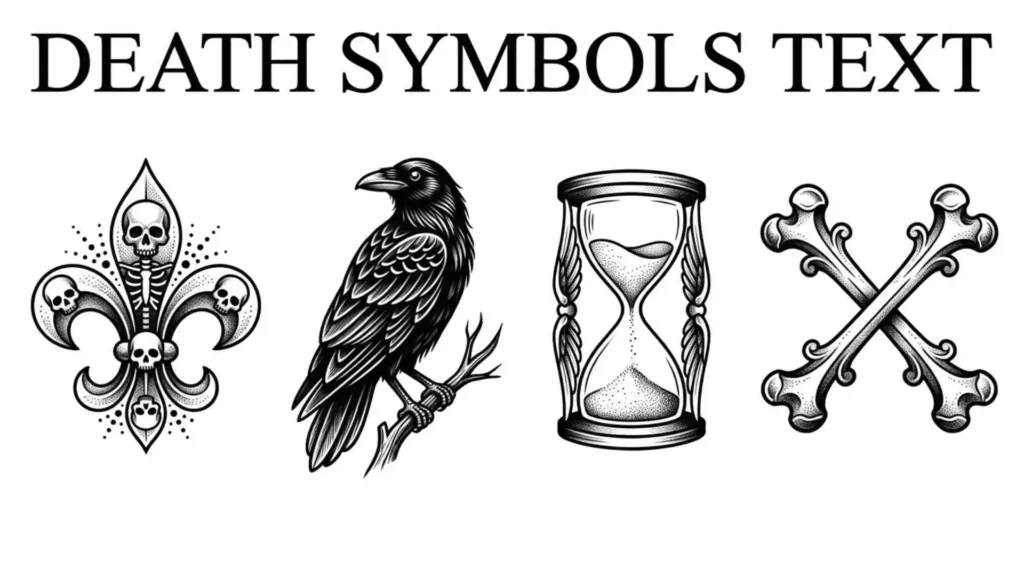
Text-based death symbols are popular in digital art, gaming, and online culture.
Popular Death Text Symbols
- ☠︎
- †
- ⚱
- ✞
- ☥
- ☾
People use these text symbols for creative designs, bios, tattoos, and usernames.
Semantic Keywords
dark text symbols, gothic text, aesthetic symbols, online death symbols
Death Symbols Tattoo
Death symbol tattoos often represent memory, transformation, strength, or acceptance of mortality.
Popular Death Tattoo Symbols
- Skull tattoos
- Grim Reaper tattoos
- Raven tattoos
- Black rose tattoos
- Snake and skull designs
- Hourglass tattoos
Many people choose death tattoos to honor loved ones or symbolize personal growth through difficult experiences.
LSI Keywords
gothic tattoo ideas, symbolic tattoos, dark tattoo art, memorial tattoo symbols
Why Death Symbols Matter
Death symbols help people understand loss, spirituality, memory, and the cycle of life. Across history, these symbols have appeared in religion, literature, art, and culture.
Some symbols remind people of mortality, while others bring comfort by representing transformation and eternal life.
Final NLP and Semantic Keywords
afterlife meaning, spiritual journey, gothic culture, mourning traditions, symbolic death art, life cycle symbolism, mystery symbols
The Universal Language of Death Symbols
Death symbols exist in every culture because death itself is universal. Humans have always needed a way to process grief, fear, and the mystery of what comes next.
Symbols help simplify something too complex to fully understand. Instead of explaining death with words, people use images, objects, and signs that carry meaning instantly.
Why symbols matter
- They help express grief when words fail
- They connect individuals to cultural traditions
- They offer comfort and understanding
- They represent transformation, not just endings
Psychologically, death symbols often represent change rather than finality. Many people associate them with rebirth, transition, or spiritual awakening.
Did you know? In many cultures, death is not seen as an end but as a doorway to another existence. This belief shapes how symbols are used and interpreted.
Skull Symbol: The Most Recognized Sign of Mortality
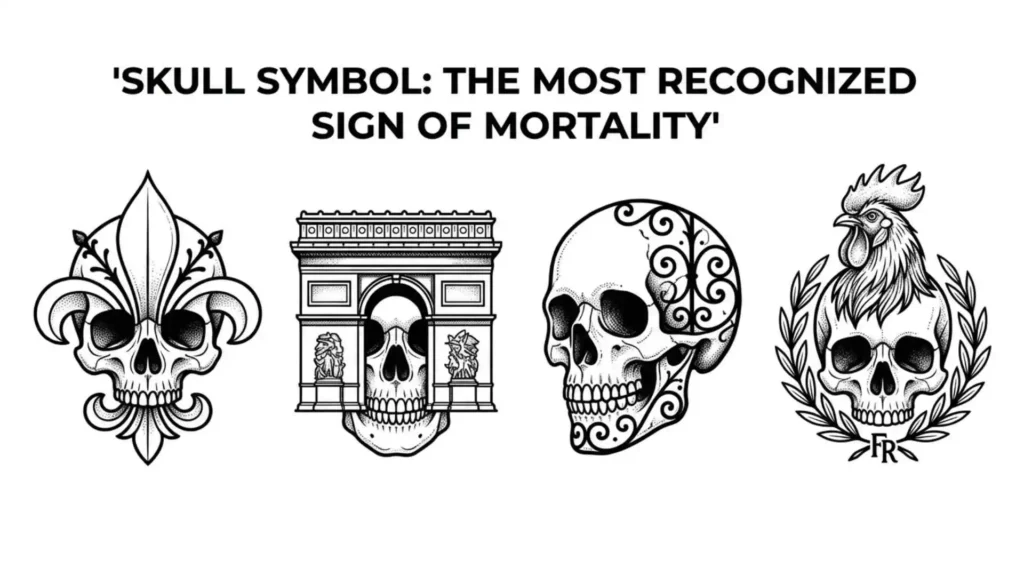
The skull is probably the most famous death symbol worldwide. It is instantly recognizable and carries strong emotional impact.
Meaning of the skull
At its core, the skull represents:
- Mortality
- The fragility of life
- Equality, since everyone has the same structure beneath
But its meaning is not always negative.
Cultural perspectives
- In Western cultures, skulls often symbolize danger or death
- In Mexican tradition, skulls represent celebration of life during Día de los Muertos
- In some African cultures, skulls are seen as ancestral connections
Psychological meaning
The skull forces us to confront reality. It reminds people to live fully because life is temporary. Many people wear skull symbols as a sign of courage or acceptance of mortality.
The Grim Reaper: Fear, Fate, and the Unknown
The Grim Reaper is one of the most iconic representations of death. Cloaked in black and holding a scythe, this figure symbolizes the moment of passing.
Origins
The Grim Reaper emerged during the Middle Ages, especially during the time of the Black Death. The scythe represents harvesting souls, much like crops.
Emotional meaning
- Fear of the unknown
- Inevitability of death
- Loss of control
Cultural variations
- In Europe, the Reaper is often feared
- In some Asian traditions, death figures are more neutral or even protective
- In African folklore, death spirits can act as guides rather than threats
Interestingly, modern interpretations sometimes portray the Grim Reaper as a calm or even compassionate figure, reflecting changing attitudes toward death.
The Raven and Crow: Messengers Between Worlds
Birds, especially ravens and crows, have long been linked to death and mystery.
Why these birds?
Their dark color, intelligence, and scavenging nature made them symbols of death in many cultures.
Symbolic meanings
- Transition between life and death
- Spiritual messages
- Mystery and hidden knowledge
Cultural interpretations
- In Native American traditions, the raven can be a creator and trickster
- In European folklore, crows are often seen as omens of death
- In Japanese culture, crows can symbolize guidance
Emotional connection
These birds often represent intuition. Seeing them may trigger deep thoughts about life, change, or unseen forces.
Did you know? Ravens are among the most intelligent birds and can remember human faces. This adds to their mystical reputation.
Flowers of Death: Beauty in Loss
Flowers are deeply connected to death rituals across the world. Each flower carries its own meaning.
Common death-related flowers
Lily
- Represents purity and the soul returning to peace
- Often used in Western funerals
Chrysanthemum
- In Asia and Europe, it symbolizes death and mourning
- In some cultures, it is used only for funerals
Rose
- Red roses symbolize love beyond death
- White roses represent innocence and remembrance
Psychological meaning
Flowers soften the harshness of death. They bring beauty, comfort, and hope during grief.
Cultural differences
- In the United States, lilies are most common
- In Japan, white chrysanthemums are associated with funerals
- In African traditions, flowers may be combined with symbolic colors and fabrics
The Hourglass: Time, Life, and Inevitable Endings
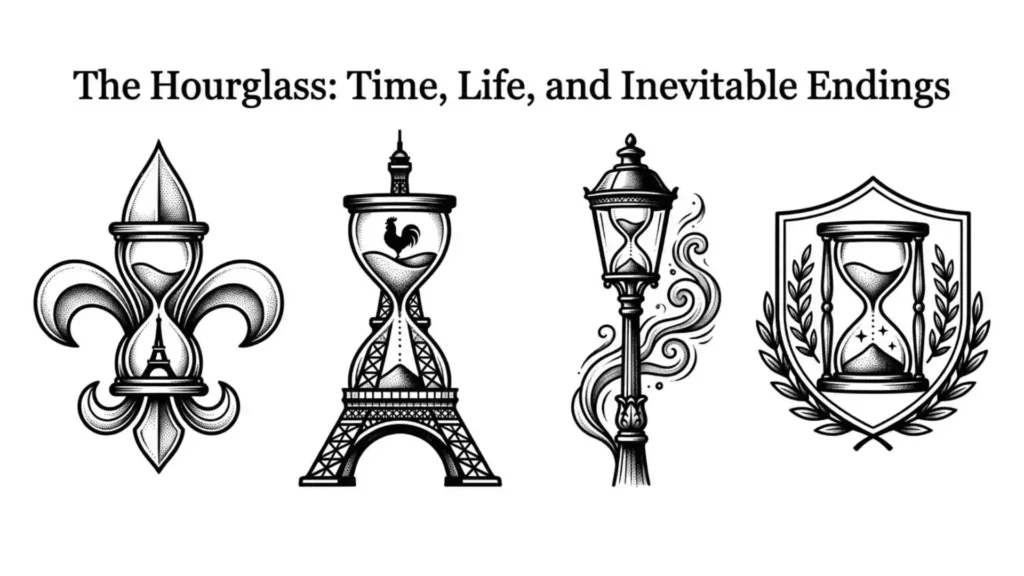
The hourglass is a powerful symbol of time running out.
Meaning
- Passage of time
- Life’s limited duration
- Inevitability of death
Deeper symbolism
When the sand runs out, it represents the end of life. But when flipped, it suggests renewal and continuation.
Cultural significance
- In European art, it often appears alongside skulls
- In modern symbolism, it can represent balance between life and death
Emotional impact
The hourglass creates urgency. It reminds people to value time and live meaningfully.
The Black Color: Mourning Across Cultures
Black is widely associated with death, especially in Western societies.
Why black?
Black represents:
- Darkness
- Mystery
- The unknown
Cultural contrasts
- In Western countries, black is worn at funerals
- In many Asian cultures, white is the color of mourning
- In some African traditions, red or other colors may symbolize death
Psychological meaning
Black creates a sense of seriousness and reflection. It allows people to express grief in a visible way.
Did you know? The association of black with mourning became widespread in Europe during the Roman Empire.
The Cross and Spiritual Symbols of Death
Religious symbols often shape how people understand death.
The cross
In Christianity, the cross represents:
- Sacrifice
- Death and resurrection
- Eternal life
Other spiritual symbols
Ankh
- Ancient Egyptian symbol of life after death
Yin and Yang
- Balance between life and death
Lotus flower
- Rebirth and spiritual awakening
Cultural perspectives
- In the United States and Europe, the cross is common at graves
- In Asia, symbols often focus on balance and reincarnation
- In Africa, ancestral symbols emphasize continuity of life
Emotional meaning
These symbols provide hope. They suggest that death is not the end but part of a larger journey.
Butterflies and Transformation: A Gentle View of Death
Not all death symbols are dark or heavy. Some represent transformation and new beginnings.
Why butterflies?
Butterflies go through metamorphosis, making them perfect symbols of change.
Meaning
- Transformation
- Rebirth
- The soul’s journey
Cultural interpretations
- In many cultures, butterflies are believed to carry souls
- In Japan, they can represent the spirit of a loved one
- In Western symbolism, they often represent hope after loss
Psychological impact
Butterflies help people cope with grief by focusing on renewal rather than loss.
Modern Death Symbols in Pop Culture and Tattoos
Today, death symbols are not just part of tradition. They are used in art, fashion, and personal expression.
Popular modern symbols
- Skull tattoos
- Angel wings
- Gothic imagery
- Minimalist symbols like small crosses or hourglasses
Why people use them
- To honor lost loved ones
- To express acceptance of mortality
- To show strength and resilience
Emotional meaning
Modern symbols often shift from fear to empowerment. They allow individuals to take control of how they view death.
Psychological Meaning of Death Symbols: Why We Are Drawn to Them
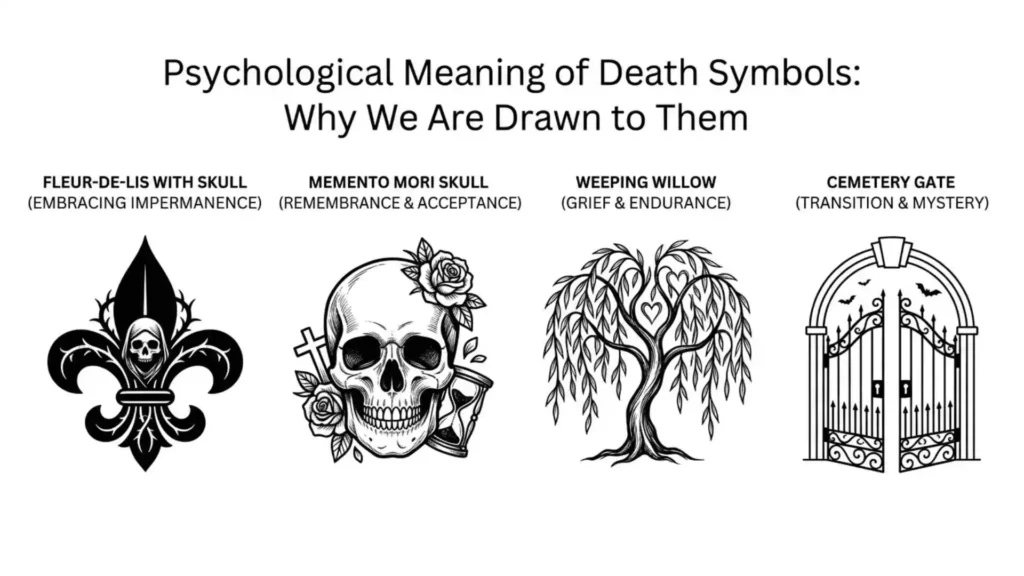
Death symbols may seem dark, but they serve important emotional functions.
Key psychological roles
- Help process grief
- Provide meaning to loss
- Reduce fear of the unknown
- Encourage reflection on life
People who embrace death symbolism are often not obsessed with death. Instead, they are more aware of life’s value.
Did you know? Studies show that thinking about mortality can actually make people prioritize meaningful relationships and goals.
FAQs About Death Symbols
1. What are the most common death symbols?
The most common include skulls, crosses, ravens, lilies, and the Grim Reaper. Each has unique cultural and emotional meanings.
2. Do death symbols always mean something negative?
No. Many represent transformation, rebirth, and spiritual growth rather than just endings.
3. Why are skulls used so often in symbolism?
Skulls are universally recognized and directly represent human mortality, making them powerful and simple symbols.
4. Which flower symbolizes death the most?
Chrysanthemums are strongly associated with death in many cultures, especially in Asia and Europe.
5. Why do different cultures use different death symbols?
Cultural beliefs about life, afterlife, and spirituality shape how death is understood and symbolized.
6. Are death symbols used in modern fashion?
Yes, especially in tattoos, jewelry, and art. They often represent strength, acceptance, or remembrance.
7. What is the psychological purpose of death symbols?
They help people cope with loss, understand mortality, and find meaning in life’s temporary nature.
Conclusion: Understanding Death Symbols Brings Clarity to Life
Death symbols are not just about endings. They are about understanding life more deeply. Each symbol, whether it is a skull, flower, or butterfly, carries layers of meaning shaped by culture, history, and emotion.
When you explore these symbols, you begin to see death not as something to fear but as part of a natural cycle. These symbols help people grieve, heal, and even grow stronger.
In the end, death symbols remind us of one powerful truth. Life is limited, and that is exactly what makes it meaningful.

Joseph Walker is a passionate writer and researcher focused on symbols, hidden meanings, ancient signs, and cultural symbolism from around the world. He enjoys exploring the stories and mysteries behind spiritual icons, mythological signs and historical emblems.
He is the author of “The Power Behind Timeless Symbols”. His work helps readers understand the deeper meanings of symbols in a simple and engaging way.
Through his articles, Joseph aims to make symbolism easier to explore for curious minds and modern readers.