
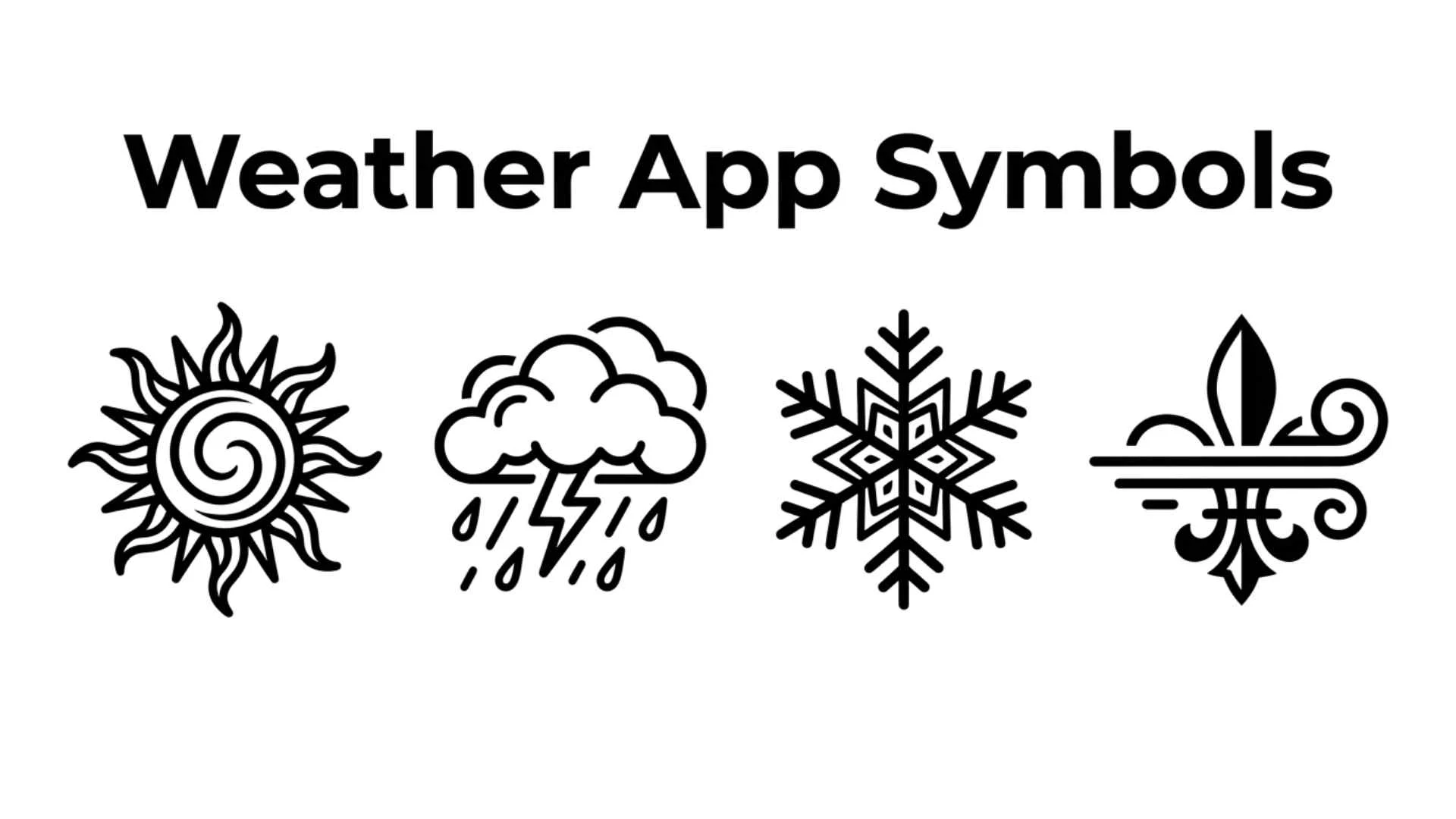
Have you ever opened your phone, checked your weather app, and paused for a second wondering what that tiny cloud with lines or sun behind mist actually means? Weather app symbols may look simple, but they carry powerful messages that guide your daily decisions, from what to wear to whether you should cancel your plans. These small icons are more than just visuals. They are a universal language connecting science, culture, and human emotion in a surprisingly deep way.
In this guide, you will not only learn what each weather symbol means, but also uncover the story behind them, how different cultures interpret them, and why they affect how you feel about your day.
Weather Symbols With Names
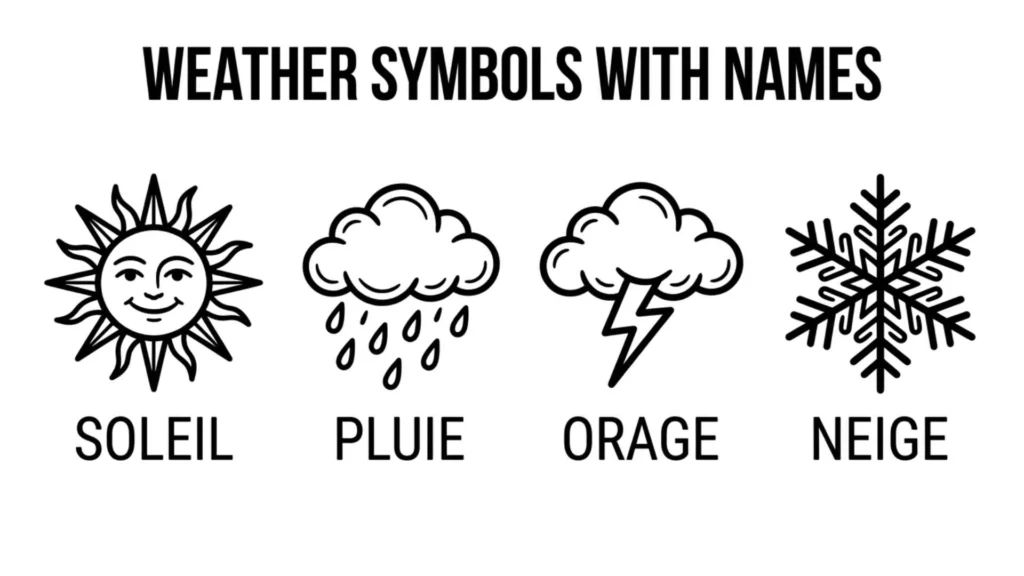
Weather symbols are small icons that show weather conditions. You can find them on weather apps, forecasts, maps, and websites. These symbols help people understand the weather quickly.
Some common weather symbols with names are:
- ☀ Sunny
- 🌤 Partly Cloudy
- ☁ Cloudy
- 🌦 Light Rain
- 🌧 Rain
- ⛈ Thunderstorm
- 🌨 Snow
- 🌫 Fog
- 💨 Windy
- 🌪 Tornado
Meteorologists and weather services use these symbols to make forecasts easy to read. Learning weather symbols can help you plan your day and prepare for changing weather conditions.
NLP Keywords: weather symbols with names, weather forecast symbols, weather icons, weather signs
LSI Keywords: weather conditions, forecast icons, climate symbols, meteorological symbols
Weather App Symbols and Meanings
Weather apps use symbols to show current weather and future forecasts. Each icon represents a specific weather condition.
| Symbol | Meaning |
|---|---|
| ☀ | Sunny |
| 🌤 | Partly Cloudy |
| ☁ | Cloudy |
| 🌦 | Light Showers |
| 🌧 | Rain |
| ⛈ | Thunderstorm |
| 🌨 | Snow |
| 🌫 | Fog |
| 💨 | Windy |
These weather app symbols help users check the forecast quickly without reading detailed weather reports.
NLP Keywords: weather app symbols and meanings, weather icon meanings, weather forecast icons
Semantic Keywords: weather indicators, weather graphics, forecast symbols
Weather App Symbols PNG
Many designers and developers use weather app symbols PNG files for websites, apps, school projects, and presentations. PNG files provide clear images and transparent backgrounds.
Popular weather PNG icons include:
- Sunny icon
- Cloudy icon
- Rain icon
- Snow icon
- Thunderstorm icon
- Wind icon
- Fog icon
PNG weather symbols are useful for creating professional weather-related designs and digital content.
LSI Keywords: weather graphics PNG, weather icon pack, transparent weather icons
Weather App Symbols iPhone
The Apple Weather app uses simple symbols to display weather conditions.
Common iPhone weather symbols include:
- ☀ Clear Sky
- 🌤 Partly Cloudy
- ☁ Cloudy
- 🌧 Rain
- ⛈ Thunderstorm
- 🌨 Snow
- 🌫 Fog
- 💨 Windy
These icons appear in daily forecasts, hourly updates, and severe weather alerts.
NLP Keywords: weather app symbols iPhone, iPhone weather icons, Apple Weather symbols
Weather Icons Meaning
Weather icons are visual signs that represent different weather conditions. They allow users to understand forecasts at a glance.
Common weather icons meaning:
- ☀ = Sunny
- ☁ = Cloudy
- 🌧 = Rain
- ⛈ = Storm
- 🌨 = Snow
- 🌫 = Fog
- 💨 = Wind
Weather icons are used by mobile apps, TV forecasts, newspapers, and weather websites around the world.
Semantic Keywords: weather icon guide, weather forecast meanings, weather symbol meanings
Weather App Symbols Meaning iPhone
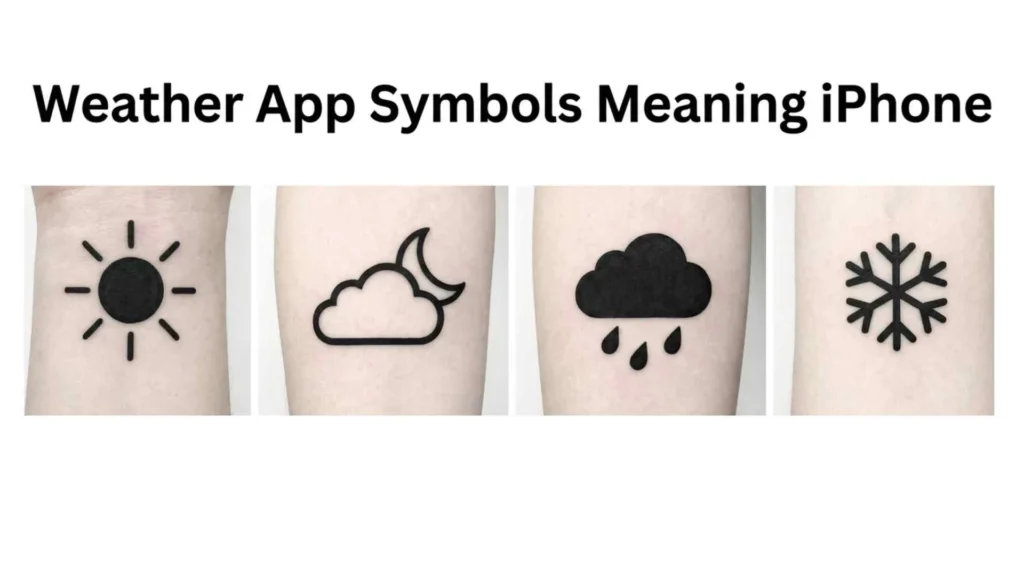
On iPhone devices, weather symbols help users identify current and upcoming weather conditions quickly.
Some common iPhone weather symbol meanings include:
- Yellow Sun = Bright and clear weather
- Gray Cloud = Cloudy conditions
- Rain Cloud = Rain expected
- Lightning Cloud = Thunderstorms
- Snowflake = Snowfall
- Fog Icon = Low visibility
These symbols make the weather forecast easier to understand and help users plan outdoor activities.
LSI Keywords: Apple weather meanings, iOS weather symbols, weather forecast iPhone
Weather Symbols Chart
The chart below shows popular weather symbols and their meanings.
| Weather Symbol | Meaning |
|---|---|
| ☀ | Sunny |
| 🌤 | Partly Cloudy |
| ☁ | Cloudy |
| 🌦 | Showers |
| 🌧 | Rain |
| ⛈ | Thunderstorm |
| 🌨 | Snow |
| 🌫 | Fog |
| 💨 | Windy |
| 🌪 | Tornado |
This weather symbols chart is useful for students, travelers, weather enthusiasts, and anyone learning to read weather forecasts.
NLP Keywords: weather symbols chart, weather icon chart, weather reference guide
Weather App Symbols Android
Android weather apps use weather icons similar to those used on iPhone devices. Most weather apps follow international weather standards.
Common Android weather symbols include:
- Sun icon = Clear weather
- Cloud icon = Cloudy weather
- Rain icon = Rainfall
- Snowflake icon = Snow
- Lightning icon = Thunderstorms
- Wind icon = Windy conditions
Although designs vary between Android apps, the meanings remain largely the same, making forecasts easy to understand.
Semantic Keywords: Android weather icons, weather symbols Android, mobile forecast icons, weather app indicators
Why Weather App Symbols Matter More Than You Think
Weather symbols are designed for instant understanding. Instead of reading long forecasts, you glance at a small icon and immediately grasp the situation.
But here is something deeper. These symbols influence your mood and behavior. A bright sun icon can make you feel hopeful and energetic. A thunderstorm symbol might create caution or even anxiety. This is not accidental. Designers carefully choose shapes and colors that trigger emotional responses.
From a practical point of view, weather icons help you:
- Plan your day quickly
- Stay safe during extreme conditions
- Make travel or work decisions
From an emotional perspective, they shape how you feel about the day ahead.
The Most Common Weather App Symbols and Their Meanings
Let’s decode the most widely used weather symbols you see daily.
☀️ Sun Symbol
Meaning: Clear sky, sunny weather
Emotional impact: Happiness, optimism, energy
Across cultures, the sun represents life and vitality. In the USA and Europe, it often signals a perfect day outdoors. In many Asian cultures, it also symbolizes prosperity and good fortune.
Did you know? Bright yellow is used because it naturally attracts attention and creates a positive psychological response.
🌤️ Partly Cloudy Symbol
Meaning: Mix of sun and clouds
Emotional impact: Balance, unpredictability
This symbol represents uncertainty. It tells you the day could go either way. In Western cultures, it often feels neutral. In some African regions, partial cloudiness may be welcomed as relief from intense heat.
☁️ Cloudy Symbol
Meaning: Overcast skies
Emotional impact: Calm, dullness, reflection
Clouds can feel peaceful or gloomy depending on context. In Europe, cloudy weather is often associated with introspection. In contrast, in hotter regions, clouds are seen as comforting and protective.
🌧️ Rain Symbol
Meaning: Rainfall expected
Emotional impact: Renewal, sadness, relaxation
Rain has one of the richest symbolic meanings worldwide:
- In Asia, it often represents growth and blessing
- In Western cultures, it can symbolize sadness or romance
- In Africa, rain is strongly tied to survival and gratitude
⛈️ Thunderstorm Symbol
Meaning: Storm with lightning and possibly heavy rain
Emotional impact: Fear, power, urgency
Thunderstorms symbolize nature’s strength. In many cultures, lightning has been linked to divine power or warnings from the heavens.
Did you know? The jagged lightning bolt shape is intentionally sharp to create a sense of danger and urgency.
🌫️ Fog or Mist Symbol
Meaning: Low visibility due to fog
Emotional impact: Mystery, confusion
Fog symbols often create a sense of uncertainty. In storytelling across Europe and Asia, fog represents hidden truths or unclear paths.
❄️ Snow Symbol
Meaning: Snowfall
Emotional impact: Peace, purity, stillness
Snow is seen differently around the world:
- In the USA and Europe, it can mean beauty or inconvenience
- In colder regions, it is routine
- In warmer countries, it represents rarity and wonder
🌬️ Wind Symbol
Meaning: Strong winds
Emotional impact: Movement, change
Wind is often associated with transformation. In many cultures, it symbolizes unseen forces or change coming your way.
The Hidden Psychology Behind Weather Icons
Weather app symbols are not random designs. They are rooted in psychology.
Color Psychology
- Yellow signals warmth and positivity
- Blue represents calmness or cold
- Gray suggests dullness or seriousness
- Red or orange warns of danger
These colors guide your emotional reaction before you even think logically.
Shape and Simplicity
Simple shapes are easier for the brain to process. That is why weather symbols are minimalistic. Your brain recognizes them instantly, saving time and effort.
How Weather Symbols Differ Across Cultures
While weather itself is universal, how people interpret symbols can vary.
United States
Symbols are direct and practical. The focus is on quick understanding and action.
Asia
Weather symbols often connect with deeper meanings like harmony, balance, and nature’s cycles.
Europe
There is a mix of practicality and emotional interpretation. Cloudy or rainy symbols often carry a poetic or reflective feel.
Africa
Weather symbols, especially rain, carry strong survival and agricultural importance. They are often associated with hope and life.
Evolution of Weather Symbols: From Ancient Signs to Digital Icons
Weather symbols did not start with smartphones.
Ancient Times
People used natural signs like:
- Animal behavior
- Cloud patterns
- Wind direction
Early Meteorology
In the 19th century, scientists began using symbols on maps to represent weather conditions.
Modern Apps
Today’s icons are simplified versions of those early scientific symbols, designed for quick mobile viewing.
Did you know? Many modern weather icons are inspired by aviation weather codes used by pilots.
How to Read Weather App Symbols Like a Pro
Understanding symbols is just the beginning. Interpreting them correctly is key.
Look Beyond the Icon
Combine symbols with temperature, wind speed, and humidity for a complete picture.
Pay Attention to Variations
A cloud with light rain is different from heavy rain. Small visual differences matter.
Check Time-Based Changes
Morning and evening symbols may differ, giving you better planning insight.
Lesser Known Weather Symbols You Should Know
Some symbols are less common but equally important.
🌨️ Snow Showers
Light, scattered snow rather than continuous snowfall.
🌩️ Isolated Thunderstorms
Storms that occur in specific areas, not everywhere.
🌪️ Tornado Symbol
Indicates extreme danger and requires immediate attention.
🌡️ Temperature Icon
Often shown with a thermometer, indicating extreme heat or cold.
The Emotional Connection We Share With Weather Symbols
Think about it. You check the weather multiple times a day. These symbols quietly shape your mood.
A sunny icon can motivate you to go outside. A storm icon might make you cancel plans. Over time, you build a subconscious relationship with these visuals.
They become part of your daily emotional rhythm.
Did You Know? Fun Facts About Weather Symbols
- The sun symbol has been used for thousands of years in art and religion
- Lightning bolts were once believed to be messages from gods
- Cloud symbols are among the oldest recorded weather illustrations
- Weather apps update symbols using real-time satellite data
FAQs About Weather App Symbols
1. What do weather app symbols actually represent?
They represent current or forecasted weather conditions like sun, rain, clouds, wind, or storms using simple visual icons.
2. Why do weather symbols look different in different apps?
Each app uses its own design style, but the meanings are generally the same to maintain universal understanding.
3. What does a cloud with lines underneath mean?
It usually indicates rain or drizzle, depending on how heavy the lines appear.
4. Are weather symbols the same worldwide?
Mostly yes, but slight variations exist based on cultural design and regional weather patterns.
5. How accurate are weather symbols?
They are based on meteorological data, but accuracy depends on forecasting models and local conditions.
6. What does a sun behind a cloud mean?
It means partly cloudy weather, a mix of sunshine and clouds.
7. Why do weather symbols affect mood?
Because colors, shapes, and familiar meanings trigger emotional responses in the brain.
Conclusion
Weather app symbols may seem small, but they carry a powerful blend of science, culture, and emotion. They help you make quick decisions while quietly influencing how you feel about your day. From the warmth of the sun icon to the intensity of a thunderstorm symbol, each one tells a story far beyond its simple design.
Understanding these symbols deeply not only makes you smarter about weather but also more aware of how visual language shapes your daily life. Next time you check your weather app, you will see more than just icons. You will see meaning.

Joseph Walker is a passionate writer and researcher focused on symbols, hidden meanings, ancient signs, and cultural symbolism from around the world. He enjoys exploring the stories and mysteries behind spiritual icons, mythological signs and historical emblems.
He is the author of “The Power Behind Timeless Symbols”. His work helps readers understand the deeper meanings of symbols in a simple and engaging way.
Through his articles, Joseph aims to make symbolism easier to explore for curious minds and modern readers.