
Christmas symbols are everywhere during the holiday season. They glow in windows, sparkle on trees, hang from doors, and quietly bring back memories from childhood. A simple bell can remind someone of family gatherings. A candle can create feelings of hope during difficult times. These symbols are not just decorations. They carry stories, emotions, traditions, and deep cultural meaning that connect people across generations.
Every ornament, color, and festive object has a reason behind it. Some Christmas symbols began hundreds of years ago in Europe while others came from ancient winter celebrations long before Christmas existed. Today they continue to represent love, faith, joy, peace, generosity, and togetherness around the world.
In this guide, you will discover the hidden meanings behind the most popular Christmas symbols, their history, emotional importance, and how different cultures interpret them. By the end, you may never look at a Christmas tree or star the same way again.
Why Christmas Symbols Matter More Than Ever
Symbols help people express emotions that words sometimes cannot explain. During Christmas, symbols become powerful reminders of comfort, belonging, and hope.
A wreath on the door tells visitors they are welcome. Twinkling lights create warmth during cold winter nights. Gifts under the tree symbolize love and generosity. Even the smell of pine or cinnamon can trigger emotional memories from childhood.
Psychologists often explain that holiday symbols create emotional security because they connect people to family traditions and positive memories. In stressful times, familiar Christmas imagery can reduce loneliness and create a feeling of togetherness.
Did you know? Studies on holiday traditions show that familiar seasonal symbols can increase feelings of happiness and emotional connection within families.
Christmas symbols are also important because they unite cultures. While traditions differ from country to country, the emotional meanings behind them remain surprisingly similar.
The Christmas Tree Meaning and Symbolism
The Christmas tree is one of the most recognized Christmas symbols in the world. Whether real or artificial, large or small, it stands at the center of holiday celebrations in millions of homes.
The Origin of the Christmas Tree
The tradition of decorating evergreen trees began in ancient Europe. Long before Christianity spread across the continent, evergreen branches represented life during harsh winters because they stayed green when other trees died.
In Germany during the 16th century, Christians began decorating trees with candles, apples, nuts, and handmade ornaments. Over time the custom spread to England, America, and eventually the entire world.
Emotional Meaning of the Christmas Tree
The tree symbolizes eternal life, resilience, and hope. Because evergreen trees survive through winter, they represent strength during difficult seasons of life.
Families gathering around the tree also creates a powerful emotional connection. Decorating together becomes a yearly ritual filled with laughter, memories, and storytelling.
Christmas Tree Meanings Across Cultures
United States
In America, the Christmas tree often symbolizes family unity and generosity. Gifts placed underneath represent love and giving.
Europe
Many European countries focus on traditional handmade ornaments and religious symbolism connected to the birth of Jesus.
Asia
In countries like Japan and South Korea, Christmas trees are often seen as symbols of joy, romance, and festive celebration rather than religious tradition.
Africa
In African communities celebrating Christmas, decorated trees may include local crafts and handmade items that represent community and creativity.
The Christmas Star and What It Represents
The Christmas star is one of the most spiritual holiday symbols. It usually appears on top of Christmas trees, in nativity scenes, and on festive decorations.
The Story Behind the Christmas Star
According to Christian tradition, the Star of Bethlehem guided the Wise Men to the birthplace of Jesus. Because of this, the star became a symbol of guidance, faith, and divine hope.
Psychological Meaning of the Star
The star represents direction during uncertain times. Emotionally, people often connect stars with dreams, inspiration, and the belief that brighter days are ahead.
During the holidays, many people feel reflective about their lives and future goals. The Christmas star quietly reminds them to keep moving toward hope and purpose.
Different Cultural Interpretations
In Western countries, the Christmas star strongly connects to Christian faith. In parts of Asia, stars often symbolize celebration and beauty during winter festivals. In African storytelling traditions, stars may also represent ancestors and spiritual guidance.
Did you know? The five pointed star became widely popular in Christmas decorations during the Victorian era when holiday traditions expanded rapidly across Europe and America.
Christmas Bells and Their Deep Symbolic Meaning
The cheerful sound of bells instantly creates a Christmas atmosphere. From church towers to sleigh bells in holiday songs, bells are deeply connected to the season.
Historical Origin of Christmas Bells
Church bells traditionally announced important events including births, weddings, and celebrations. During Christmas, they rang to celebrate the birth of Jesus and invite communities to worship.
Over time bells also became associated with Santa Claus and festive winter celebrations.
Emotional Symbolism of Bells
Bells symbolize joy, celebration, awakening, and unity. Their sound captures attention and brings people together.
Many people also associate bells with nostalgia because they remind them of childhood excitement, holiday movies, and family gatherings.
Christmas Bells Around the World
Europe
Church bells remain an important religious tradition during Christmas Eve services.
United States
Bells often symbolize festive joy and holiday entertainment.
Latin America
Christmas bells are commonly connected with religious processions and spiritual celebration.
Asia
In some countries bells blend with local New Year traditions and symbolize luck and renewal.
The Meaning of Christmas Wreaths
The Christmas wreath may look simple, but it carries deep spiritual and emotional symbolism.
History of the Christmas Wreath
Ancient Romans used wreaths as symbols of victory and honor. Later Christians adopted evergreen wreaths during winter celebrations because they represented eternal life.
The circular shape has no beginning or end, making it a symbol of eternity and everlasting love.
Emotional Meaning of Wreaths
A wreath hanging on a door symbolizes welcome, peace, and protection. It creates a feeling of warmth before someone even enters the home.
Families often make wreaths together, turning them into meaningful holiday traditions.
Symbolism of Wreath Colors
Green represents life and renewal. Red berries symbolize love and sacrifice. Gold decorations often represent light and prosperity.
Did you know? Advent wreaths traditionally contain four candles representing hope, peace, joy, and love during the weeks leading up to Christmas.
Christmas Candles and the Symbol of Light
Candles are among the oldest Christmas symbols and remain emotionally powerful today.
Why Candles Became Christmas Symbols
Before electricity, candles illuminated homes during dark winter nights. Christians later used candles to symbolize Jesus as the light of the world.
Today candles continue to represent hope, warmth, and spiritual reflection.
Psychological Meaning of Candlelight
Soft candlelight creates calmness and emotional comfort. Studies show that warm lighting can reduce stress and create feelings of safety and relaxation.
This explains why candles remain central to holiday traditions around the world.
Cultural Meanings of Christmas Candles
Scandinavia
Candles play an important role in winter festivals because of the long dark winters.
Mexico
Candles often guide religious processions and symbolize faith.
Africa
In Kwanzaa celebrations, candles represent unity, creativity, and community values.
Europe
Many churches still hold candlelight Christmas services focused on peace and reflection.
Holly, Mistletoe, and Evergreen Plants
Nature inspired many traditional Christmas symbols. Holly, mistletoe, ivy, and evergreen branches all carry special meanings.
Holly Symbolism
Holly leaves symbolize protection and eternal life because the plant survives through winter. The red berries often represent love and sacrifice.
In medieval Europe, people believed holly protected homes from evil spirits during winter.
Mistletoe Meaning
Mistletoe became associated with peace and affection in ancient Norse mythology. Enemies who met under mistletoe were expected to stop fighting.
Today kissing under mistletoe symbolizes love, reconciliation, and romance.
Evergreen Branches
Evergreen plants symbolize endurance and hope because they remain alive during winter when most plants appear dead.
These natural Christmas symbols remind people that life continues even during difficult seasons.
Did you know? Ancient cultures used evergreen plants during winter festivals long before modern Christmas traditions developed.
Santa Claus as a Modern Christmas Symbol
Santa Claus may be one of the most beloved holiday figures in modern culture.
The Real History Behind Santa Claus
Santa Claus was inspired by Saint Nicholas, a Christian bishop known for secretly helping the Saint and giving gifts to children.
Over centuries, stories about Saint Nicholas blended with European folklore, eventually creating the modern image of Santa Claus.
Emotional Meaning of Santa Claus
Santa represents generosity, kindness, wonder, and childhood imagination.
For children, Santa creates excitement and magic. For adults, he often symbolizes nostalgia and the joy of giving without expecting anything in return.
How Different Cultures View Santa
United States and Canada
Santa is central to Christmas celebrations and gift giving.
Europe
Different countries have their own versions including Father Christmas and Sinterklaas.
Asia
Santa is often viewed more as a cheerful cultural figure connected to festive shopping and celebration.
Africa
Santa traditions vary widely depending on local customs and Christian communities.
Christmas Colors and Their Hidden Meanings
Colors are powerful Christmas symbols that influence emotions and atmosphere.
Red
Red symbolizes love, warmth, sacrifice, and celebration. It also creates excitement and energy which explains why it dominates holiday decorations.
Green
Green represents eternal life, growth, renewal, and hope.
Gold
Gold symbolizes light, wisdom, royalty, and prosperity.
White
White often represents peace, purity, snow, and spiritual calmness.
Blue
Blue symbolizes peace, trust, and heavenly connection in many Christian traditions.
Psychological Impact of Christmas Colors
Holiday colors affect emotions more than people realize. Red increases excitement while green creates calmness and balance. Gold adds feelings of luxury and celebration.
Together these colors create the emotional atmosphere people associate with Christmas warmth and joy.
Nativity Scenes and Their Spiritual Importance
The nativity scene tells the story of the birth of Jesus and remains one of the most meaningful religious Christmas symbols.
Origin of Nativity Displays
Saint Francis of Assisi created one of the first live nativity scenes in the 13th century to help people visualize the Christmas story.
Today nativity sets appear in homes, churches, and public spaces around the world.
Symbolic Meaning of the Nativity
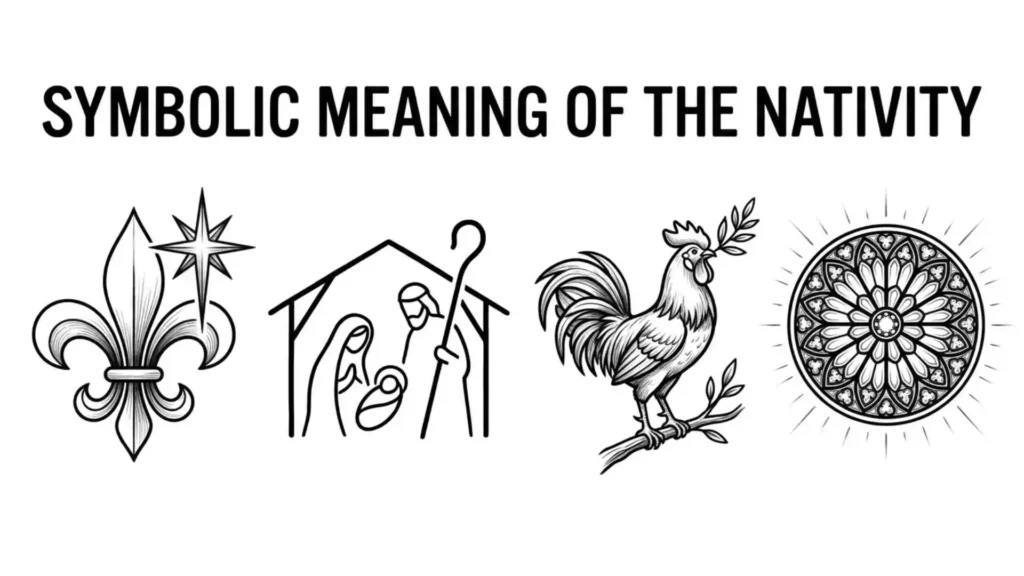
The nativity symbolizes humility, hope, faith, and divine love. Each figure carries meaning:
- Baby Jesus represents hope and salvation
- Mary symbolizes compassion and motherhood
- Joseph represents protection and responsibility
- Shepherds symbolize simplicity and faith
- Wise Men represent wisdom and spiritual seeking
Cultural Variations
Nativity scenes differ across countries. In Latin America, displays may include local animals and colorful village settings. African nativity scenes often feature regional clothing and artistic styles. Asian versions sometimes blend traditional local architecture into the scene.
These variations show how Christmas symbols adapt beautifully across cultures while keeping their core message alive.
FAQs About Christmas Symbols
What is the most important Christmas symbol?
The Christmas tree is often considered the most recognized Christmas symbol worldwide because it represents hope, life, and family togetherness.
Why are evergreen trees used during Christmas?
Evergreen trees stay green during winter, making them symbols of eternal life, resilience, and hope.
What does the Christmas star symbolize?
The Christmas star represents guidance, faith, hope, and the Star of Bethlehem from Christian tradition.
Why do people hang wreaths on doors?
Wreaths symbolize welcome, eternal love, peace, and protection because their circular shape has no end.
What is the meaning of mistletoe at Christmas?
Mistletoe symbolizes peace, affection, romance, and reconciliation.
Why are candles important during Christmas?
Candles represent light, hope, warmth, spiritual reflection, and comfort during dark winter months.
How do different cultures celebrate Christmas symbols?
Different cultures adapt Christmas symbols using local traditions, colors, art styles, foods, and spiritual beliefs while maintaining themes of hope, joy, and togetherness.
Conclusion
Christmas symbols are much more than festive decorations. They carry centuries of history, spiritual meaning, emotional comfort, and cultural tradition. From glowing candles to evergreen trees, each symbol tells a story about hope, love, resilience, and human connection.
These symbols continue to matter because they create emotional memories that stay with people for life. A wreath can make someone feel welcomed. A star can inspire hope during difficult times. A simple bell can bring back joyful childhood memories in an instant.
No matter where people live or how they celebrate, Christmas symbols remind humanity of something deeply important. Even during the coldest season, warmth, kindness, faith, and togetherness still shine brightly.

Joseph Walker is a passionate writer and researcher focused on symbols, hidden meanings, ancient signs, and cultural symbolism from around the world. He enjoys exploring the stories and mysteries behind spiritual icons, mythological signs and historical emblems.
He is the author of “The Power Behind Timeless Symbols”. His work helps readers understand the deeper meanings of symbols in a simple and engaging way.
Through his articles, Joseph aims to make symbolism easier to explore for curious minds and modern readers.