
From flags waving in the wind to animals stamped on official seals, USA symbols are everywhere. They are not just images or designs, they carry stories, emotions, and deep cultural meaning. Whether you see the bald eagle soaring high or the stars and stripes on a flag, each symbol reflects the identity, struggles, and dreams of a nation.
These symbols are more than decoration. They represent freedom, unity, courage, and hope. They connect millions of people through shared values and history. In this guide, you will discover the most important symbols of the United States, their origins, emotional meanings, and how they compare with symbols across cultures.
USA Symbols and Meanings
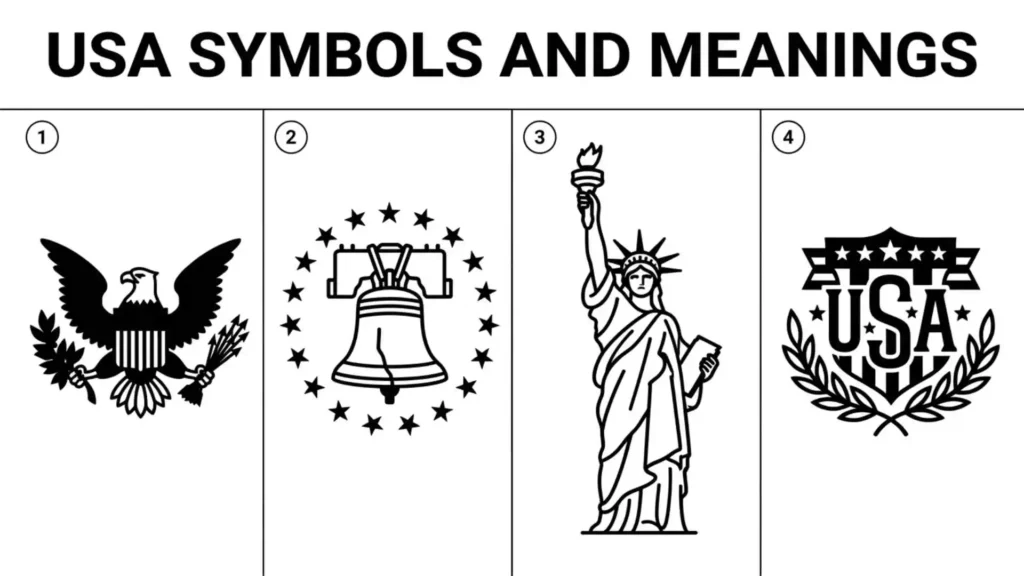
The United States has many symbols that represent its history, values, and culture. These symbols help people understand what America stands for. Some of the most recognized USA symbols include the American flag, the bald eagle, the Statue of Liberty, and the Liberty Bell.
Each symbol has a special meaning. The American flag represents freedom and unity. The Statue of Liberty stands for hope and democracy. The Liberty Bell symbolizes independence, while the bald eagle represents strength and courage. Together, these national symbols reflect the spirit of the United States.
USA Symbols and Their Meanings
American symbols tell the story of the nation. They remind people of important events, achievements, and values that shaped the country. The Great Seal of the United States, the White House, and Uncle Sam are also important symbols of American identity.
Understanding USA symbols and their meanings helps students, tourists, and citizens learn more about American heritage. These symbols are commonly featured in schools, government buildings, museums, and patriotic celebrations across the country.
U.S. State Symbols List
Every U.S. state has its own official symbols that represent its history, wildlife, and natural beauty. Common state symbols include a state bird, state flower, state tree, state animal, and state motto.
For example, California’s state flower is the California poppy, while Texas is known for the bluebonnet. Florida’s state bird is the northern mockingbird, and Alaska’s state animal is the moose. These symbols help preserve state pride and teach residents about local traditions and natural resources.
National Symbols of USA Presentation
A national symbols of USA presentation is a great way to teach students about American history and culture. Important topics often include the American flag, the Statue of Liberty, the bald eagle, Mount Rushmore, the White House, and the Liberty Bell.
Adding pictures, simple facts, and historical information can make a presentation more engaging. Educational presentations about American symbols are commonly used in classrooms, school projects, and history lessons throughout the United States.
USA Symbols Eagle
The bald eagle is one of the most important symbols of the United States. It became the national bird and symbol of America in 1782. The eagle was chosen because of its strength, independence, and impressive appearance.
Today, the bald eagle appears on government seals, official documents, military insignia, and U.S. currency. It remains a powerful symbol of freedom, leadership, and national pride. The eagle’s image is recognized around the world as a representation of the United States.
USA Symbols for Kids
Learning about USA symbols for kids helps children understand American history in a fun and simple way. Young students often learn about the American flag, the Statue of Liberty, the bald eagle, and Uncle Sam.
Teachers use educational games, worksheets, coloring pages, and classroom activities to introduce these patriotic symbols. Understanding national symbols helps children develop knowledge about their country and its values of freedom, equality, and democracy.
National Symbols of USA Pictures
Pictures of national symbols of the USA make learning easier and more engaging. Images of the American flag, the Statue of Liberty, the White House, Mount Rushmore, and the bald eagle help people recognize important parts of American culture.
Educational websites, textbooks, presentations, and classroom materials often use pictures to explain the meaning and importance of these symbols. Visual learning helps students remember facts and better understand American history.
American Symbols and Meanings PDF
An American symbols and meanings PDF is a useful educational resource for students, teachers, and parents. It provides detailed information about important U.S. symbols in a convenient and printable format.
A well-designed PDF may include pictures, historical facts, symbol descriptions, and learning activities. Common topics include the American flag, the bald eagle, the Statue of Liberty, the Liberty Bell, and other patriotic symbols. These resources are often used for classroom instruction, homeschooling, and educational research.
The American Flag: A Living Symbol of Unity and Freedom
The American flag is one of the most recognized USA symbols in the world. Its design is simple yet powerful, with 13 stripes and 50 stars.
The stripes represent the original 13 colonies, while the stars symbolize the 50 states. But beyond numbers, the flag stands for unity in diversity. Each star shines equally, reminding people that every state matters.
Emotionally, the flag evokes pride, sacrifice, and resilience. It is often seen during national celebrations, protests, and even moments of mourning. This dual role makes it a living symbol, constantly evolving with the nation’s story.
In comparison, many countries in Asia use flags to reflect harmony and balance, while European flags often highlight royal heritage. The American flag focuses more on unity and independence.
Did you know? The current 50-star design was created by a high school student as part of a class project.
The Bald Eagle: Power, Freedom, and Vision
The bald eagle is the national bird and one of the strongest symbols of the USA. Chosen in 1782, it represents strength, courage, and freedom.
Eagles are known for their sharp vision and ability to soar high. Psychologically, this connects with the idea of seeing beyond limits and striving for greatness. Americans often associate the eagle with independence and leadership.
In Native American traditions, the eagle is sacred and symbolizes a connection between humans and the divine. This adds a spiritual layer to its meaning.
Across cultures, birds often symbolize freedom. In Africa, birds can represent communication with ancestors, while in Asia, cranes symbolize longevity. The bald eagle stands out for its association with power and national identity.
The Statue of Liberty: Hope and New Beginnings
Standing tall in New York Harbor, the Statue of Liberty is one of the most emotional USA symbols. It was a gift from France in 1886, symbolizing friendship and shared values.
The statue holds a torch, representing enlightenment, and a tablet inscribed with the date of American independence. For millions of immigrants, it was the first sign of a new life.
Emotionally, the Statue of Liberty represents hope, freedom, and opportunity. It tells a story of people leaving behind struggles and starting fresh.
In comparison, European monuments often honor kings or victories, while this statue celebrates freedom and human rights. In Asian cultures, statues often reflect spirituality, whereas Lady Liberty reflects social ideals.
Did you know? The statue’s full name is “Liberty Enlightening the World.”
The Great Seal: Authority and National Identity
The Great Seal of the United States is used on official documents and represents the government’s authority. It features the bald eagle holding arrows and an olive branch.
The arrows symbolize readiness for war, while the olive branch represents peace. This balance reflects a powerful message, strength with responsibility.
The seal also includes the Latin phrase “E Pluribus Unum,” meaning “Out of many, one.” This phrase captures the essence of unity in diversity.
Psychologically, the seal represents balance between power and peace. It reassures citizens that strength is used wisely.
Across cultures, seals and emblems often symbolize authority. In Asia, dragons represent imperial power, while in Europe, coats of arms reflect noble families. The American seal focuses on collective identity rather than individual rulers.
The Liberty Bell: The Sound of Freedom
The Liberty Bell is a historic symbol associated with American independence. Located in Philadelphia, it is known for its iconic crack.
The bell was originally rung to mark important events, including the reading of the Declaration of Independence. Over time, it became a symbol of freedom and justice.
Emotionally, the Liberty Bell represents the voice of the people. Even with its crack, it stands strong, symbolizing resilience and imperfection.
In African cultures, drums often serve a similar purpose, communicating messages and uniting communities. In Europe, bells are linked to churches and tradition. The Liberty Bell uniquely represents political freedom.
Did you know? The crack in the bell actually made it more famous and meaningful.
Uncle Sam: The Face of National Identity
Uncle Sam is a personified symbol of the United States, often shown as a tall man with a white beard and patriotic clothing.
He became popular during wartime recruitment campaigns, especially with the famous “I Want You” poster. Uncle Sam represents the government but also the spirit of the American people.
Psychologically, personification makes a nation feel relatable. Instead of an abstract idea, people connect with a human figure.
In comparison, many countries use symbolic figures. For example, Britain has “John Bull,” and France has “Marianne.” Uncle Sam stands out for his direct, engaging presence.
The White House: Power and Responsibility
The White House is more than just a building. It is a symbol of leadership, democracy, and governance.
As the official residence of the President, it represents authority and decision-making. Yet, its approachable design reflects transparency and accessibility.
Emotionally, the White House represents trust and responsibility. It reminds citizens of the power they entrust to their leaders.
In Europe, palaces often symbolize monarchy and tradition. In contrast, the White House reflects democratic values and public service.
The Rose: Beauty and National Pride
The rose is the national flower of the United States. It symbolizes beauty, love, and growth.
Roses are often used in celebrations and ceremonies, making them a symbol of joy and unity. They also represent balance, beauty with thorns, reflecting life’s complexities.
Across cultures, flowers carry deep meanings. In Asia, lotus flowers symbolize purity and enlightenment. In Europe, roses often represent romance. In the USA, the rose combines beauty with national pride.
The National Anthem: A Symbol You Can Feel
“The Star-Spangled Banner” is more than a song. It is an emotional symbol of resilience and patriotism.
Written during the War of 1812, it tells the story of a flag still standing after battle. The anthem captures the spirit of survival and hope.
Music has a unique psychological impact. It connects deeply with emotions, making the anthem a powerful unifying force.
Across cultures, national songs often inspire pride. However, the American anthem is especially tied to a specific historical moment, making it deeply narrative-driven.
FAQs About USA Symbols
1. What are the most important USA symbols?
The American flag, bald eagle, Statue of Liberty, Great Seal, Liberty Bell, and Uncle Sam are among the most recognized symbols.
2. Why are symbols important in the United States?
They represent national values, history, and identity, helping people feel connected and united.
3. What does the bald eagle symbolize?
It represents freedom, strength, and vision.
4. Why is the American flag so meaningful?
It symbolizes unity, independence, and the sacrifices made for freedom.
5. What is the meaning of the Statue of Liberty?
It stands for hope, freedom, and new beginnings.
6. How do USA symbols compare with other countries?
They focus more on freedom and unity, while other cultures may emphasize spirituality, monarchy, or tradition.
7. Are USA symbols still relevant today?
Yes, they continue to evolve and reflect modern values and challenges.
Conclusion: Why USA Symbols Still Matter Today
USA symbols are not just historical artifacts. They are living representations of a nation’s soul. From the flag to the eagle, each symbol tells a story of struggle, hope, and unity.
They connect people emotionally, reminding them of shared values and dreams. Even in a changing world, these symbols remain powerful because they adapt while keeping their core meaning alive.
Understanding these symbols helps you see the United States not just as a country, but as an idea shaped by people, history, and vision.

Joseph Walker is a passionate writer and researcher focused on symbols, hidden meanings, ancient signs, and cultural symbolism from around the world. He enjoys exploring the stories and mysteries behind spiritual icons, mythological signs and historical emblems.
He is the author of “The Power Behind Timeless Symbols”. His work helps readers understand the deeper meanings of symbols in a simple and engaging way.
Through his articles, Joseph aims to make symbolism easier to explore for curious minds and modern readers.