
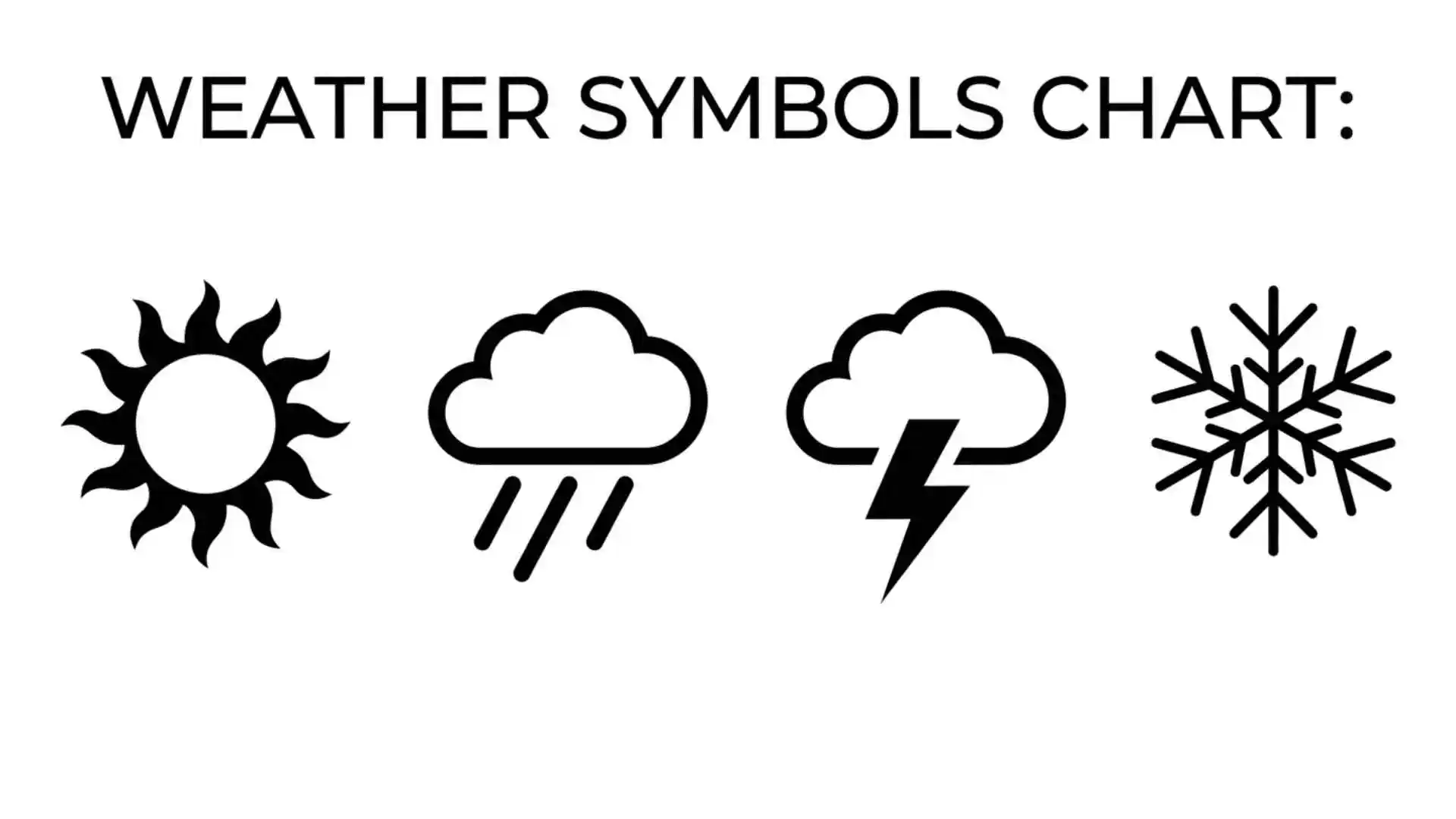
Have you ever looked at a weather app or forecast and felt confused by all the tiny icons? A cloud here, a lightning bolt there, maybe a mysterious swirl or snowflake. That’s where a weather symbols chart becomes your best friend. It turns those small graphics into meaningful stories about the sky above you.
Weather symbols are not just technical signs. They are visual expressions of nature’s mood. They help you prepare, stay safe, and even connect emotionally with the environment. Once you understand them, you will never look at a forecast the same way again.
Why Weather Symbols Matter More Than You Think
Weather symbols are like a universal language. Instead of reading long reports, you get instant information through visuals. This is especially helpful in fast-paced daily life.
Think about it. A simple sun icon tells you more than just “clear sky.” It suggests warmth, brightness, and energy. A storm cloud with lightning can instantly trigger caution, even anxiety.
Practical importance
- Helps you plan your day quickly
- Supports safety during extreme conditions
- Used globally in aviation, shipping, and agriculture
Emotional connection
Humans react emotionally to symbols. A sunny icon can lift your mood. A rainy symbol might make you feel calm or even nostalgic.
Did you know? Weather symbols were first standardized in the 19th century to help sailors and meteorologists communicate quickly across regions.
The Complete Weather Symbols Chart Explained
A weather symbols chart includes a variety of icons that represent atmospheric conditions. Let’s break down the most common ones.
☀️ Sunny / Clear Sky
Represents a bright sun with no clouds.
- Meaning: Clear weather, no precipitation
- Emotional impact: Happiness, energy, positivity
- Cultural view:
- USA and Europe associate it with productivity
- In Asia, it often symbolizes good fortune
- In Africa, it can also imply intense heat and caution
☁️ Cloudy
A simple cloud icon.
- Meaning: Overcast skies
- Emotional impact: Calmness or dullness
- Psychological note: Often linked with introspection or quiet moods
🌧️ Rain
Cloud with falling drops.
- Meaning: Precipitation expected
- Emotional impact: Relaxation, sadness, or renewal
- Cultural differences:
- In Europe, rain often symbolizes gloom
- In parts of Asia, it represents prosperity and life
⛈️ Thunderstorm
Cloud with lightning and rain.
- Meaning: Severe weather with thunder and lightning
- Emotional impact: Fear, excitement, power
- Symbolic meaning: Nature’s raw strength
❄️ Snow
Snowflake icon.
- Meaning: Snowfall or freezing conditions
- Emotional impact: Peace, beauty, isolation
- Cultural insight:
- In Western cultures, snow is magical
- In colder regions, it can mean survival challenges
🌫️ Fog / Mist
Faded cloud-like symbol.
- Meaning: Reduced visibility
- Emotional impact: Mystery, confusion
- Psychological link: Often used metaphorically for uncertainty
🌬️ Wind
Swirling lines or arrows.
- Meaning: Windy conditions
- Emotional impact: Change, restlessness
- Symbolism: Represents movement and transition
🌡️ Temperature Indicators
Thermometer symbols.
- Meaning: Hot or cold conditions
- Emotional meaning:
- Heat suggests intensity
- Cold represents stillness or isolation
The History Behind Weather Symbols
Weather symbols didn’t appear overnight. They evolved over centuries.
In early meteorology, scientists used handwritten notes. As communication expanded, especially with the invention of telegraphs, there was a need for quick visual shorthand.
By the late 1800s:
- Standardized symbols were introduced
- Used in newspapers and maps
- Became essential for global communication
Today, digital platforms use modern versions, but the core idea remains the same.
Psychological Meaning of Weather Symbols
Weather symbols are powerful because they tap into human emotions.
Why do symbols affect us?
Our brains process visuals faster than text. Symbols trigger instant emotional reactions.
Emotional associations
- Sun equals joy and energy
- Rain connects to sadness or calmness
- Storms trigger alertness and fear
These reactions are deeply rooted in human survival instincts. For example, dark clouds historically meant danger.
Weather Symbols Across Cultures
Different cultures interpret weather symbols in unique ways.
United States
- Focus on practicality
- Symbols used for planning and alerts
Asia
- Strong symbolic meaning
- Rain seen as blessing, not inconvenience
Europe
- Emotional interpretation
- Cloudy weather linked with mood changes
Africa
- Weather symbols tied to survival
- Rain represents life and agriculture
This cultural variation shows that a weather symbols chart is not just scientific. It is also deeply human.
How to Read a Weather Symbols Chart Like a Pro
Understanding a weather symbols chart becomes easy with practice.
Step-by-step approach
- Identify the main symbol
- Look for additional details like wind or temperature
- Combine symbols for full meaning
Example
A cloud + lightning + rain
= Thunderstorm with heavy rain
Pro tip
Always check the legend. Different apps may use slightly different icons.
Modern Use of Weather Symbols in Technology
Weather symbols are everywhere today.
Where you see them
- Mobile apps
- Smartwatches
- TV forecasts
- Aviation dashboards
Why they are important
- Quick understanding
- Global consistency
- Easy for all age groups
Technology has made weather symbols more interactive, with animations and real-time updates.
Common Mistakes People Make When Reading Weather Symbols
Even though they seem simple, people often misinterpret them.
Mistake 1: Ignoring combinations
A single symbol rarely tells the whole story.
Mistake 2: Assuming universal meaning
Different regions may use variations.
Mistake 3: Overlooking intensity
Light rain and heavy rain have different symbols.
Fix
Always look at the full chart, not just one icon.
Did You Know? Fun Facts About Weather Symbols
- The lightning bolt symbol has been used for centuries to represent power and danger
- Snowflake designs are based on real crystal patterns
- Some cultures historically used animal symbols to predict weather
These small details make weather symbols even more fascinating.
FAQs About Weather Symbols Chart
1. What is a weather symbols chart?
A weather symbols chart is a visual guide that explains icons used in weather forecasts to represent different conditions.
2. Why are weather symbols important?
They provide quick, easy-to-understand information about weather conditions without needing long explanations.
3. Are weather symbols the same worldwide?
Not always. While many are standardized, some regions use slightly different versions.
4. How can I learn weather symbols quickly?
Start by focusing on common icons like sun, rain, and clouds, then gradually learn combinations.
5. What does a cloud with lightning mean?
It represents a thunderstorm, often with rain and strong winds.
6. Do weather symbols have emotional meaning?
Yes, people often associate them with feelings like happiness, calmness, or fear.
7. Where are weather symbols used?
They are used in apps, TV forecasts, newspapers, and professional meteorology systems.
Conclusion
A weather symbols chart is more than just a collection of icons. It is a powerful language that connects science, emotion, and culture. Once you understand these symbols, you gain a deeper awareness of the world around you. You start to notice patterns, prepare better, and even feel more connected to nature.
From the warmth of the sun to the intensity of storms, each symbol tells a story. Learning them is not just practical. It is a small step toward understanding the rhythm of life itself.

Amelia Scott is a passionate writer and symbolism researcher who explores the hidden meanings behind ancient signs, spiritual icons and cultural symbols. She enjoys uncovering the stories and mysteries connected to symbols from around the world.
She is the author of “Mystic Marks And Secret Meanings” and “Echoes Of Forgotten Symbols”. Her work combines history, spirituality and mythology to help readers better understand the deeper meaning of symbols in everyday life.
Through her writing, Amelia aims to make the world of symbols fascinating, meaningful and easy to explore.