
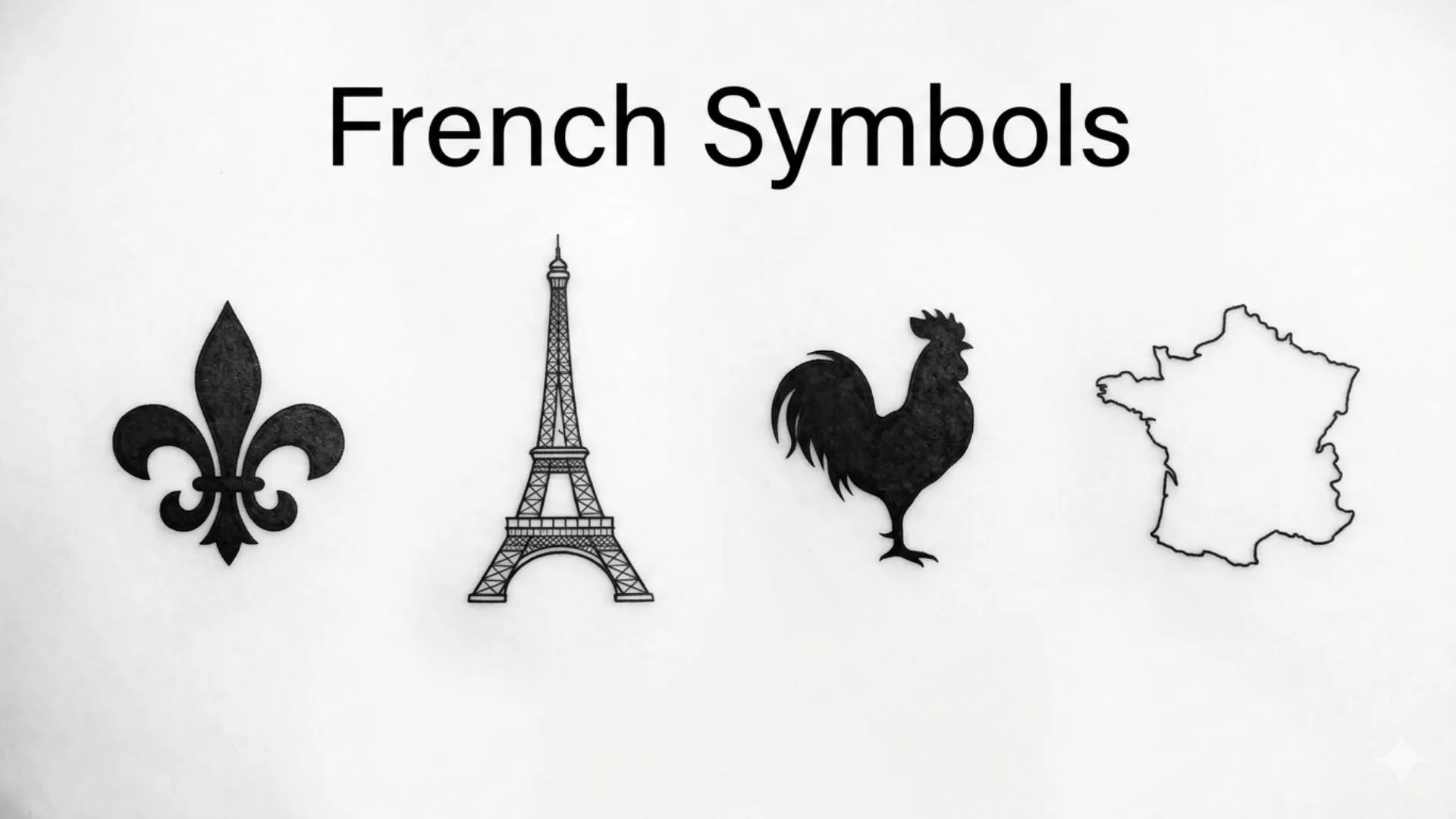
French symbols are more than just images, flags, or decorative designs. They are emotional storytellers that reflect identity, history, pride, and culture. When you explore French symbols, you are actually stepping into centuries of revolution, royalty, art, and national spirit.
From the elegant Eiffel Tower to the mysterious Fleur-de-Lis, every symbol carries deep meaning that connects people across generations. These symbols are not only important for France but also admired worldwide for their beauty and emotional power.
If you have ever wondered what represents France, or why certain icons appear in French culture again and again, this guide will help you understand everything in a simple and engaging way.
Top French Symbols and Meanings
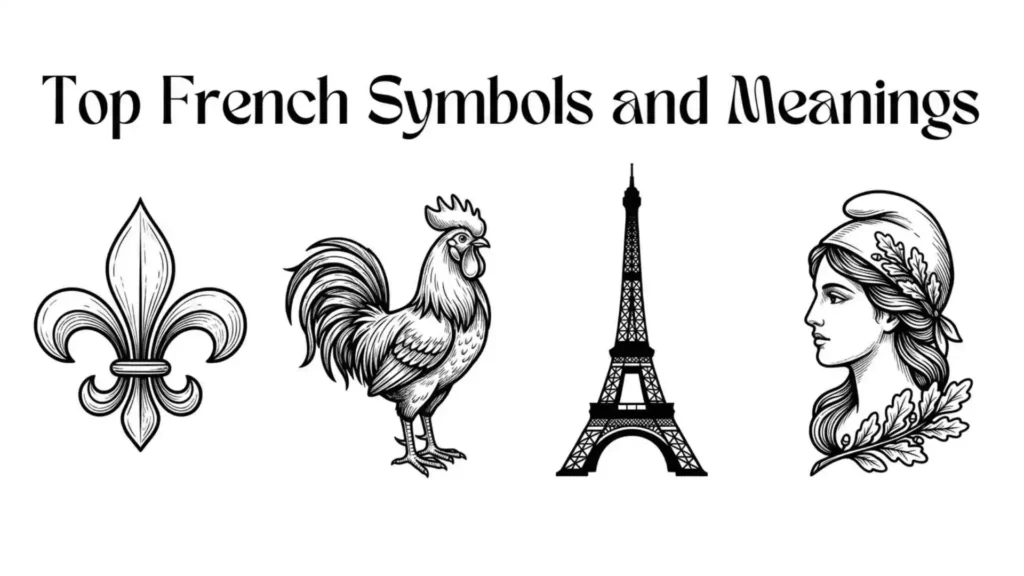
France is known for its rich history, culture, and national pride. Over the centuries, several symbols have come to represent the French nation and its values. These symbols reflect ideas such as liberty, equality, unity, and heritage.
Some of the most famous French symbols include the Eiffel Tower, the Gallic Rooster, Marianne, the Fleur-de-Lis, and the French Tricolor Flag. Each symbol has a unique story and continues to play an important role in French culture and identity.
Top French Symbols and Their Meanings
French symbols represent the history and spirit of France. The French Tricolor Flag symbolizes liberty, equality, and fraternity. Marianne represents the French Republic and democratic values. The Gallic Rooster stands for courage and national pride.
Other important symbols include the Fleur-de-Lis, which has strong connections to French royalty, and the Eiffel Tower, a global symbol of France. Together, these symbols help define the nation’s heritage and traditions.
French Symbols and Meanings
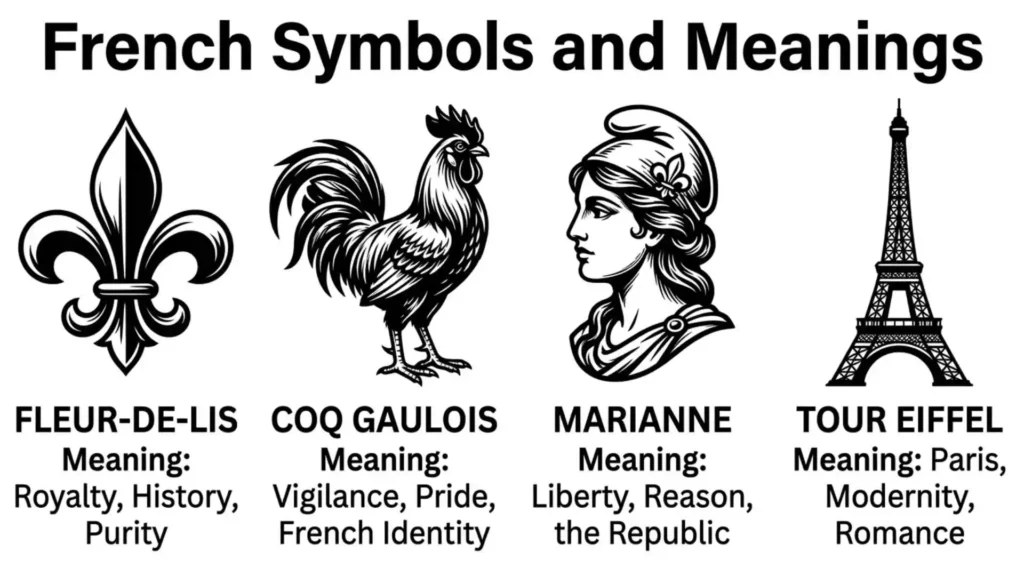
French symbols can be found in art, government buildings, historical monuments, and national celebrations. They remind people of France’s achievements, culture, and values.
The Fleur-de-Lis symbolizes nobility and the French monarchy. Marianne represents freedom and citizenship. The French flag reflects the principles of the French Republic. These symbols continue to inspire patriotism and national unity throughout the country.
5 Symbols of France
France has many national symbols, but five stand out as the most recognized:
- The Eiffel Tower – A symbol of French culture and innovation.
- The French Tricolor Flag – Represents liberty, equality, and fraternity.
- Marianne – The national personification of the French Republic.
- The Gallic Rooster – A symbol of courage and national pride.
- The Fleur-de-Lis – A historic emblem associated with French royalty.
These symbols are recognized both within France and around the world.
National Symbols of France in French
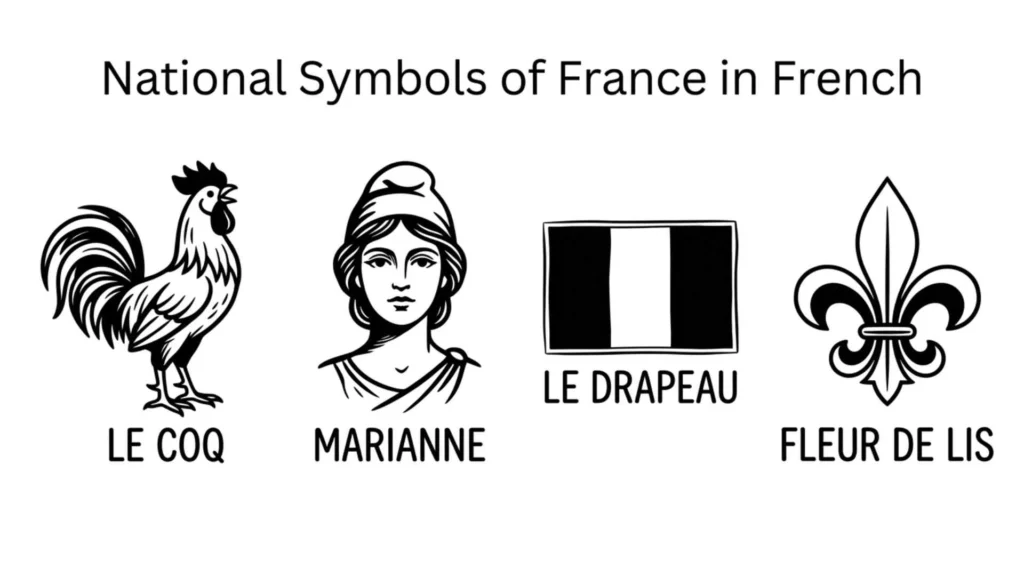
Many French national symbols are known by their French names:
- Le Drapeau Tricolore – The French Tricolor Flag
- Marianne – Symbol of the Republic
- Le Coq Gaulois – The Gallic Rooster
- La Tour Eiffel – The Eiffel Tower
- La Fleur-de-Lis – The Fleur-de-Lis
- La Marseillaise – The national anthem of France
These symbols play an important role in French history, education, and public life.
French National Symbols
French national symbols represent the country’s identity and values. They are often displayed during national holidays, official ceremonies, and cultural events.
The national motto of France, “Liberté, Égalité, Fraternité” (Liberty, Equality, Fraternity), is one of the country’s most important symbols. Along with the flag, anthem, and Marianne, it reflects the principles upon which modern France was built.
Ancient French Symbols
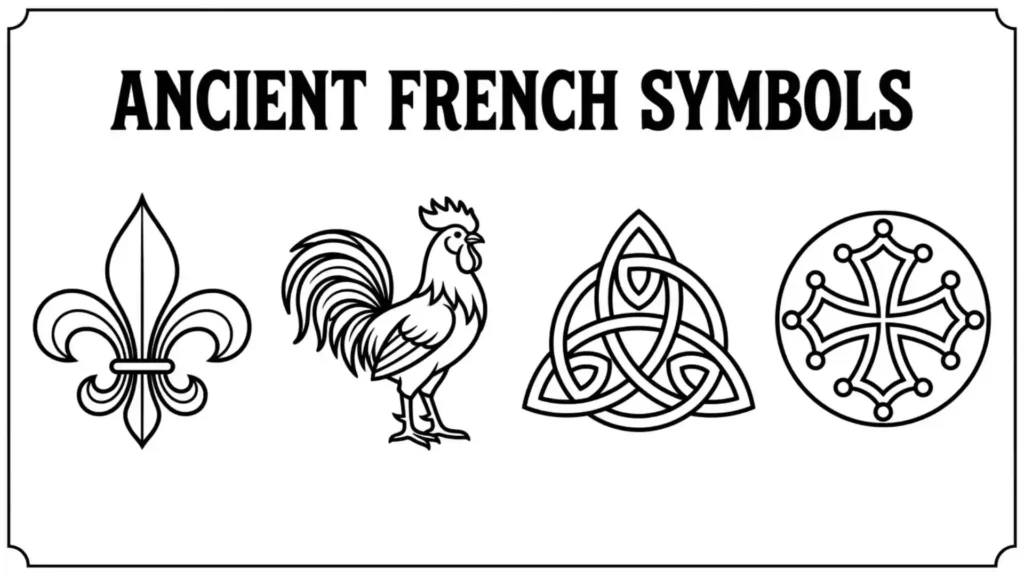
Ancient French symbols date back to the early kingdoms and medieval period. One of the oldest symbols is the Fleur-de-Lis, which became associated with French kings and royal authority.
Other historical symbols include medieval coats of arms, royal crowns, and heraldic emblems used by noble families. These ancient symbols provide insight into France’s royal past and cultural evolution.
France Symbols
France symbols are recognized worldwide and represent the country’s history, culture, and achievements. From the iconic Eiffel Tower to the proud Gallic Rooster, these symbols help tell the story of France.
Whether used in education, tourism, government, or cultural events, French symbols continue to showcase the nation’s values of freedom, unity, and national pride. They remain powerful reminders of France’s influence on art, politics, history, and global culture.
What Are French Symbols and Why Do They Matter?
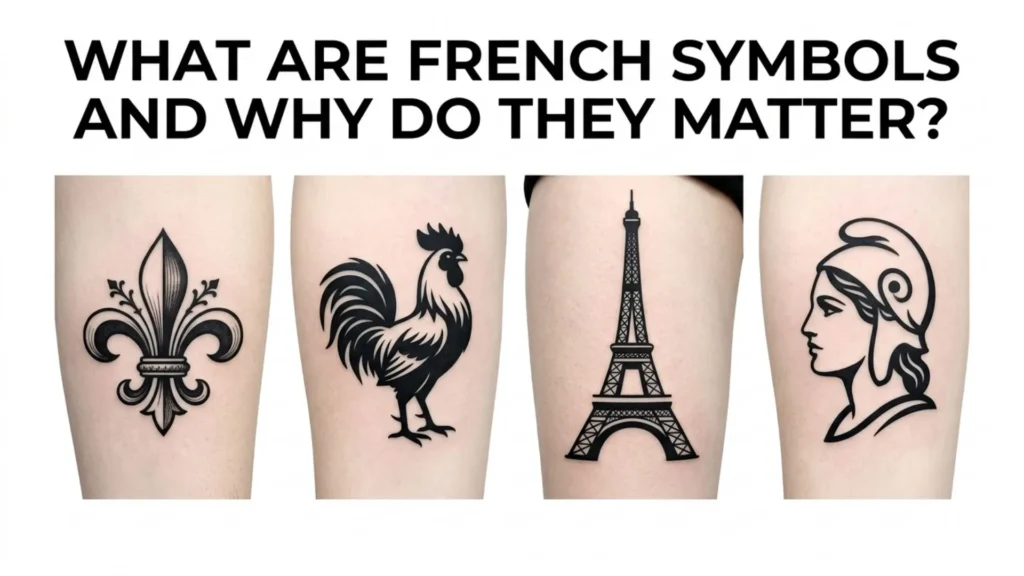
French symbols are visual or cultural representations that express the identity, values, and heritage of France. These include national emblems, historical icons, religious imagery, and modern cultural signs.
The meaning of French symbols goes beyond decoration. They represent liberty, unity, elegance, revolution, and artistic excellence. For example, the French flag symbolizes freedom and equality, while the Marianne figure represents the spirit of the French Republic.
In emotional terms, these symbols create a sense of belonging. For French people, they are reminders of struggle, pride, and cultural strength. For the world, they represent romance, fashion, art, and sophistication.
Why people search for French symbols meaning
Many people look for:
French symbols meaning
cultural symbols of France
what represents France
French iconography
national emblem of France
These keywords show curiosity about France’s identity and cultural depth.
The Historical Evolution of French Symbols
The history of French symbols is deeply connected to monarchy, revolution, and national transformation. Each period in French history added new meaning to these symbols.
During the monarchy, symbols like the Fleur-de-Lis represented divine right and royal authority. Later, during the French Revolution, symbols shifted toward liberty and equality, introducing Marianne and the tricolor flag.
Over time, France moved from royal imagery to republican ideals. This evolution shows how symbols change with society’s emotions and political changes.
Did you know?
The French Revolution in 1789 completely transformed national symbolism. Many royal symbols were replaced to reflect freedom and citizen power.
French symbols are therefore not static. They are living expressions of history.
French National Symbols and Their Deep Meaning
France has several powerful national symbols that represent its identity across the world.
The French Flag
The French flag, known as the Tricolore, has three colors: blue, white, and red.
Blue represents liberty and Paris
White represents purity and monarchy history
Red represents courage and revolution
Together, they reflect unity between the people and the nation.
Marianne, the Face of the Republic
Marianne is one of the most important French symbols. She represents liberty, reason, and the spirit of the French Republic. You often see her in statues, stamps, and government buildings.
Emotionally, Marianne represents strength, feminine power, and justice.
The Gallic Rooster
The Gallic rooster is a traditional symbol of France. It represents courage, confidence, and vigilance.
Historically, Romans associated Gaul with roosters due to wordplay in Latin. Over time, the rooster became a national emblem of pride.
In modern times, it appears in sports and official French branding.
Cultural meaning across regions
USA: Seen as branding and national pride
Europe: Symbol of shared history and revolution
Asia: Represents elegance and tradition
Africa: Often associated with French colonial history and cultural influence
The Fleur-de-Lis Symbol Meaning and Royal Legacy
The Fleur-de-Lis is one of the oldest and most elegant French symbols. It is shaped like a stylized lily flower and has been associated with French royalty for centuries.
Origin and royal connection
The Fleur-de-Lis was used by French kings as a symbol of divine authority. It represented purity, light, and connection to God.
It was often displayed on royal coats of arms, armor, and flags.
Emotional and psychological meaning
Emotionally, the Fleur-de-Lis represents:
Purity
Leadership
Honor
Spiritual growth
People often see it as a symbol of refinement and sophistication.
Modern usage
Today, it is used in fashion, architecture, sports logos, and cultural art.
Did you know?
The Fleur-de-Lis is also used in scouting organizations worldwide, symbolizing guidance and moral values.
Eiffel Tower as a Modern Symbol of France
The Eiffel Tower is one of the most recognized French symbols in the world. Built in 1889 for the World’s Fair, it was originally criticized but later became a global icon.
Meaning of the Eiffel Tower symbol
The Eiffel Tower represents:
Innovation
Romance
Engineering excellence
French identity
It is not just a structure. It is a cultural emotion.
Psychological impact
People associate the Eiffel Tower with love, dreams, and beauty. That is why Paris is called the “City of Love.”
Cultural interpretation worldwide
USA: Romantic destination
Asia: Luxury travel symbol
Europe: Artistic heritage
Africa: Educational and historical landmark
Everyday symbolism
You will find the Eiffel Tower in perfumes, fashion brands, souvenirs, and digital emojis representing France.
Religious and Traditional Symbols in French Culture
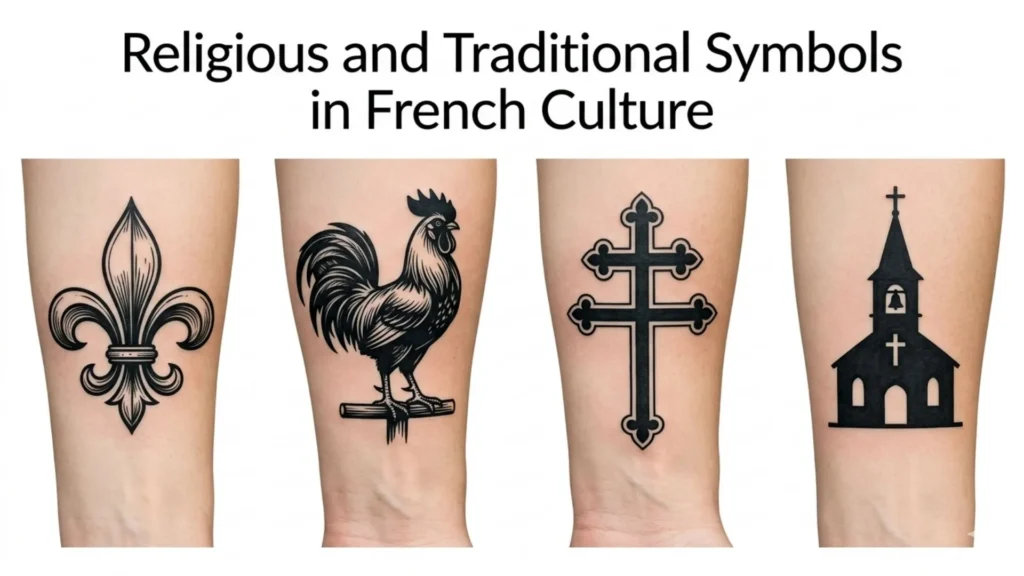
Christianity has deeply influenced French architecture and art. Churches, cathedrals, and crosses represent spiritual strength and history.
Joan of Arc as a symbol of courage
Joan of Arc is a historical figure who symbolizes bravery, faith, and resistance. She is a national heroine of France.
Her image represents sacrifice and determination.
Traditional rural symbols
In rural France, symbols like wheat, vineyards, and lavender fields represent agriculture, peace, and natural beauty.
Emotional meaning
These symbols often connect people to simplicity, tradition, and harmony with nature.
French Symbols in Language, Emojis, and Modern Communication
Modern French symbols are not only physical objects. They are also present in language, emojis, and digital culture.
French emojis and digital symbols
People use emojis like 🇫🇷 to represent France online. The Eiffel Tower emoji and heart symbols are also commonly used to express French identity.
Symbolism in French language
French language itself is considered a symbol of elegance and culture. Words like “liberté,” “égalité,” and “fraternité” are powerful symbolic expressions.
Fashion and branding symbols
French luxury brands use symbols like crowns, fleur patterns, and minimalist designs to represent elegance.
Brands like Chanel and Louis Vuitton have made French symbols global in fashion culture.
LSI keywords naturally included
French cultural symbols
French iconography meaning
symbols of French identity
modern French symbols
French aesthetic symbols
Psychological Meaning of French Symbols in Human Emotion
French symbols are not only cultural. They also affect human emotions deeply.
Symbol of love and romance
France, especially Paris, is globally associated with love. Symbols like the Eiffel Tower reinforce emotional connection and romantic imagination.
Symbol of freedom and revolution
The French flag and Marianne represent freedom. They remind people of struggle against oppression.
Symbol of elegance and beauty
Fleur-de-Lis and French fashion represent refinement and luxury.
Symbol of identity and pride
For French citizens, these symbols create emotional grounding and national pride.
Cross cultural psychology
In Western countries, French symbols represent romance and art.
In Eastern cultures, they often represent luxury and aspiration.
In African regions, they may carry historical and educational meaning.
Global Influence of French Symbols
French symbols have influenced global culture in fashion, architecture, art, and media.
Fashion industry
French symbols dominate luxury branding and haute couture designs.
Tourism and media
Films, advertisements, and travel campaigns often use Eiffel Tower imagery and French flags.
Art and design
Artists around the world incorporate French symbols for elegance and historical depth.
Cultural globalization
French symbols have become universal signs of beauty, romance, and sophistication.
FAQs About French Symbols
1. What are the main French symbols?
The main French symbols include the French flag, Marianne, the Gallic rooster, Fleur-de-Lis, and the Eiffel Tower.
2. What does the Fleur-de-Lis represent?
It represents purity, royalty, and spiritual connection, historically linked to French kings.
3. Why is the Eiffel Tower a symbol of France?
It represents innovation, romance, and French cultural identity.
4. What does Marianne symbolize?
Marianne symbolizes liberty, reason, and the French Republic.
5. What is the meaning of the French flag colors?
Blue means liberty, white means purity, and red means courage and revolution.
6. Why is the rooster a French symbol?
It symbolizes courage and vigilance, historically linked to ancient Gaul.
7. Are French symbols still relevant today?
Yes, they are widely used in culture, fashion, politics, and global branding.
Conclusion
French symbols are powerful expressions of history, culture, and identity. From royal emblems like the Fleur-de-Lis to modern icons like the Eiffel Tower, each symbol carries emotional and historical depth. They reflect France’s journey from monarchy to modern republic, blending tradition with innovation.
Understanding French symbols helps us see how a nation communicates its soul through imagery. These symbols are not just French heritage, they are global cultural treasures that continue to inspire art, fashion, and human emotion.

Amelia Scott is a passionate writer and symbolism researcher who explores the hidden meanings behind ancient signs, spiritual icons and cultural symbols. She enjoys uncovering the stories and mysteries connected to symbols from around the world.
She is the author of “Mystic Marks And Secret Meanings” and “Echoes Of Forgotten Symbols”. Her work combines history, spirituality and mythology to help readers better understand the deeper meaning of symbols in everyday life.
Through her writing, Amelia aims to make the world of symbols fascinating, meaningful and easy to explore.