
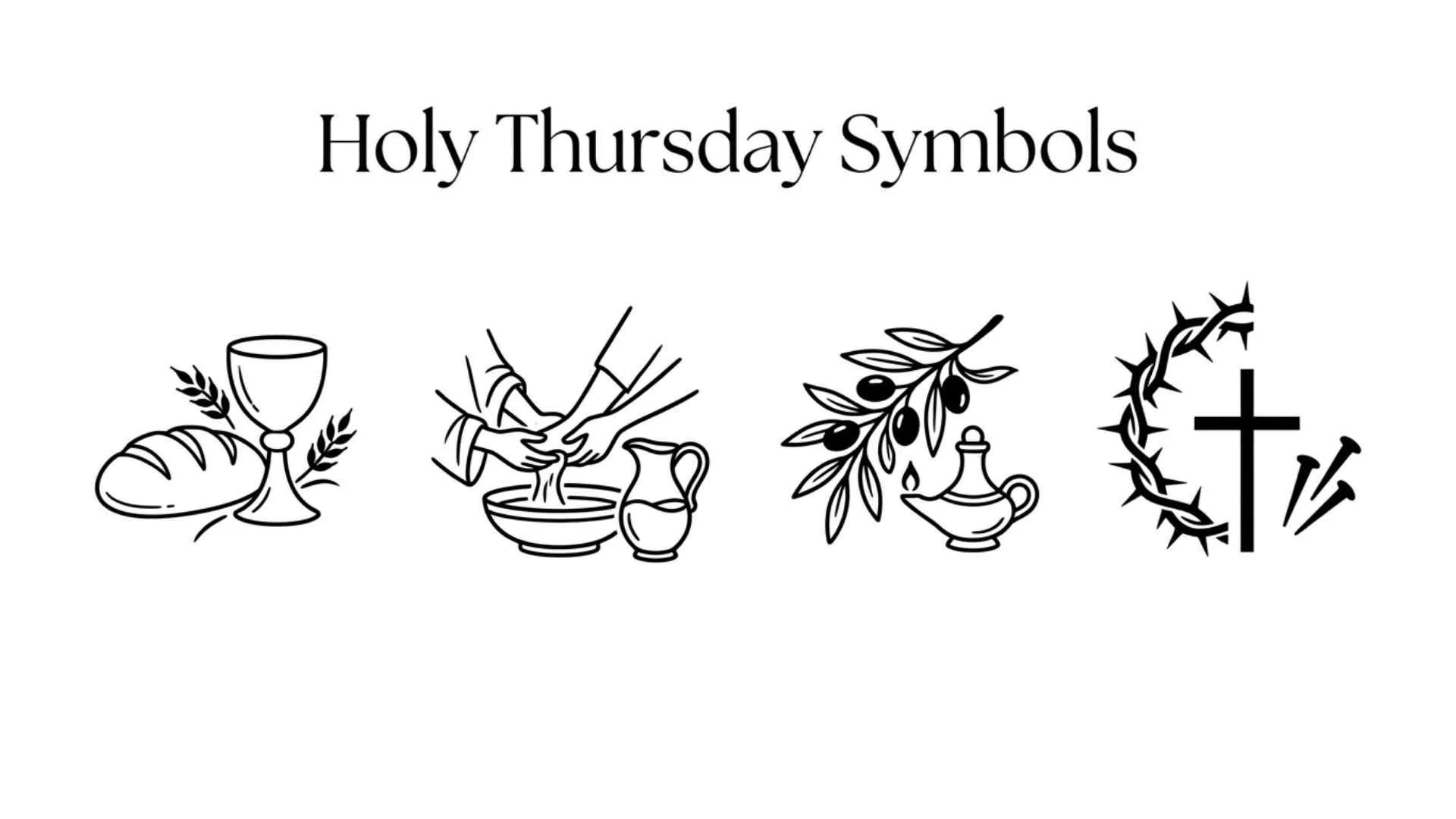
Holy Thursday symbols hold a deep spiritual and emotional meaning for Christians around the world. They are not just religious visuals or traditions, but powerful reminders of love, sacrifice, humility, and renewal. If you have ever wondered why certain rituals and signs appear during Holy Week, especially on Holy Thursday, you are about to uncover a rich layer of history and symbolism that still shapes faith today.
From the breaking of bread to the washing of feet, every symbol carries a message that speaks to the heart. These symbols are used across churches in the USA, Europe, Asia, and Africa, each adding cultural depth while keeping the core meaning intact. Understanding Holy Thursday symbols helps you see Holy Week not just as tradition, but as a deeply emotional journey.
Holy Thursday Images
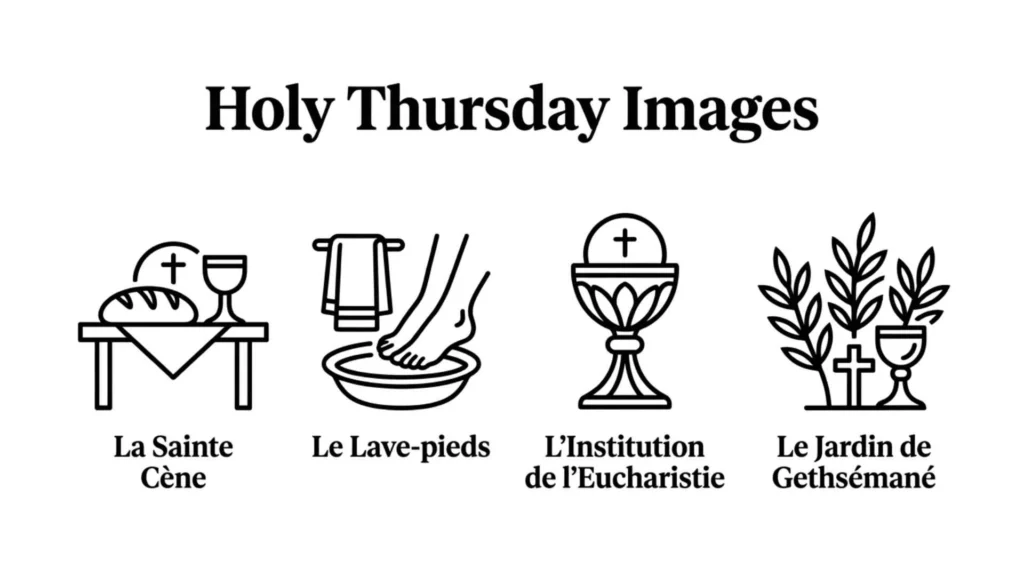
Holy Thursday images are widely used during Holy Week to reflect on the Last Supper of Jesus Christ and His final meal with the apostles. These images often feature the Eucharist, bread and wine, Jesus washing the disciples’ feet, and scenes from the Upper Room.
Churches, schools, and Christian communities use Holy Thursday images for worship materials, presentations, social media posts, and religious education. They help believers remember the importance of humility, service, and the institution of Holy Communion.
Holy Thursday Symbols Catholic
In the Catholic Church, Holy Thursday is rich with symbolism that commemorates the Last Supper and the beginning of the Eucharist.
Common Catholic Holy Thursday symbols include:
- Bread and Wine – The Body and Blood of Christ
- Chalice – The Eucharist and Holy Communion
- Basin and Towel – Jesus washing the disciples’ feet
- Altar – The celebration of the Mass
- Cross – Christ’s sacrifice
These symbols remind Catholics of Jesus’ love, service, and sacrifice.
Holy Thursday Symbols and Meanings
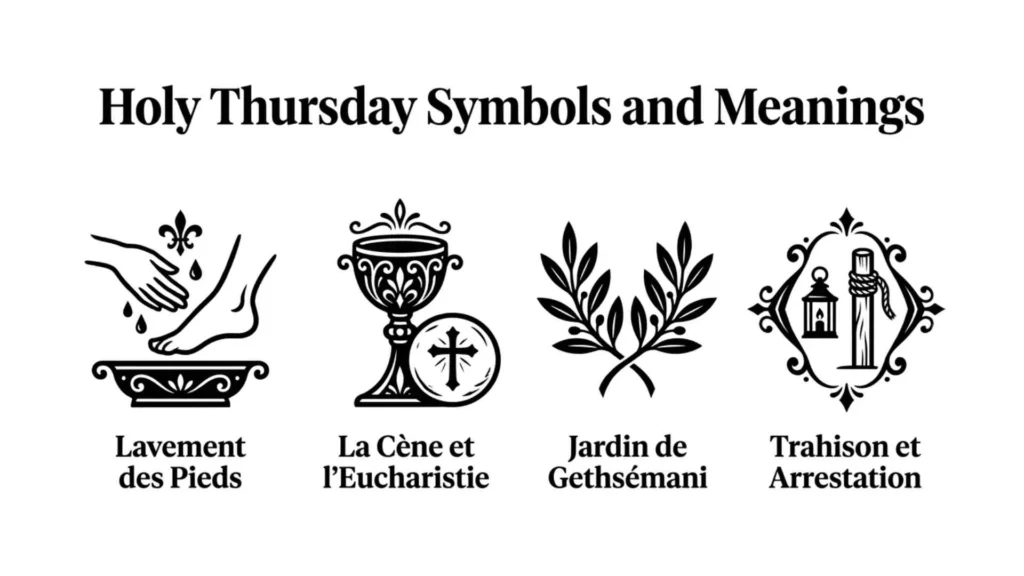
Holy Thursday symbols help Christians understand the events that took place before the crucifixion of Jesus.
Important symbols and meanings include:
| Symbol | Meaning |
|---|---|
| Bread | Christ’s Body |
| Wine | Christ’s Blood |
| Chalice | Holy Communion |
| Basin and Towel | Humility and Service |
| Table | The Last Supper |
| Candle | Christ as the Light of the World |
These symbols play a central role in Holy Thursday worship and reflection.
Holy Thursday Images Free Download
Many churches, educators, and Christian organizations look for Holy Thursday images for free download to use in newsletters, worship slides, educational resources, and social media content.
Popular image themes include:
- The Last Supper
- Bread and Wine
- Foot Washing Ceremony
- Church Altars
- Holy Communion
- Prayer and Worship Scenes
These images help communicate the spiritual meaning of Holy Thursday during Holy Week observances.
Holy Week Symbols and Meanings
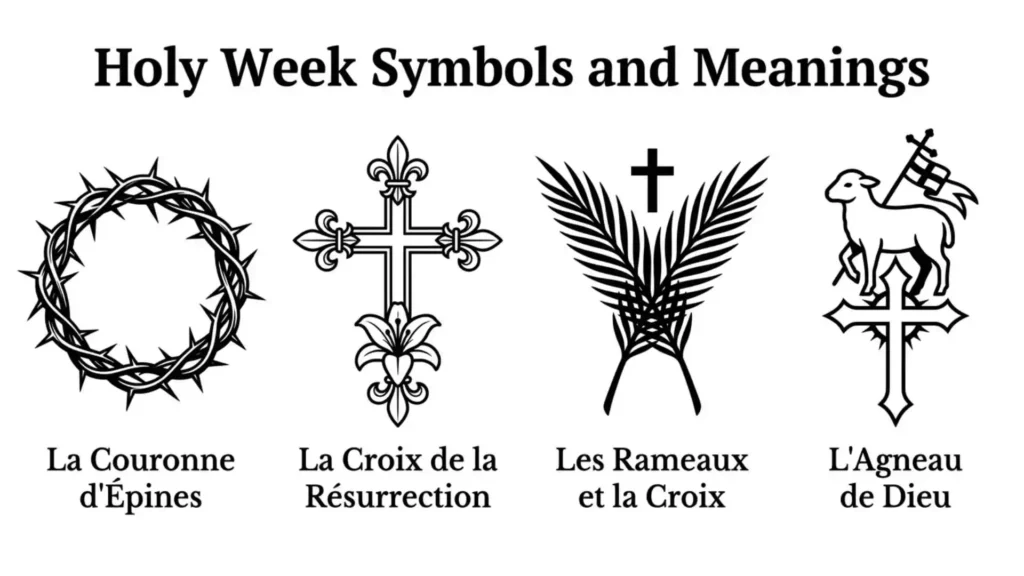
Holy Week contains several important Christian symbols that represent the final days of Jesus’ earthly ministry.
Common Holy Week symbols include:
- Palm Branches – Jesus’ triumphal entry into Jerusalem
- Bread and Wine – The Last Supper
- Cross – Crucifixion and sacrifice
- Crown of Thorns – Christ’s suffering
- Nails – The crucifixion
- Empty Tomb – Resurrection and victory over death
These symbols help believers reflect on faith, redemption, and salvation.
Holy Thursday Background
A Holy Thursday background is often used in church presentations, worship programs, websites, and religious graphics. Common design elements include chalices, crosses, candles, bread, wine, and scenes from the Last Supper.
Colors frequently associated with Holy Thursday include white and gold, symbolizing purity, holiness, and the institution of the Eucharist. These backgrounds create a meaningful setting for worship and reflection during Holy Week.
Holy Thursday Pictures and Quotes
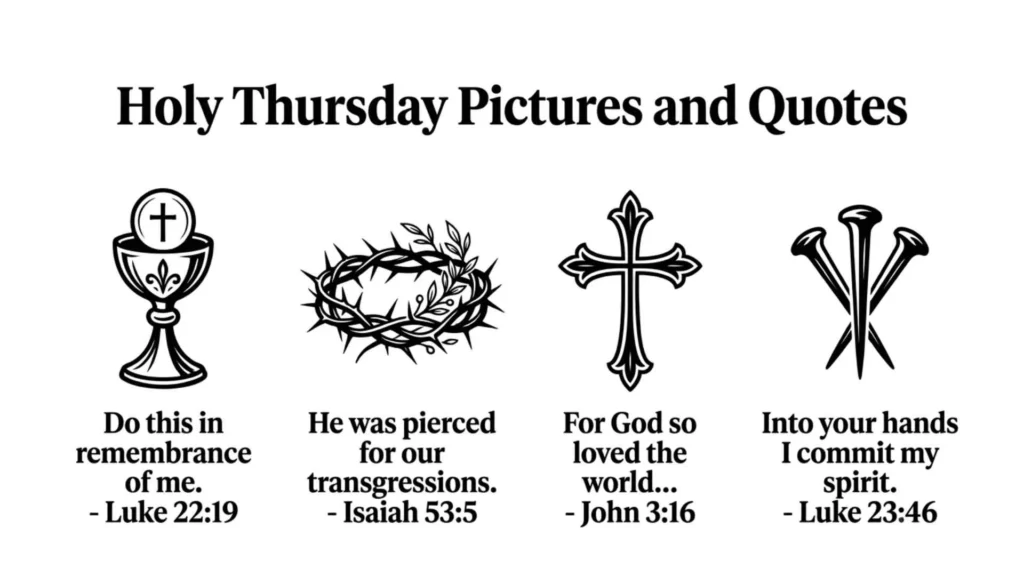
Holy Thursday pictures and quotes are commonly shared to inspire faith and remembrance during Holy Week.
Popular themes include:
- Jesus serving others through foot washing
- The institution of Holy Communion
- Love, sacrifice, and humility
- The Last Supper
Example quote:
“Do this in remembrance of me.”
Another popular reflection:
“True greatness is found in serving others.”
These pictures and quotes encourage believers to reflect on Christ’s example of love and service.
Holy Saturday Symbols
Holy Saturday marks the day between the crucifixion and the resurrection of Jesus Christ. It is a day of waiting, prayer, and hope.
Important Holy Saturday symbols include:
- Empty Tomb – Anticipation of the Resurrection
- Paschal Candle – Christ’s light overcoming darkness
- Fire – New life and renewal
- White Garments – Purity and resurrection hope
- Water – Baptism and spiritual renewal
These symbols prepare Christians for the celebration of Easter Sunday and the resurrection of Jesus.
What Are Holy Thursday Symbols and Why Do They Matter?
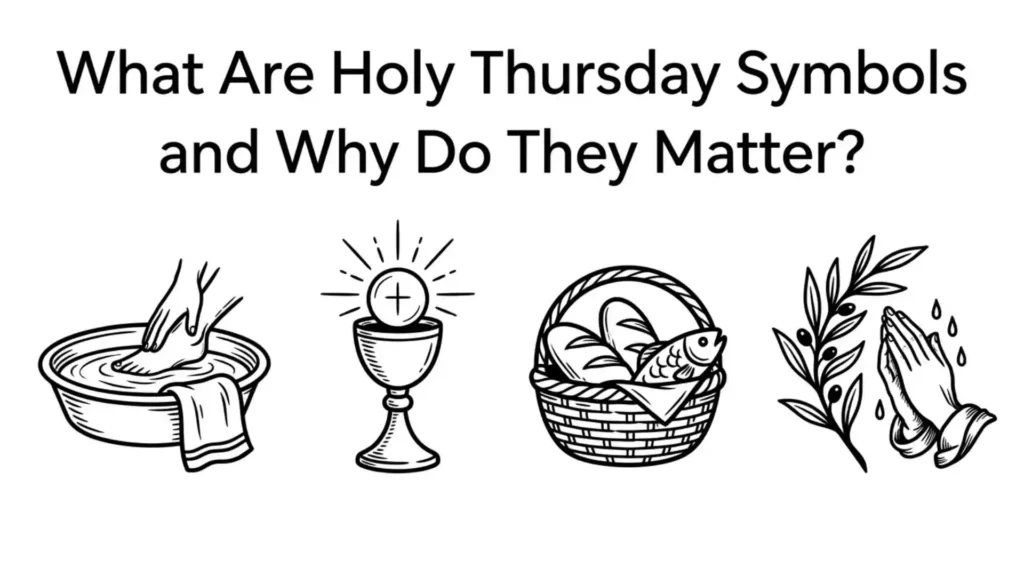
Holy Thursday symbols are visual and ritual elements used during Maundy Thursday, the day Christians remember the Last Supper of Jesus Christ with his disciples. This day marks the beginning of the Passion of Christ and leads into Good Friday and Easter.
These symbols matter because they represent core Christian values such as:
- Sacrifice and love
- Humility and service
- Unity and forgiveness
- Spiritual renewal
In simple terms, Holy Thursday symbols act like a language of faith. They communicate messages that words alone cannot fully express.
Across different cultures, the interpretation may vary slightly, but the emotional foundation remains the same. Whether in a cathedral in Europe or a small church in Africa, the symbols connect believers to the same sacred story.
The Last Supper: Bread and Wine as Powerful Holy Thursday Symbols
One of the most important Holy Thursday symbols is the bread and wine shared during the Last Supper. This moment is the foundation of the Christian ritual known as Holy Communion or Eucharist.
Meaning of Bread
The bread represents the body of Christ. It symbolizes:
- Sacrifice for humanity
- Spiritual nourishment
- Unity among believers
Meaning of Wine
The wine represents the blood of Christ. It symbolizes:
- Forgiveness of sins
- Covenant between God and humanity
- Eternal life
Psychologically, this symbol creates a deep sense of belonging. It reminds believers that they are part of something greater than themselves.
In Western churches, communion is often formal and structured. In some Asian and African communities, it is more communal and expressive, but the meaning remains identical.
The bread and wine together form one of the strongest Holy Week symbols, reinforcing love and sacrifice.
Washing of the Feet: The Ultimate Symbol of Humility and Service
Another deeply moving Holy Thursday symbol is the washing of feet. This ritual comes directly from the Gospel story where Jesus washed the feet of his disciples.
Spiritual Meaning
This act represents:
- Humility over pride
- Leadership through service
- Love expressed through action
Emotional Impact
The washing of feet creates a powerful emotional response. It breaks social hierarchy and shows that true greatness lies in serving others.
In many churches in Europe and the Americas, clergy wash the feet of members during Maundy Thursday services. In African and Asian traditions, this symbol is sometimes adapted into community service acts like helping the poverty or elderly.
This symbol reminds people that faith is not only about belief, but also about action.
The Cross and Passion Symbols: Anticipation of Sacrifice
Although the cross is most associated with Good Friday, it is also strongly connected to Holy Thursday symbols because it marks the beginning of Christ’s suffering.
Meaning of the Cross on Holy Thursday
- Foreshadowing sacrifice
- Acceptance of destiny
- Love through suffering
On Holy Thursday, churches often begin to introduce more solemn decorations that point toward the coming crucifixion.
Psychological Meaning
The cross symbolizes emotional resilience. It teaches believers that pain can have purpose and suffering can lead to transformation.
Across cultures, the cross is recognized globally, but its emotional interpretation may differ. In Western Christianity, it is often linked with redemption. In African traditions, it can also symbolize endurance and hope. In Asian Christian communities, it is sometimes viewed through a lens of balance between suffering and peace.
Olive Branch and Peace Symbols: Unity in Holy Thursday Traditions
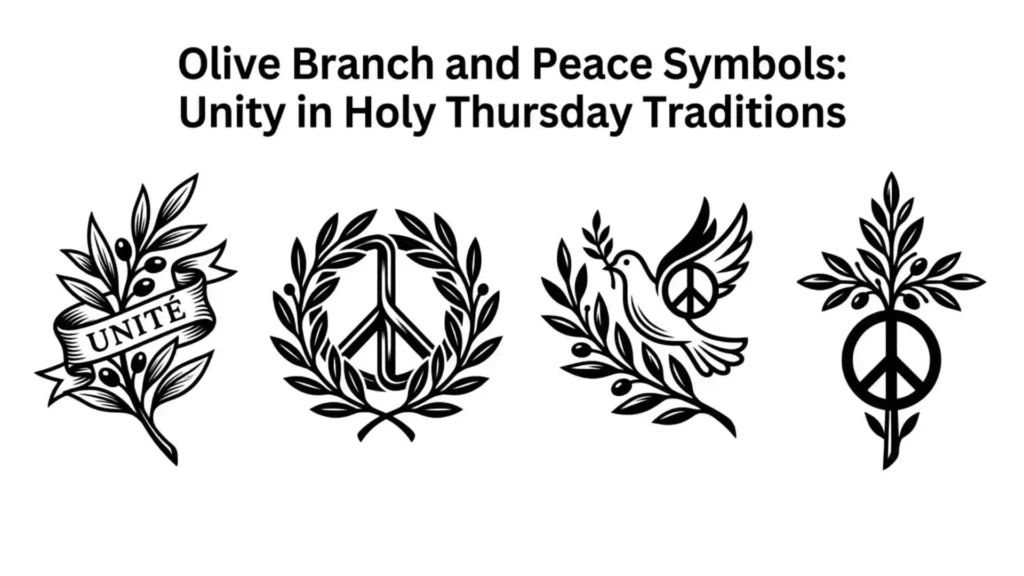
While not present in every church, the olive branch is sometimes used as a symbolic reminder during Holy Week, including Holy Thursday.
Meaning of Olive Branch
- Peace and reconciliation
- Ending of conflict
- Divine blessing
The olive branch connects deeply to biblical history, especially stories of peace after struggle.
Cultural Interpretations
- In Europe, it often represents reconciliation between individuals or nations
- In Middle Eastern Christian traditions, it is closely tied to biblical landscapes
- In African churches, it can symbolize community unity and harmony
- In American churches, it is often used in youth services to promote peace messages
This symbol adds emotional balance to Holy Thursday, reminding believers that peace is the result of sacrifice and understanding.
Stripping of the Altar: A Symbol of Loss and Silence
One of the most visually striking Holy Thursday symbols is the stripping of the altar at the end of the service.
What Happens During This Ritual?
- Candles are removed
- Cloths are taken away
- Decorations are stripped from the altar
Meaning Behind It
This symbolizes:
- Abandonment of Christ
- Emotional emptiness
- Transition into sorrow and reflection
It represents the moment when joy fades into mourning as Holy Week moves toward Good Friday.
Emotional Psychology
This ritual creates a strong emotional silence. It helps believers reflect on loss, emptiness, and spiritual vulnerability.
Across different cultures, this symbol is universally powerful. Whether in a large European cathedral or a small village church in Asia, the feeling of emptiness is deeply shared.
Liturgical Colors: Purple, White, and the Language of Worship
Colors are also important Holy Thursday symbols. They communicate meaning without words.
Purple
- Represents penance
- Symbol of preparation and sacrifice
- Used throughout Lent and Holy Week
White
- Represents purity and divinity
- Often used during the Eucharist
- Symbol of hope and resurrection
Emotional Meaning
Colors influence mood. Purple creates reflection and seriousness, while white brings peace and spiritual clarity.
In Western churches, color usage is highly structured. In African and Asian churches, colors may be more vibrant but still carry the same symbolic meaning.
Light and Darkness: Candles and the Beginning of Tenebrae Feelings
Another subtle but powerful Holy Thursday symbol is the use of candles and the gradual transition into darkness.
Candle Symbolism
- Light represents Christ
- Darkness represents suffering and uncertainty
What It Represents on Holy Thursday
As the service progresses, lights may be dimmed or candles extinguished. This reflects:
- The coming betrayal
- Spiritual darkness before the resurrection
- Human weakness and doubt
Did You Know?
In some traditions, Holy Thursday leads into Tenebrae services, where candles are slowly extinguished one by one to symbolize the growing darkness of Christ’s passion.
This visual transformation deeply affects emotions and encourages reflection.
Foot Washing and Eucharist Across Cultures: A Global Perspective
Holy Thursday symbols are not interpreted in just one way. They are shared globally but expressed differently.
United States and Europe
- Formal liturgical ceremonies
- Focus on structured communion
- Emphasis on tradition and theology
Africa
- Strong community participation
- Music and expressive worship
- Symbols tied to unity and resilience
Asia
- Quiet reflection in many regions
- Blending of cultural humility and spiritual discipline
- Emphasis on inner transformation
Global Common Ground
Despite differences, the meaning of Holy Thursday symbols remains consistent:
- Love
- Sacrifice
- Humility
- Renewal
This global unity makes Holy Thursday one of the most emotionally powerful moments in Christianity.
Psychological Meaning of Holy Thursday Symbols
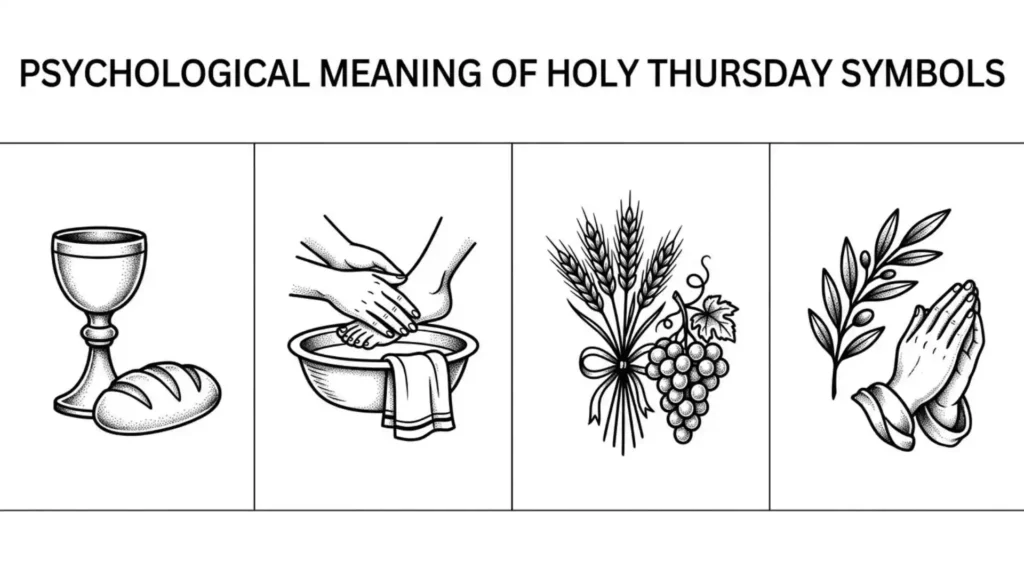
Beyond religion, Holy Thursday symbols have deep psychological impact.
They help people:
- Process grief and loss
- Understand sacrifice and forgiveness
- Feel emotional connection to a larger story
- Reflect on personal behavior and values
Symbols like bread, wine, water, and darkness work on the subconscious mind. They create emotional memory, which is why Holy Thursday remains unforgettable for many believers.
FAQs About Holy Thursday Symbols
1. What are the main Holy Thursday symbols?
The main symbols include bread and wine, washing of feet, altar stripping, candles, and liturgical colors like purple and white.
2. Why is bread and wine important on Holy Thursday?
They represent the body and blood of Christ, symbolizing sacrifice, forgiveness, and unity among believers.
3. What does the washing of feet symbolize?
It symbolizes humility, service, and love, showing that true leadership is about serving others.
4. Why is the altar stripped on Holy Thursday?
It represents abandonment, sorrow, and the emotional transition into Good Friday.
5. What colors are used on Holy Thursday?
Purple is used for repentance, while white represents purity and divine presence.
6. Are Holy Thursday symbols the same in all countries?
Yes, the core meaning is the same, but cultural expressions vary across continents.
7. What is the emotional meaning of Holy Thursday symbols?
They represent sacrifice, love, humility, and spiritual reflection, helping believers connect deeply with faith.
Conclusion
Holy Thursday symbols are more than religious traditions. They are emotional, spiritual, and psychological messages that connect people across the world. From bread and wine to the washing of feet, each symbol carries a story of love, sacrifice, and humility. These symbols help believers reflect on life, faith, and human connection in a deeply meaningful way. Understanding them allows you to experience Holy Week not just as a ritual, but as a powerful journey of the heart.

Nicholas Allen is a passionate writer and symbolism researcher who explores the hidden meanings behind ancient signs, spiritual icons and cultural symbols from around the world. His work focuses on making complex symbolism easy to understand for modern readers.
He is the author of “Mystic Signs and Their Hidden Meanings”. Through his writing, Nicholas helps readers discover the stories, beliefs and mysteries connected to symbols across history and different cultures.