
Filipino symbols are more than just images or designs, they are powerful reflections of identity, history, and emotion. From ancient tribal markings to modern national icons, Filipino symbols carry stories of struggle, unity, faith, and pride.
When we explore Filipino symbols, we are not just looking at art, we are stepping into the soul of a nation shaped by thousands of islands and centuries of culture.
These symbols connect people emotionally to their roots, even if they live far away from the Philippines.
They also reveal how Filipinos see life, family, nature, and spirituality in a deeply meaningful way.
Understanding Filipino symbols helps us understand the heart of Filipino identity and what truly makes the culture unique in the world.
The Historical Origins of Filipino Symbols and Cultural Identity
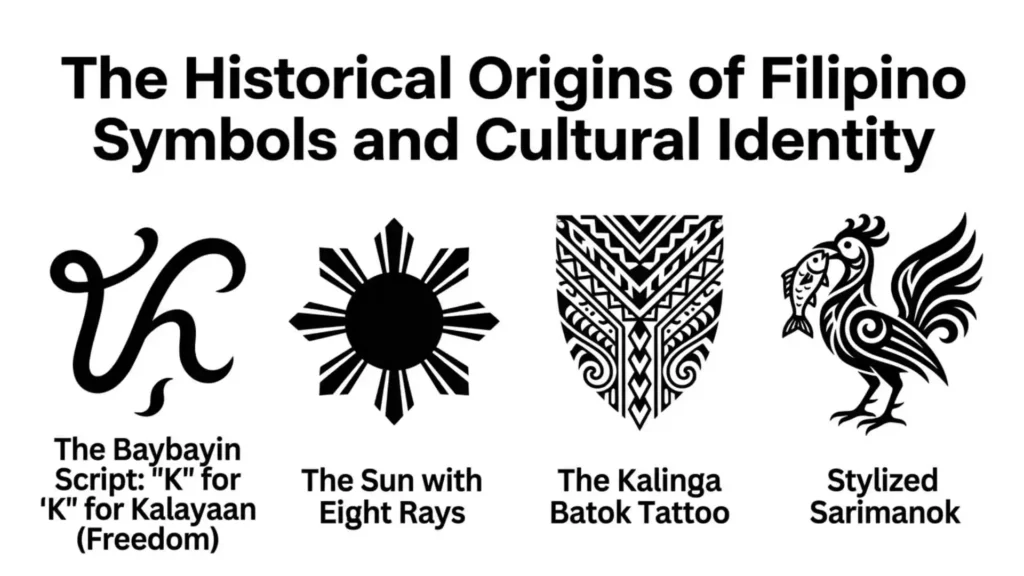
Filipino symbols have deep historical roots that go back before colonial times. Early Filipinos used symbols in tattoos, pottery, clothing, and even oral storytelling. These symbols were not just decoration, they were communication tools.
Before Spanish colonization, indigenous groups like the Visayans and Tagalogs already had rich symbolic systems. The writing system called Baybayin is one of the earliest examples. It was used to express thoughts, names, and messages using simple characters.
When Spanish colonization arrived in the 16th century, many original symbols were replaced or mixed with Catholic imagery. This created a unique blend of indigenous and Western symbolism that still exists today.
From a psychological perspective, Filipino symbols represent resilience. They show how a culture can adapt without losing its core identity. Even after centuries of change, these symbols still survive in festivals, art, and daily life.
National Filipino Symbols and What They Represent
National symbols are among the most recognized Filipino symbols. They represent unity, independence, and pride for the country.
The Philippine flag is one of the strongest symbols. The blue represents peace, red represents courage, and white represents purity. The sun with eight rays symbolizes the first provinces that fought for independence. The three stars represent the main island groups of the Philippines: Luzon, Visayas, and Mindanao.
Another powerful symbol is the Philippine eagle, known for strength and freedom. It represents national pride and the importance of protecting nature.
The Sampaguita flower is also a national symbol. It represents simplicity, humility, and purity of heart. It is often used in religious offerings and ceremonies.
The Carabao, or water buffalo, symbolizes hard work, patience, and strength. It reflects the Filipino farming lifestyle and connection to the land.
Across cultures, national symbols carry similar emotional meanings. In the USA, the eagle also represents freedom. In Japan, the cherry blossom represents beauty and short life. In Africa, tribal animals often symbolize strength and survival. Filipino symbols align with this global pattern but maintain a deeply community centered meaning.
Indigenous Filipino Symbols and Ancient Tribal Meanings
Indigenous Filipino symbols are some of the most fascinating aspects of the culture. They come from ancient tribes such as the Ifugao, Kalinga, and Visayan groups.
One of the most famous indigenous practices is tattoo symbolism. Ancient warriors known as “Pintados” wore tattoos that represented bravery, achievements, and spiritual protection. Each design had meaning, such as protection from enemies or blessings from ancestors.
Weaving patterns in indigenous textiles also carry symbolic meaning. The geometric shapes often represent nature, protection, and spiritual balance.
Baybayin script is another important symbol system. Each character represents a sound and also carries cultural identity. Today, Baybayin is seen as a symbol of cultural revival and pride.
These symbols are deeply psychological. They represent belonging, identity, and protection. They also show how early Filipinos understood the connection between humans and nature in a spiritual way.
Compared to Europe, where symbols often focused on royalty and power, Filipino indigenous symbols focus more on community and harmony. Compared to Africa, where symbols often represent ancestry and tribal identity, Filipino symbols also strongly emphasize family and respect for elders.
Religious Filipino Symbols and Spiritual Beliefs
Religion plays a huge role in Filipino culture, and many Filipino symbols are influenced by Catholicism and indigenous spirituality.
The cross is one of the strongest religious symbols in the Philippines. It represents faith, sacrifice, and hope. Many Filipino homes display crosses as a sign of protection and blessings.
The Santo Niño, or Holy Child, is another powerful symbol. It represents innocence, guidance, and divine love. Many festivals across the country celebrate this figure with dance and music.
Anting anting, or traditional amulets, are also important symbols in Filipino spiritual culture. They are believed to provide protection, strength, and luck. These beliefs come from a mix of indigenous spirituality and Catholic influence.
Psychologically, religious Filipino symbols represent hope and emotional strength. They help people deal with hardships and uncertainty.
In comparison, Latin American cultures also blend Catholic symbols with indigenous beliefs. In contrast, European cultures often separate religion from daily symbolic life. Filipino culture blends both seamlessly.
Filipino Symbols Found in Nature and Everyday Life
Nature plays a huge role in Filipino identity, and many symbols come directly from the environment.
The Philippine eagle symbolizes strength and freedom. It is one of the rarest eagles in the world and represents conservation and pride.
The Sampaguita flower symbolizes purity and humility. It is small but deeply meaningful, often used in garlands during ceremonies.
The Narra tree is another national symbol. It represents strength, stability, and resilience. It is also the national tree of the Philippines.
The Carabao symbolizes patience and hard work. It reflects the agricultural foundation of Filipino life.
These natural symbols create emotional connections between people and their land. They remind Filipinos of simplicity, survival, and unity with nature.
In other countries, similar nature symbols exist. In India, the lotus represents purity. In Canada, the maple leaf represents identity. Filipino symbols stand out because they are deeply connected to everyday rural life.
Cultural Values as Filipino Symbols of Behavior and Identity
Not all Filipino symbols are physical objects. Some are values and behaviors that define the culture.
Bayanihan is one of the most important Filipino symbols. It represents community unity and helping others without expecting anything in return. Traditionally, it is shown when neighbors help move a house by carrying it together.
Pakikisama is another symbol of social harmony. It represents the importance of getting along with others and maintaining peace in relationships.
Hiya represents a sense of shame or social awareness. It guides behavior and encourages respect for others.
Utang na loob means debt of gratitude. It represents deep appreciation and loyalty to those who help you.
These cultural symbols are emotional and psychological frameworks. They guide behavior and relationships in Filipino society.
Compared to Western cultures, where individualism is stronger, Filipino symbols emphasize community and emotional connection. In Asian cultures like Japan, harmony is also important, but Filipino culture adds stronger emotional gratitude and family loyalty.
Modern Filipino Symbols in Pop Culture and National Identity
Today, Filipino symbols have evolved into modern forms found in music, fashion, and media.
The jeepney is one of the most iconic modern symbols. It represents creativity, adaptability, and everyday life in the Philippines.
Filipino fashion often uses tribal patterns and indigenous designs, showing pride in heritage.
Music and pop culture also carry symbolic meaning. Filipino love songs often represent emotional depth, resilience, and hope.
Social media has also created new Filipino symbols like hashtags, viral dances, and online expressions that represent modern identity.
Psychologically, modern symbols represent adaptation. They show how Filipino identity continues to grow while staying connected to tradition.
Psychological Meaning and Cross Cultural Comparison of Filipino Symbols
Filipino symbols are deeply emotional and psychological. They often represent resilience, faith, family, and community.
Psychologically, these symbols provide comfort and identity. They help people feel connected to something larger than themselves.
Across cultures, symbols serve similar roles. In Europe, symbols often represent history and power. In Africa, they represent ancestry and tribal connection. In Asia, they often represent balance and harmony. Filipino symbols combine all these elements but focus more on emotional connection and family unity.
This makes Filipino symbols unique because they are not just visual, they are emotional experiences passed through generations.
Did You Know About Filipino Symbols?
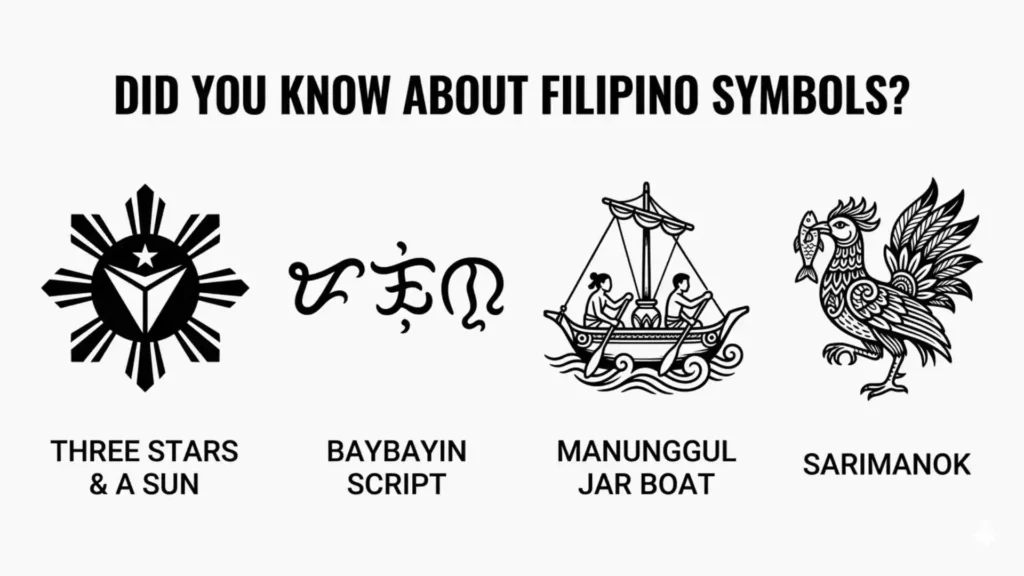
Did you know that Baybayin is being reintroduced in modern education and tattoos as a symbol of cultural pride
Did you know the Philippine eagle can fly over 6 feet in wingspan making it one of the strongest national symbols
Did you know Sampaguita flowers are often used in religious offerings because they represent purity and devotion
Did you know ancient Filipino tattoos were believed to protect warriors in battle
Did you know jeepneys are considered moving symbols of Filipino creativity and survival after World War 2
FAQs About Filipino Symbols
1. What are the most important Filipino symbols?
The most important Filipino symbols include the national flag, Philippine eagle, Sampaguita flower, Carabao, and Baybayin script.
2. What do Filipino symbols represent?
Filipino symbols represent identity, culture, unity, faith, resilience, and connection to nature and community.
3. What is the meaning of Baybayin in Filipino symbols?
Baybayin is an ancient writing system that represents early Filipino identity, communication, and cultural heritage.
4. Why are symbols important in Filipino culture?
Symbols are important because they preserve history, strengthen identity, and pass cultural values from generation to generation.
5. What is the most powerful Filipino national symbol?
The Philippine flag is considered the most powerful national symbol because it represents independence, unity, and national pride.
6. How do Filipino symbols differ from other countries?
Filipino symbols focus more on emotional connection, family values, and community compared to many Western and African symbolic systems.
Conclusion
Filipino symbols are a living reflection of history, identity, and emotion. They connect ancient traditions with modern life in a powerful way.
From Baybayin to jeepneys, every symbol carries meaning that goes beyond appearance.
They represent resilience, faith, unity, and love for community and nature.
Understanding Filipino symbols allows us to see how deeply culture shapes identity and emotional life.
In a rapidly changing world, these symbols continue to preserve the heart and soul of the Filipino people.

Nicholas Allen is a passionate writer and symbolism researcher who explores the hidden meanings behind ancient signs, spiritual icons and cultural symbols from around the world. His work focuses on making complex symbolism easy to understand for modern readers.
He is the author of “Mystic Signs and Their Hidden Meanings”. Through his writing, Nicholas helps readers discover the stories, beliefs and mysteries connected to symbols across history and different cultures.