
You are driving home after a long day when suddenly a small light flashes on your Jeep dashboard. Your heart skips a beat. Is it serious, or just a harmless reminder? Most drivers have faced this exact moment. Understanding jeep dashboard symbols and meanings is not just about avoiding repair costs. It is about safety, confidence, and staying connected with your vehicle.
Modern Jeep vehicles are built with intelligent systems that communicate through dashboard warning lights and symbols. These indicators are designed to protect your engine, tires, brakes, battery, and even your life. Yet many drivers ignore them because they look confusing or intimidating.
This guide explains every important Jeep dashboard warning light in simple language. You will learn what each symbol means, why it appears, what emotional message it sends to drivers, and how these symbols are understood in different cultures around the world. By the end, you will feel more in control every time you start your Jeep.
Why Jeep Dashboard Symbols Matter More Than Most Drivers Think
Dashboard symbols are more than glowing icons. They are your Jeep’s way of speaking to you. Every light has a purpose, whether it is warning you about danger, reminding you of maintenance, or helping you drive safely.
In older vehicles, drivers relied on strange sounds or smoke to know something was wrong. Today, Jeep uses advanced sensors and onboard computers to detect problems before they become disasters.
Psychologically, warning lights trigger urgency because humans naturally react to colors and symbols. Red symbols create stress and alertness because red is globally associated with danger. Yellow or orange lights suggest caution and preparation. Green or blue symbols usually indicate safety or active systems.
In the USA and Europe, dashboard warning systems are standardized for safety regulations. In Asia, symbols often emphasize fuel efficiency and environmental awareness. In Africa, many Jeep owners rely heavily on warning symbols due to rough road conditions and long distance travel where repair shops may not be nearby.
Did you know? The first dashboard warning systems became common in the 1930s, but computerized dashboard diagnostics only became widespread in the 1980s.
The Most Important Jeep Dashboard Warning Lights and Their Meanings
Engine Warning Light
The check engine light is one of the most feared dashboard symbols.
It usually looks like a small engine icon. This warning appears when the onboard computer detects a problem with the engine or emissions system.
Common causes include:
- Loose fuel cap
- Faulty oxygen sensor
- Engine misfire
- Catalytic converter issue
- Ignition problems
If the light stays solid, the issue may not be urgent but should be checked soon. If it flashes, stop driving immediately because severe engine damage could happen.
Emotionally, this symbol often creates anxiety because drivers associate engine problems with expensive repairs. However, many times the issue is minor.
In Europe, emissions related engine warnings are taken very seriously due to strict environmental laws. In some Asian countries, regular diagnostic checks are part of mandatory vehicle inspections.
Oil Pressure Warning Light
This symbol looks like an old style oil can dripping oil.
It warns that oil pressure inside the engine is dangerously low. Without proper lubrication, engine components can grind together and fail.
Possible reasons include:
- Low oil level
- Oil leak
- Faulty oil pump
- Dirty oil filter
If this light appears, stop the vehicle as soon as safely possible.
Psychologically, oil represents life and movement. In many cultures, oil symbolizes smooth operation and continuity. When this warning appears, it emotionally signals that your Jeep’s “lifeblood” is threatened.
Battery Warning Light
The battery symbol usually looks like a small rectangle with positive and negative signs.
Many people think this only means a dead battery, but it often points to charging system problems.
Causes may include:
- Weak alternator
- Damaged battery cables
- Corroded terminals
- Failing battery
In colder climates like northern Europe and North America, battery warnings are especially common during winter because freezing temperatures reduce battery performance.
Did you know? A weak battery can affect modern Jeep safety systems, infotainment screens, and even transmission performance.
Brake System Symbols Every Jeep Driver Must Understand
Brake Warning Light
This symbol may appear as a red circle with an exclamation mark or the word “BRAKE.”
It often means:
- Parking brake is engaged
- Brake fluid is low
- Brake system malfunction
Brakes represent protection and control. Across cultures, losing braking ability symbolizes loss of security and stability. That is why this warning instantly creates fear in most drivers.
Never ignore this light, especially if braking feels unusual.
ABS Warning Light
ABS stands for Anti Lock Braking System.
This light indicates the ABS system may not work correctly during emergency braking. Your normal brakes may still function, but your Jeep could skid during sudden stops.
ABS technology became popular because it helps drivers maintain steering control during panic situations.
In snowy regions of Europe and mountainous areas of Asia, ABS systems are considered essential for safe driving.
Tire Pressure Monitoring System Light
This warning looks like a horseshoe shape with an exclamation point.
It means one or more tires have low pressure.
Low tire pressure can cause:
- Poor fuel economy
- Uneven tire wear
- Blowouts
- Reduced handling
Many drivers ignore this symbol because the Jeep may still feel normal. However, underinflated tires are dangerous, especially at highway speeds.
In African desert regions and hot climates, tire pressure warnings are critical because extreme heat increases tire failure risk.
Jeep Safety and Stability Symbols Explained
Traction Control Light
This symbol usually shows a vehicle with squiggly lines underneath.
It activates when your Jeep detects wheel slip. The system helps maintain grip on slippery roads.
This feature is especially valuable for Jeep owners who drive off road or in snowy conditions.
Psychologically, traction symbols represent stability and confidence. Humans naturally fear losing control, so this light often reassures drivers that the vehicle is actively helping them.
Electronic Stability Control Warning
This warning relates to your Jeep’s ability to maintain directional stability.
If the light flashes briefly, the system is actively helping during slippery conditions. If it stays on constantly, there may be a malfunction.
In the USA, stability control systems significantly reduced rollover accidents in SUVs after becoming mandatory in newer vehicles.
Airbag Warning Light
The airbag symbol usually shows a seated passenger with a circle in front.
This warning means the airbag system may not deploy properly during an accident.
Potential causes include:
- Faulty crash sensors
- Wiring issues
- Seat belt sensor problems
Emotionally, this warning affects drivers deeply because airbags symbolize survival and family protection.
In cultures worldwide, safety systems are increasingly viewed not just as technology but as guardians of loved ones.
Jeep Temperature and Fluid Warning Symbols
Engine Temperature Warning Light
This symbol looks like a thermometer floating in liquid.
It indicates engine overheating.
Possible reasons include:
- Low coolant
- Broken radiator fan
- Coolant leak
- Water pump failure
Overheating can destroy an engine within minutes.
Historically, overheating was one of the most common causes of roadside breakdowns before modern cooling systems improved reliability.
Did you know? Desert driving places extra stress on Jeep cooling systems, especially during off road adventures.
Coolant Level Warning
This symbol alerts drivers to low coolant levels.
Coolant protects the engine from both overheating and freezing.
In cold regions such as Canada and northern Europe, coolant also prevents engine block damage during winter.
Windshield Washer Fluid Warning
This light reminds drivers to refill washer fluid.
Although it seems minor, visibility is directly tied to safety. Mud, snow, dust, and insects can quickly make driving dangerous.
In dusty African and Middle Eastern environments, washer fluid systems are extremely important for maintaining visibility.
Advanced Jeep Dashboard Symbols in Modern Models
Adaptive Cruise Control Symbol
This icon usually shows a vehicle with speed or distance indicators.
Adaptive cruise control automatically adjusts speed to maintain safe following distance.
This feature reflects the evolution of driving psychology. Modern drivers increasingly seek comfort, reduced stress, and intelligent assistance during long journeys.
Lane Departure Warning Light
This system alerts drivers when drifting out of a lane without signaling.
The symbol often includes lane markings beside a vehicle.
Fatigue related crashes are a major issue worldwide. Lane departure systems help reduce accidents caused by distraction or drowsiness.
Blind Spot Monitoring Indicator
Blind spot systems warn drivers about unseen vehicles beside them.
These indicators reduce anxiety during highway lane changes.
In busy urban areas across Asia and Europe, blind spot monitoring is becoming highly valued due to dense traffic conditions.
Color Meanings Behind Jeep Dashboard Symbols
Understanding warning light colors can help drivers react quickly.
Red Dashboard Lights
Red means immediate attention is required.
Examples include:
- Brake system warnings
- Oil pressure alerts
- Overheating warnings
Red universally symbolizes danger, urgency, and stopping.
Yellow or Orange Dashboard Lights
These lights indicate caution or maintenance needs.
Examples include:
- Check engine light
- Tire pressure warning
- Stability system alerts
Yellow psychologically encourages awareness without panic.
Green and Blue Dashboard Lights
These colors usually indicate active features rather than problems.
Examples include:
- Headlights
- Cruise control
- Eco driving modes
Green represents safety and normal operation across most cultures worldwide.
Common Jeep Dashboard Symbols Drivers Often Ignore
Fuel Warning Light
Many people wait too long after this light appears.
Running extremely low on fuel can damage fuel pumps over time.
In remote rural regions, fuel warnings carry greater emotional importance because gas stations may be far away.
Service Reminder Light
This reminder encourages scheduled maintenance.
Ignoring maintenance increases long term repair costs and decreases reliability.
Routine maintenance symbols reflect preventive care psychology. They encourage responsibility before problems become emergencies.
Door Ajar Symbol
This icon warns that a door or trunk is not fully closed.
While simple, it prevents accidents and theft.
Did you know? Many modern Jeep systems use sensors in doors to control interior lights, alarms, and airbags.
What Makes Jeep Dashboard Symbols Unique Compared to Other Vehicles
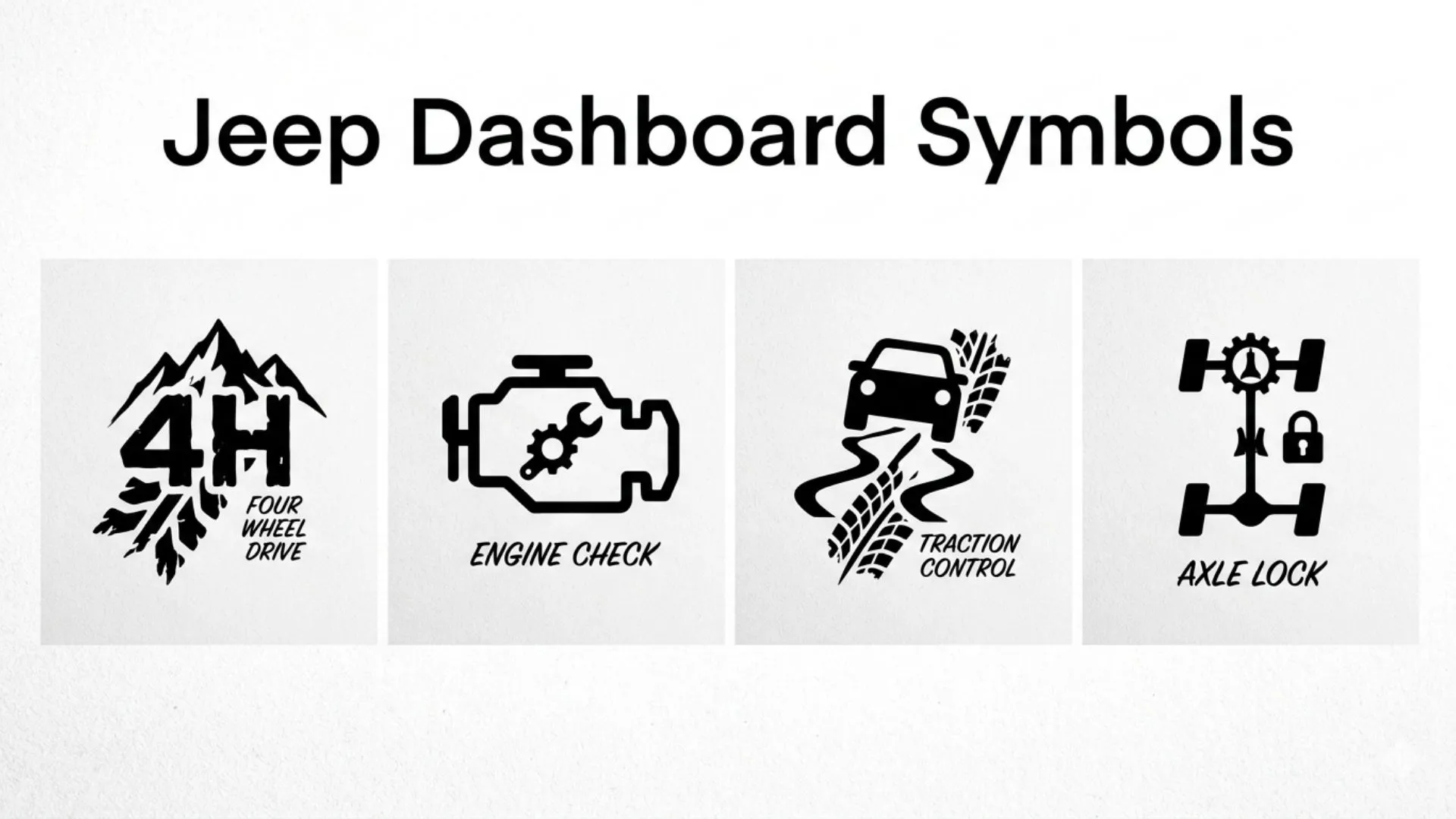
Jeep dashboard systems are designed with adventure driving in mind. Unlike many standard SUVs, Jeep vehicles often include additional indicators for off road capability and terrain management.
Some Jeep specific symbols may include:
- Four wheel drive indicators
- Hill descent control
- Differential lock symbols
- Terrain management systems
These features reflect Jeep’s heritage as an off road and military inspired vehicle brand.
Historically, Jeep vehicles gained global recognition during World War II. Their rugged design philosophy continues today, influencing dashboard technology focused on durability and exploration.
In North America, Jeep symbols often emphasize outdoor adventure and freedom. In Europe, drivers focus more on safety and efficiency systems. In Africa and parts of Asia, Jeep reliability symbols are highly respected for harsh terrain driving.
How to Respond Correctly When a Dashboard Symbol Appears
Many drivers panic when warning lights suddenly illuminate. The key is understanding the level of urgency.
Stop Immediately for Red Warnings
Pull over safely if you see:
- Oil pressure warning
- Overheating warning
- Brake failure warning
Ignoring these can cause catastrophic damage or accidents.
Schedule Service Soon for Yellow Warnings
These lights usually allow continued driving for a limited time, but repairs should not be delayed.
Use Your Owner’s Manual
Every Jeep model may display slightly different symbols. The owner’s manual provides exact explanations tailored to your vehicle.
Invest in Diagnostic Scans
An OBD2 scanner can help identify engine related issues quickly and save money on unnecessary repairs.
Did you know? Some modern Jeep models can send diagnostic alerts directly to smartphone apps.
FAQs About Jeep Dashboard Symbols and Meanings
What is the most serious Jeep dashboard warning light?
The oil pressure warning and brake system warning are among the most serious because they can lead to severe engine damage or unsafe driving conditions.
Can I drive with the check engine light on?
If the light is solid, short trips may be possible, but the issue should be diagnosed soon. If it flashes, stop driving immediately.
Why does my Jeep tire pressure light stay on after filling tires?
The system may need recalibration, or one tire may still have incorrect pressure. Temperature changes can also affect readings.
What does the lightning bolt symbol mean on a Jeep?
The lightning bolt warning usually indicates a problem with the electronic throttle control system.
Why are dashboard symbols different colors?
Colors indicate urgency levels. Red means danger, yellow means caution, and green or blue means normal operation.
Are Jeep dashboard symbols universal worldwide?
Most symbols follow international safety standards, but some Jeep specific features may vary by region and model.
What should I do if multiple warning lights appear together?
Stop driving if critical systems are affected and have the vehicle professionally inspected as soon as possible.
Conclusion
Understanding jeep dashboard symbols and meanings transforms the driving experience from confusion to confidence. These symbols are not random lights. They are intelligent messages designed to protect your vehicle, your passengers, and your safety on the road.
Every warning light tells a story about your Jeep’s condition. Some demand immediate action, while others simply guide you toward better maintenance habits. Knowing the difference can save money, prevent breakdowns, and even avoid dangerous accidents.
Modern Jeep technology continues evolving, but the core purpose remains the same, communication between driver and machine. When you understand these dashboard symbols, you build trust with your vehicle and gain peace of mind during every journey.
The next time a light appears on your dashboard, you will not feel helpless. You will know exactly what your Jeep is trying to tell you.

Amelia Scott is a passionate writer and symbolism researcher who explores the hidden meanings behind ancient signs, spiritual icons and cultural symbols. She enjoys uncovering the stories and mysteries connected to symbols from around the world.
She is the author of “Mystic Marks And Secret Meanings” and “Echoes Of Forgotten Symbols”. Her work combines history, spirituality and mythology to help readers better understand the deeper meaning of symbols in everyday life.
Through her writing, Amelia aims to make the world of symbols fascinating, meaningful and easy to explore.