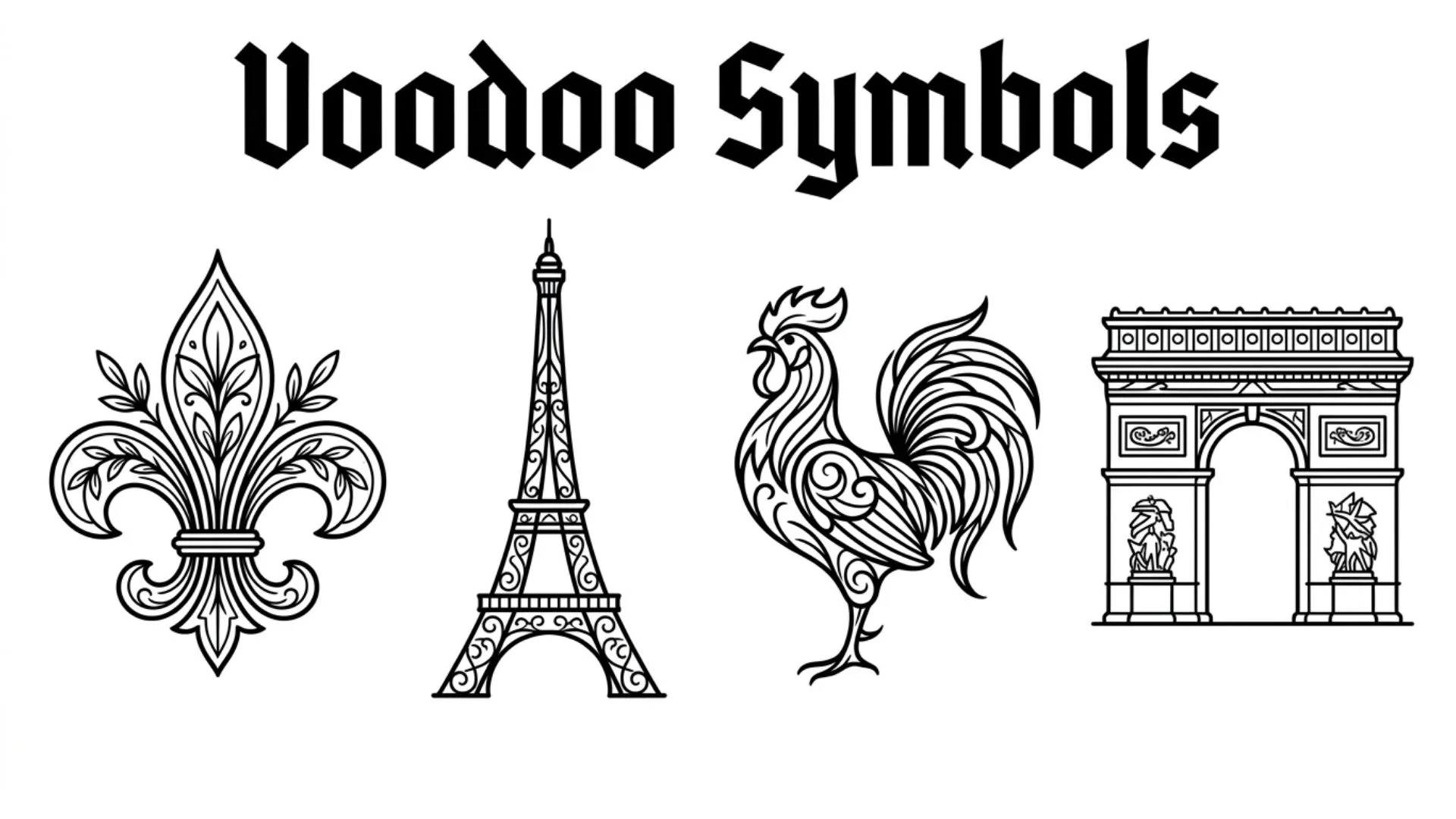
Voodoo symbols have fascinated people for centuries because they carry mystery, emotion, protection, power, and deep spiritual meaning. From sacred drawings used in ceremonies to symbols connected with love, healing, ancestors, and energy, these ancient signs continue to influence modern spirituality and culture. Many people see voodoo symbols as magical marks, but behind them lies a rich history filled with faith, survival, identity, and human emotion. Whether you are curious about spiritual symbols, African traditions, or the hidden meaning of sacred signs, understanding voodoo symbolism opens a doorway into one of the world’s most misunderstood spiritual systems.
Voodoo Symbols for Death
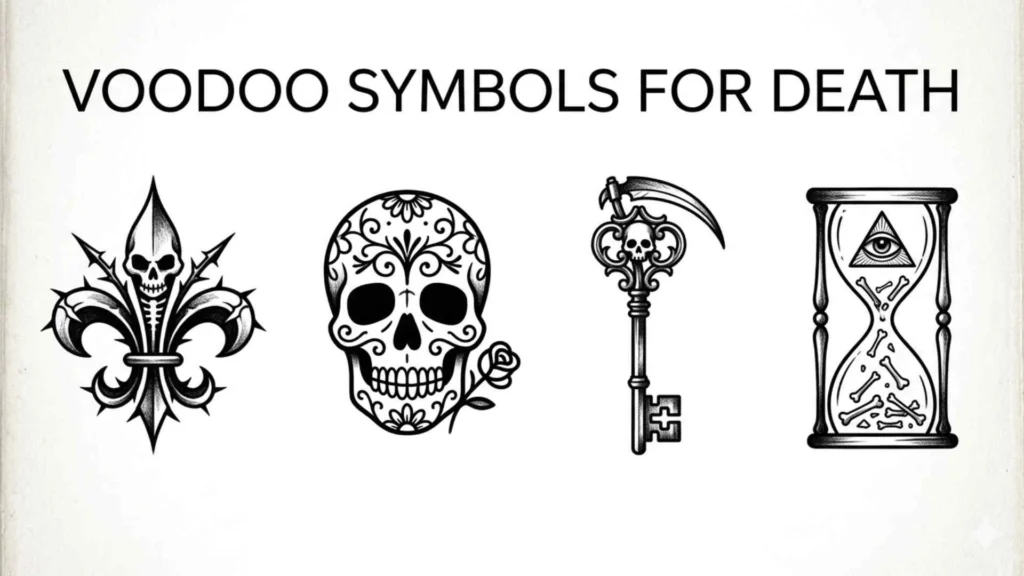
In Voodoo traditions, symbols are often used to represent spiritual concepts, ancestors, and connections between the physical and spiritual worlds. Some symbols associated with death relate to remembrance, transition, and respect for ancestors rather than fear or destruction.
Many Voodoo practitioners believe that death is part of a spiritual journey. Symbols connected to ancestral spirits may appear in ceremonies, artwork, and religious practices. Their meanings can vary depending on the region, tradition, and cultural background.
Voodoo Symbols Meaning
Voodoo symbols, often called Veves, are sacred designs used in Haitian Vodou and related spiritual traditions. A Veve is typically drawn on the ground or created as part of a ritual to honor specific spirits known as Lwa.
Each symbol has a unique meaning and is connected to a particular spirit, purpose, or aspect of life. Some represent wisdom, protection, love, prosperity, guidance, or communication with ancestors. Understanding Voodoo symbols helps people appreciate the history, culture, and spiritual significance behind these sacred designs.
Voodoo Symbols PDF
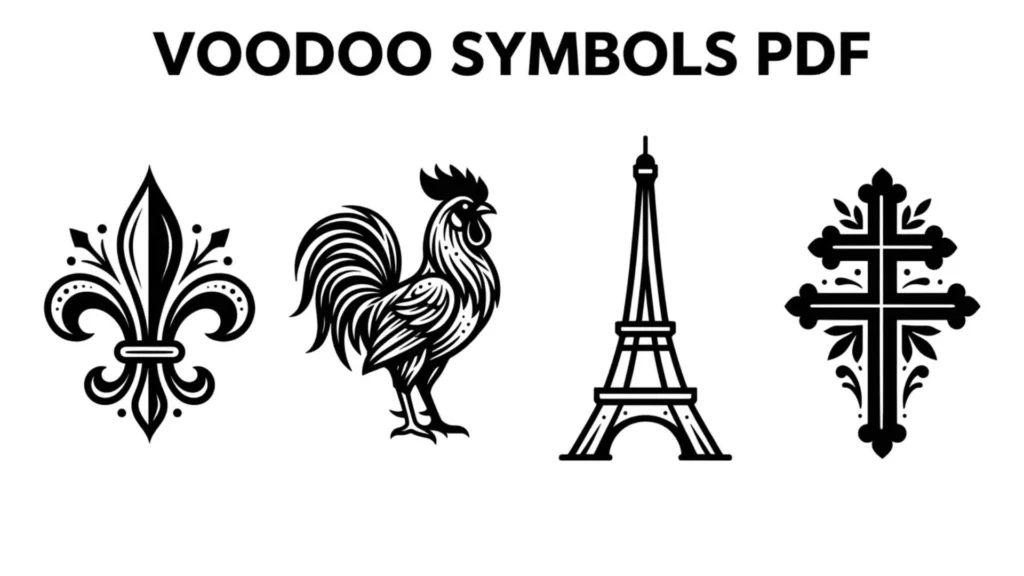
A Voodoo symbols PDF can be a helpful educational resource for learning about Veves and their meanings. These documents often include illustrations, historical information, and explanations of symbols associated with different Lwa.
Students, researchers, and those interested in spiritual traditions often use PDF guides to study the origins and cultural significance of Voodoo symbols. A well-organized PDF can provide an easy reference for understanding these traditional designs.
Voodoo Symbols for Good Luck
Some Voodoo symbols are associated with blessings, success, prosperity, and positive energy. Depending on the tradition, certain Veves may be connected to spirits believed to offer guidance, protection, or good fortune.
Many people view these symbols as reminders of hope, opportunity, and spiritual support. However, their meanings should always be understood within the cultural and religious context from which they originate.
Voodoo Symbols Images
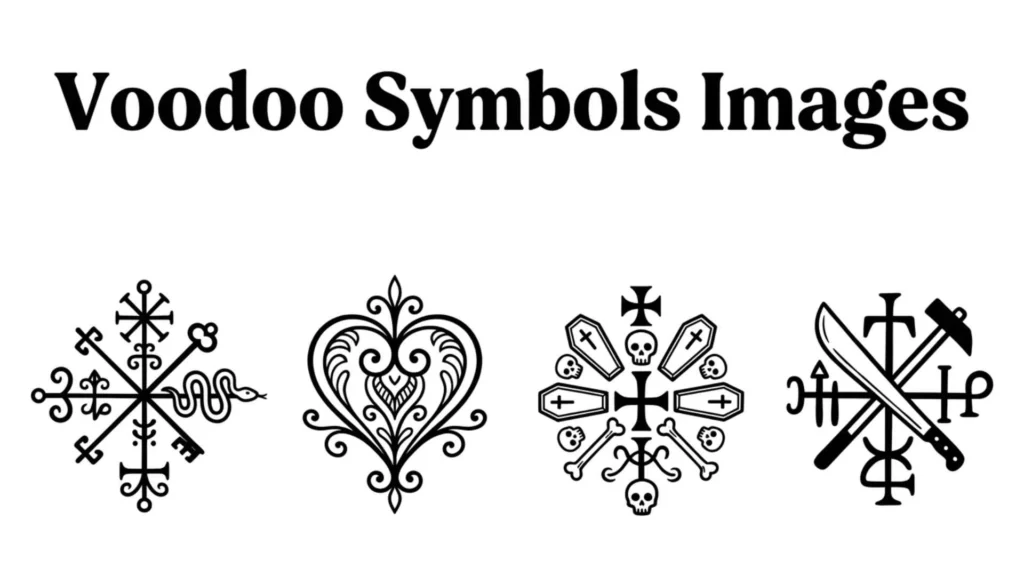
Voodoo symbol images often feature intricate geometric patterns, circles, crosses, stars, and decorative lines. These artistic designs are used in ceremonies, religious artwork, educational materials, and cultural studies.
Because each Veve represents a specific spirit or purpose, images can vary greatly in appearance. Studying Voodoo symbol images can help people recognize the diversity and artistic beauty of Vodou traditions.
Voodoo Symbols for Love
Some Voodoo symbols are associated with relationships, affection, harmony, and emotional connections. In Vodou traditions, certain Veves may be linked to spirits connected with beauty, attraction, family, and love.
These symbols are often viewed as representations of positive relationships and emotional well-being. Their interpretation depends on the specific tradition and spiritual practices in which they are used.
Voodoo Symbols Alastor
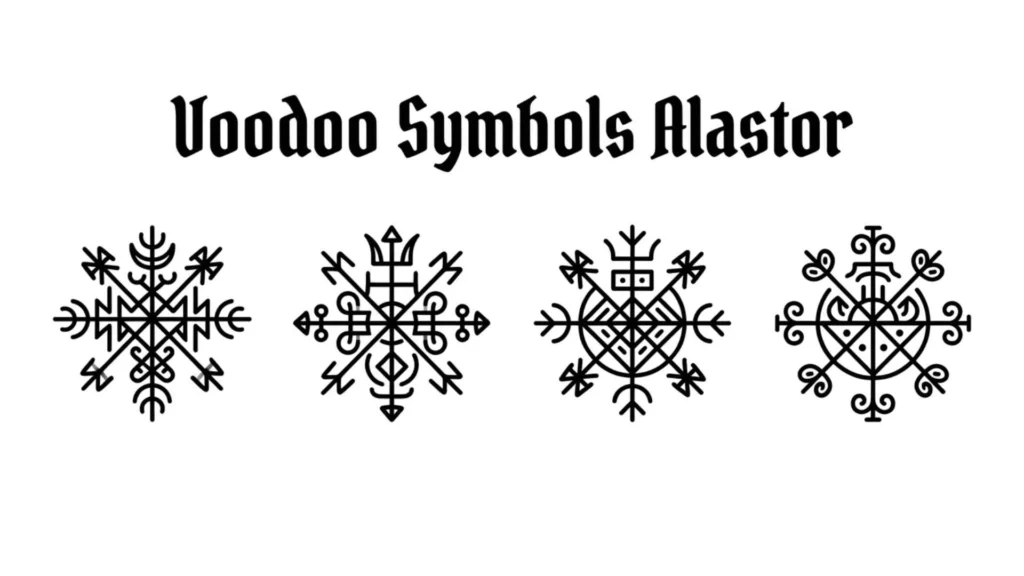
Many people search for Voodoo symbols related to Alastor because of the character’s design and themes in modern entertainment. While Alastor is often associated with Voodoo-inspired imagery by fans, the symbols seen in fan art and media interpretations are usually fictional or stylized adaptations rather than authentic religious Veves.
Understanding the difference between real Voodoo symbols and entertainment-inspired designs can help avoid confusion when studying Vodou culture and traditions.
Voodoo Symbols Hazbin Hotel
In Hazbin Hotel, several visual elements and symbols are inspired by folklore, occult themes, and artistic interpretations. Fans frequently associate Alastor with Voodoo-inspired imagery because of his character design and supernatural abilities.
However, the symbols used in the show are primarily part of a fictional universe and should not be considered official representations of Haitian Vodou practices. The series uses creative symbolism for storytelling and character development rather than religious instruction.
What Are Voodoo Symbols?
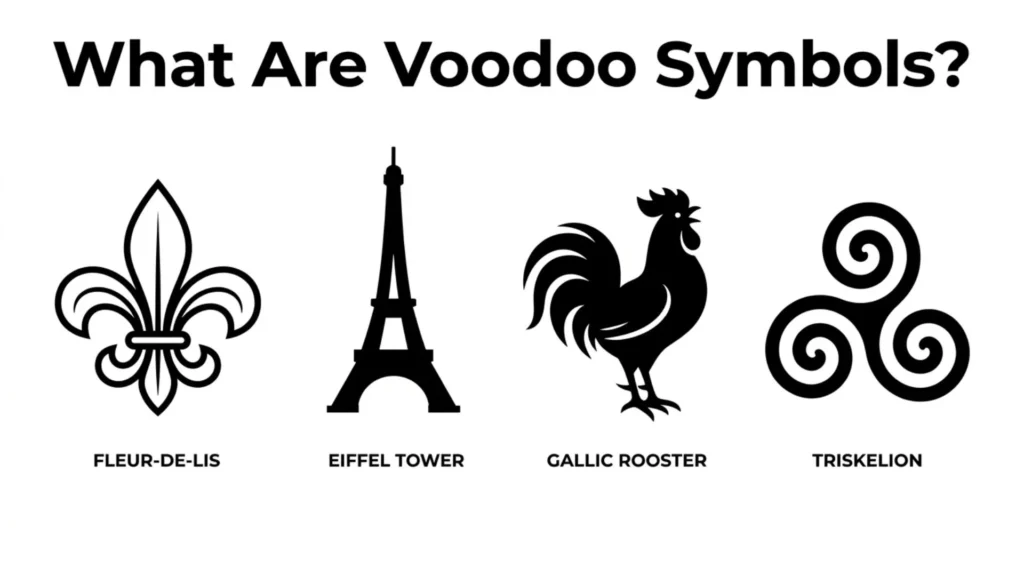
Voodoo symbols are sacred spiritual designs used in Vodou and related African diasporic religions. These symbols are often called veves, mystical drawings created during rituals to connect with spirits known as Loa or Lwa.
Each symbol represents a spiritual force, emotion, deity, or life energy. Some symbols are connected with protection and healing, while others represent love, strength, wisdom, fertility, or communication with ancestors.
Unlike ordinary artwork, voodoo symbols are believed to hold spiritual power. Practitioners draw them on the ground using cornmeal, ash, flour, or chalk during ceremonies. The symbols act like spiritual pathways that invite divine energies into the ritual space.
In many ways, voodoo symbols work similarly to sacred symbols in other cultures. Just as the lotus flower represents enlightenment in Asia or the cross represents faith in Christianity, voodoo symbols represent spiritual truths and emotional experiences.
Did you know?
Many modern tattoo designs and spiritual artworks are inspired by authentic voodoo veves without people realizing their African spiritual origins.
The Ancient Origins of Voodoo Symbols
The roots of voodoo symbols trace back to West Africa, especially regions that are now Benin, Haiti, Togo, and parts of Nigeria. Enslaved Africans carried their spiritual beliefs across the Atlantic during the slave trade. Despite oppression and forced conversion, they preserved their traditions through symbols, songs, dances, and rituals.
Over time, African spirituality blended with elements of Catholicism and indigenous traditions. This cultural mixing gave birth to Haitian Vodou and other related practices in the Caribbean and the Americas.
Symbols became powerful because they allowed enslaved communities to secretly preserve spiritual identity. A veve was more than a drawing. It was resistance, memory, and survival.
In Africa, symbols have always held deep cultural meaning. Similar traditions can be seen in:
African Symbolism
African cultures often use sacred geometric signs to represent wisdom, destiny, and protection. Adinkra symbols from Ghana are one example of symbolic communication through visual art.
European Influence
European occult traditions later influenced the interpretation of voodoo symbols. This created myths and misunderstandings, especially in Western movies and horror stories.
Asian Spiritual Comparison
In Asian cultures, mandalas and sacred calligraphy are used for meditation and spiritual focus. Voodoo symbols serve a similar emotional and spiritual purpose.
Native and Indigenous Connections
Many indigenous traditions around the world also believe symbols can connect humans with nature, ancestors, and invisible energies.
The Most Powerful Voodoo Symbols and Their Meanings
Papa Legba Veve
Papa Legba is one of the most respected spirits in Vodou. His symbol often resembles a crossroad with intersecting lines and keys.
Meaning
This symbol represents communication, opportunity, spiritual gateways, and life decisions. Papa Legba is believed to open doors between the physical and spiritual worlds.
Emotional Meaning
People connect this symbol with hope during uncertain times. It reminds individuals that every challenge also contains a new path forward.
Psychological Symbolism
The crossroads symbolize moments in life where choices shape destiny. Many people emotionally connect with this symbol during major life transitions.
Erzulie Freda Veve
Erzulie Freda is associated with love, beauty, femininity, luxury, and emotional desire.
Meaning
Her veve often includes heart shapes and elegant curves that symbolize romance and emotional connection.
Emotional Meaning
This symbol speaks to human longing for affection, intimacy, and self worth.
Cultural Interpretation
In the USA and Europe, heart based spiritual symbols often represent romantic love. In African spirituality, however, love symbols also represent emotional healing and divine feminine energy.
Baron Samedi Veve
Baron Samedi is linked with death, ancestors, transformation, and the afterlife.
Meaning
His symbol may include crosses, tomb imagery, or dark ceremonial elements.
Emotional Meaning
Instead of representing fear, this symbol teaches acceptance of mortality and respect for ancestors.
Psychological Meaning
Many people are drawn to this symbol during periods of grief or emotional transformation.
Did you know?
Baron Samedi inspired many famous movie characters associated with dark humor, mystery, and the spirit world.
Damballa Veve
Damballa is symbolized by serpents and flowing curved lines.
Meaning
This symbol represents wisdom, purity, creation, and divine energy.
Emotional Meaning
The serpent symbolizes rebirth and spiritual awakening in many cultures, including Africa, Asia, and ancient Europe.
Spiritual Connection
People often use serpent symbolism during meditation or personal growth journeys.
Ogun Veve
Ogun is the spirit of iron, war, hard work, and protection.
Meaning
His symbol often contains weapons, tools, or strong geometric lines.
Emotional Meaning
This symbol represents courage, determination, discipline, and survival.
Psychological Impact
Many people emotionally connect with Ogun symbolism when facing obstacles or rebuilding life after hardship.
Why Voodoo Symbols Feel So Powerful Emotionally
Symbols affect the human mind deeply because they communicate emotions without words. Voodoo symbols combine art, spirituality, storytelling, and ritual into one visual language.
Psychologists often explain that symbols activate emotional memory and subconscious thinking. A simple design can trigger feelings of safety, mystery, fear, hope, or empowerment.
The Human Need for Spiritual Signs
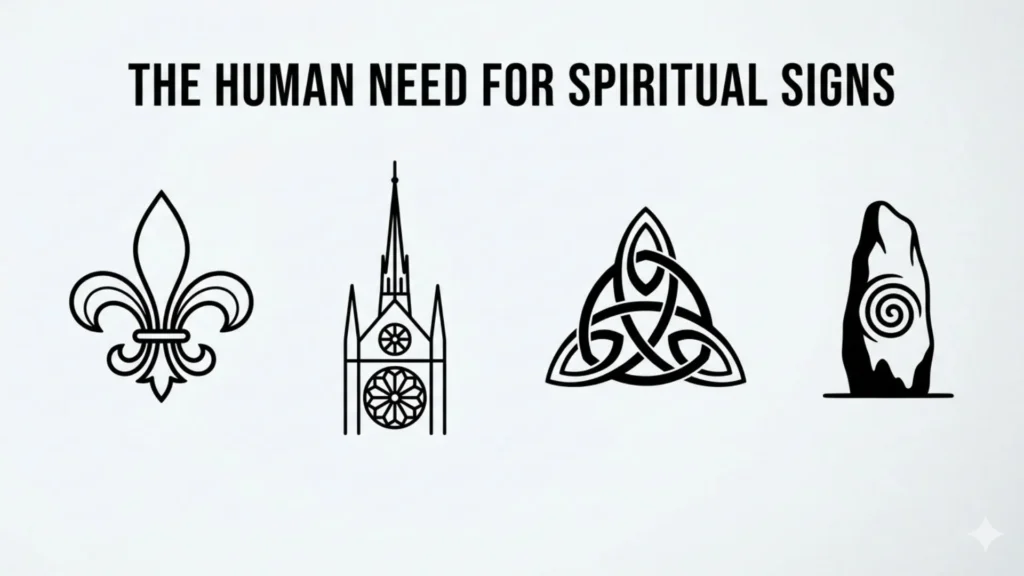
Across every civilization, humans have created sacred symbols to understand life and uncertainty.
Examples include:
- The Yin Yang in Chinese philosophy
- The Eye of Horus in Egypt
- Celtic knots in Europe
- Native American dreamcatchers
- African spiritual symbols
Voodoo symbols belong to this universal human tradition of finding meaning through sacred imagery.
Why People Still Use Spiritual Symbols Today
Modern people continue using symbolic designs in tattoos, meditation, jewelry, home decor, and healing practices because symbols create emotional identity.
Many individuals feel disconnected in modern life. Sacred symbols provide a sense of purpose, spirituality, and inner grounding.
Common Myths and Misunderstandings About Voodoo Symbols
Hollywood and horror stories have created many false ideas about voodoo symbols. In reality, authentic Vodou is a spiritual tradition focused on balance, respect, healing, ancestors, and community.
Myth 1: All Voodoo Symbols Are Evil
This is completely false. Most symbols are connected with healing, love, guidance, wisdom, and protection.
Myth 2: Voodoo Is Only About Magic Spells
Vodou is a religion and spiritual system with ceremonies, prayers, music, dance, ethics, and ancestral respect.
Myth 3: Symbols Automatically Have Power
In traditional practice, symbols gain spiritual meaning through ritual intention and cultural understanding, not simply by drawing them.
Myth 4: Voodoo Symbols Are Only African
Although the roots are African, voodoo symbolism evolved in Haiti, the Caribbean, and the Americas through cultural blending.
Myth 5: Every Symbol Means the Same Thing Everywhere
Symbol meanings can vary between communities, temples, and regions. Cultural context matters greatly.
Voodoo Symbols in Modern Culture
Today, voodoo symbols appear in fashion, tattoos, music, movies, gaming, and spiritual art.
However, many people use these symbols without understanding their origins. This creates both appreciation and controversy.
Tattoos and Body Art
Many tattoo lovers choose veves because they look mysterious and meaningful. Popular tattoo themes include:
- Protection symbols
- Love symbols
- Ancestor symbols
- Crossroads imagery
- Serpent designs
Before getting spiritual tattoos, many practitioners recommend learning the true meaning behind the symbol.
Music and Entertainment
Voodoo imagery appears frequently in blues, jazz, rock, hip hop, and fantasy storytelling. The mysterious visual language makes these symbols artistically powerful.
Spiritual Communities
Modern spiritual communities often explore voodoo symbols alongside astrology, tarot, meditation, and energy healing.
Did you know?
Some sacred veves are traditionally destroyed after ceremonies because they are meant to exist only during spiritual rituals.
The Deeper Psychological Meaning Behind Voodoo Symbols
One reason voodoo symbols remain fascinating is because they reflect universal human emotions.
Protection
Humans naturally seek signs of safety and protection. Symbols linked with guardianship create emotional comfort during uncertainty.
Transformation
Many voodoo symbols represent death and rebirth. Psychologically, this connects with healing after emotional pain.
Identity
Spiritual symbols help people feel connected to ancestry, culture, and personal meaning.
Mystery
The unknown fascinates the human mind. Voodoo symbolism combines secrecy, spirituality, and imagination, creating strong emotional attraction.
Connection
At the heart of Vodou is connection between humans, spirits, ancestors, nature, and community. The symbols visually express this invisible bond.
Comparing Voodoo Symbols Across Cultures
In African Traditions
Symbols often represent ancestral wisdom, nature spirits, and community identity.
In American Culture
Voodoo symbols are sometimes misunderstood through horror entertainment, but modern spiritual communities increasingly appreciate their authentic meaning.
In European Traditions
Europe historically connected mysterious symbols with occult practices. This influenced how voodoo was portrayed in literature and cinema.
In Asian Spirituality
Asian traditions often view sacred symbols as pathways to balance and enlightenment. This is spiritually similar to how veves guide ritual focus.
Shared Global Meaning
No matter the culture, sacred symbols often represent:
- Hope
- Protection
- Transformation
- Spiritual guidance
- Human emotion
- Connection with something greater
How to Respectfully Learn About Voodoo Symbols
If you are interested in voodoo symbols, approach the topic with curiosity and respect rather than fear or stereotypes.
Learn the History
Understanding African and Haitian history helps explain why these symbols matter culturally and spiritually.
Avoid Cultural Mockery
Sacred symbols should not be treated as jokes or horror decorations without understanding their meaning.
Explore Authentic Sources
Books, historians, practitioners, and cultural educators offer more accurate knowledge than fictional movies.
Appreciate the Spiritual Depth
Voodoo symbols are not simply magical drawings. They represent survival, identity, faith, resilience, and emotional wisdom.
Did You Know? Fascinating Facts About Voodoo Symbols
- Some veves are so detailed they can take hours to create during ceremonies.
- Cornmeal is commonly used because it symbolizes nourishment and life.
- Certain symbols are only drawn during specific rituals or spiritual celebrations.
- Many symbols combine African traditions with Christian imagery.
- Veves are often temporary because spiritual energy is believed to move and transform.
- Haitian Vodou was officially recognized as a religion in Haiti in 2003.
Frequently Asked Questions About Voodoo Symbols
What are voodoo symbols called?
Voodoo symbols are commonly known as veves. They are sacred ritual drawings connected with spirits called Loa or Lwa.
Are voodoo symbols dangerous?
Authentic voodoo symbols are spiritual and cultural symbols. They are not automatically dangerous or evil.
What does the voodoo crossroad symbol mean?
The crossroads symbol often represents Papa Legba, spiritual communication, life choices, and opportunities.
Why are serpents common in voodoo symbols?
Serpents symbolize wisdom, creation, transformation, healing, and spiritual energy in many cultures.
Can anyone use voodoo symbols?
People can study and appreciate them respectfully, but understanding their cultural and spiritual meaning is important.
Are voodoo symbols connected with African culture?
Yes. Voodoo symbols originated from African spiritual traditions and later evolved in Haiti and the Caribbean.
Why do people tattoo voodoo symbols?
Many people choose these symbols for spiritual meaning, emotional connection, protection, or artistic expression.
Conclusion
Voodoo symbols are far more than mysterious drawings or movie imagery. They are sacred expressions of history, survival, spirituality, emotion, and human connection. From the crossroads of Papa Legba to the healing energy of Damballa, each symbol tells a story about hope, transformation, protection, and identity. Across Africa, the Americas, Europe, and Asia, humans have always searched for meaning through symbols, and voodoo symbolism remains one of the most emotionally powerful examples of that universal tradition. By understanding the true meaning behind these sacred signs, we move beyond fear and stereotypes into a deeper appreciation of culture, spirituality, and the human soul.

Amelia Scott is a passionate writer and symbolism researcher who explores the hidden meanings behind ancient signs, spiritual icons and cultural symbols. She enjoys uncovering the stories and mysteries connected to symbols from around the world.
She is the author of “Mystic Marks And Secret Meanings” and “Echoes Of Forgotten Symbols”. Her work combines history, spirituality and mythology to help readers better understand the deeper meaning of symbols in everyday life.
Through her writing, Amelia aims to make the world of symbols fascinating, meaningful and easy to explore.