
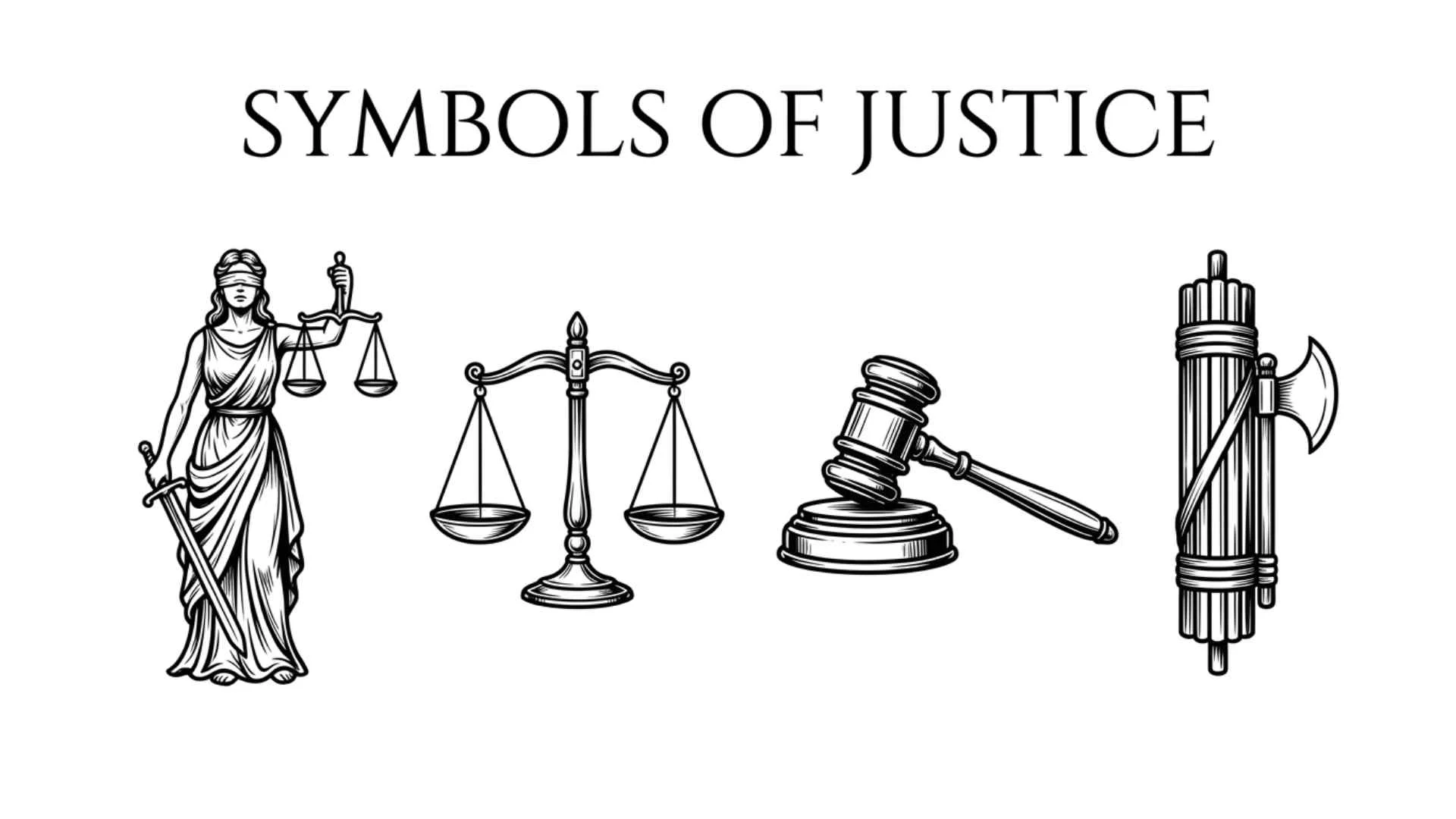
Justice is not just a legal concept. It is a deeply human need, something we all feel when something is right or terribly wrong. The idea of symbols of justice has existed for thousands of years, helping people visualize fairness, truth, and moral balance in ways words sometimes cannot. These symbols speak to our emotions, our beliefs, and our shared understanding of right and wrong.
From ancient civilizations to modern courtrooms, justice has been represented through powerful imagery. These symbols are not random. Each one carries history, psychology, and cultural meaning that shapes how we understand fairness today. Whether it is a blindfold, a scale, or a sword, each symbol tells a story about how humans strive to create a fair world.
In this guide, we will explore the most important symbols of justice, their origins, emotional meanings, and how different cultures interpret them.
Symbols of Justice Meaning
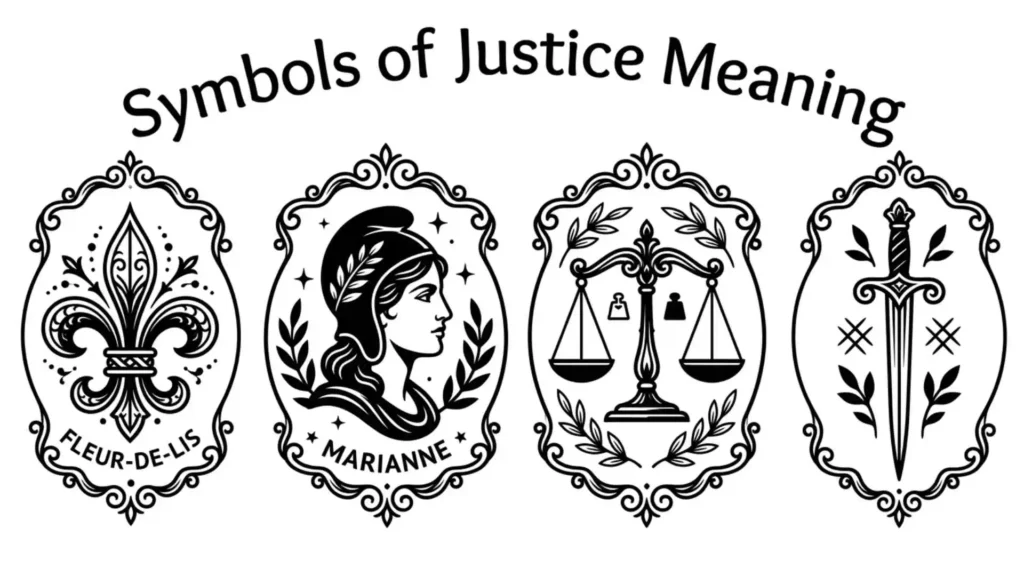
Justice symbols have deep meanings connected to truth, balance, honesty, and protection.
Common Meanings of Justice Symbols
- Fairness – Treating everyone equally
- Truth – Making honest decisions
- Balance – Weighing both sides carefully
- Authority – Respect for the law
- Protection – Defending rights and freedom
Justice symbols remind people that laws should be fair for everyone.
Semantic Keywords
legal balance, equality under law, truth and fairness, court symbolism, moral justice
Ancient Symbols of Justice
Ancient civilizations used many symbols to represent justice and law.
Famous Ancient Justice Symbols
- Scales – Used in Ancient Egypt and Greece to show balance
- Sword – Represented power and punishment
- Feather of Ma’at – Egyptian symbol of truth and order
- Blindfold – Symbolized fair judgment without bias
- Stone Tablets – Represented written laws
These symbols became important parts of modern legal systems.
LSI Keywords
ancient law symbols, Egyptian justice, Greek mythology justice, legal history, historic symbols
Symbols of Justice PDF
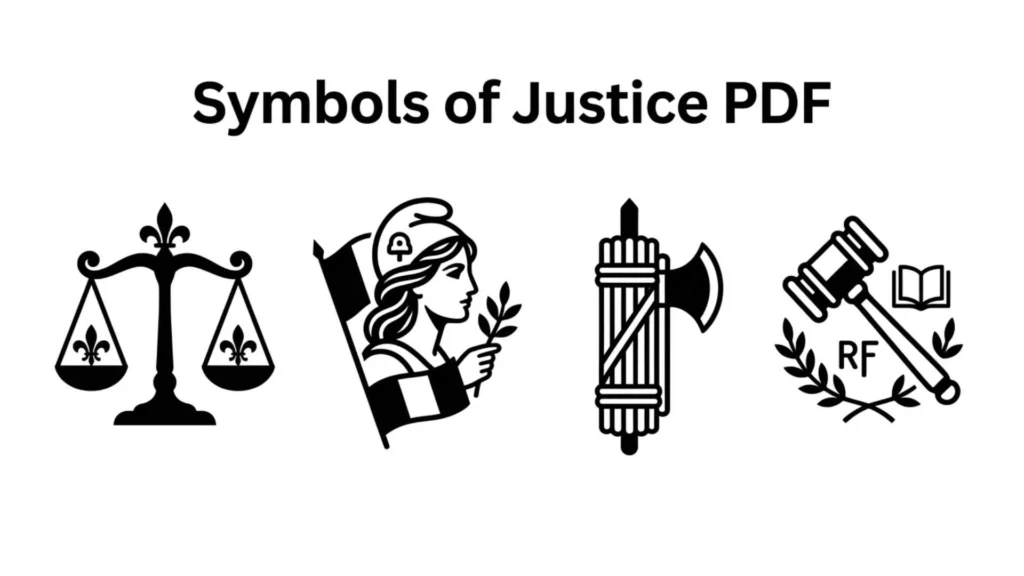
Many students, teachers, and researchers look for symbols of justice PDF files for education and learning.
A justice symbols PDF may include:
- Justice symbol meanings
- Lady Justice history
- Ancient law symbols
- Court symbolism illustrations
- Legal education material
PDF guides help people study justice symbols in a simple and organized way.
NLP Keywords
justice symbols PDF, legal study guide, court symbol document, educational PDF
Symbols of Justice Around the World
Different cultures use different symbols to represent justice.
Justice Symbols in Different Countries
- United States – Lady Justice with scales and sword
- Egypt – Feather of Ma’at for truth
- China – Dragon symbols linked with authority
- India – Ashoka Chakra connected to law and righteousness
- Rome – Goddess Justitia represented legal fairness
Even though symbols change, the message of justice stays similar around the world.
Semantic Keywords
global justice symbols, world law symbols, international justice, legal traditions
Lady Justice
Lady Justice is the most famous symbol of justice in the world.
She is often shown as a woman holding scales and a sword while wearing a blindfold.
What Lady Justice Represents
- Scales – Fair decisions
- Sword – Power of the law
- Blindfold – No favoritism or bias
Lady Justice comes from Roman mythology and continues to appear in courts and government buildings today.
LSI Keywords
Justitia goddess, legal statue, court symbol, Roman justice, justice figure
Symbols of Justice Drawing
Justice drawings are popular in schools, law projects, and art classes.
Popular Justice Drawing Ideas
- Lady Justice sketch
- Scales of justice art
- Sword and blindfold drawing
- Courtroom symbol designs
- Ancient justice illustrations
Justice drawings help explain legal ideas through visual art.
NLP Keywords
justice symbol drawing, legal art, scales drawing, courtroom illustration
Symbols of Justice Animals
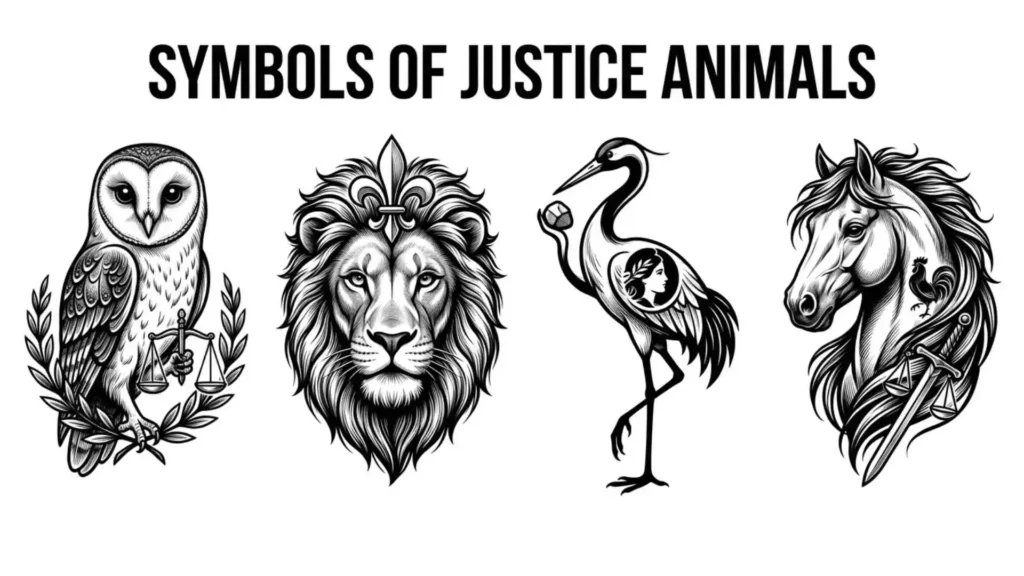
Some animals are linked with justice, wisdom, and truth.
Animals Connected to Justice
- Owl – Wisdom and intelligence
- Lion – Strength and authority
- Eagle – Freedom and justice
- Snake – Truth and moral judgment
These animals often appear in government logos and legal emblems.
Semantic Keywords
justice animals, wisdom symbols, legal emblems, authority animals
Lady Justice Statue
Lady Justice Statue statues are found outside courthouses, law schools, and government offices around the world.
These statues remind people that justice should be fair, honest, and equal.
Famous Features of Lady Justice Statues
- Blindfold over the eyes
- Scales in one hand
- Sword in the other hand
- Strong and calm posture
The statue has become one of the strongest symbols of modern law and order.
LSI Keywords
court statue, legal monument, justice sculpture, law building symbol
Why Justice Symbols Matter Today
Justice symbols still play an important role in modern society. They remind people about equality, human rights, truth, and legal fairness.
From ancient civilizations to modern courts, these symbols continue to inspire trust in the legal system.
Final NLP and Semantic Keywords
justice and fairness, legal equality, law and order, truth symbol, justice culture, court traditions, legal education, balance of law
⚖️ The Scales of Justice: Balance and Fairness
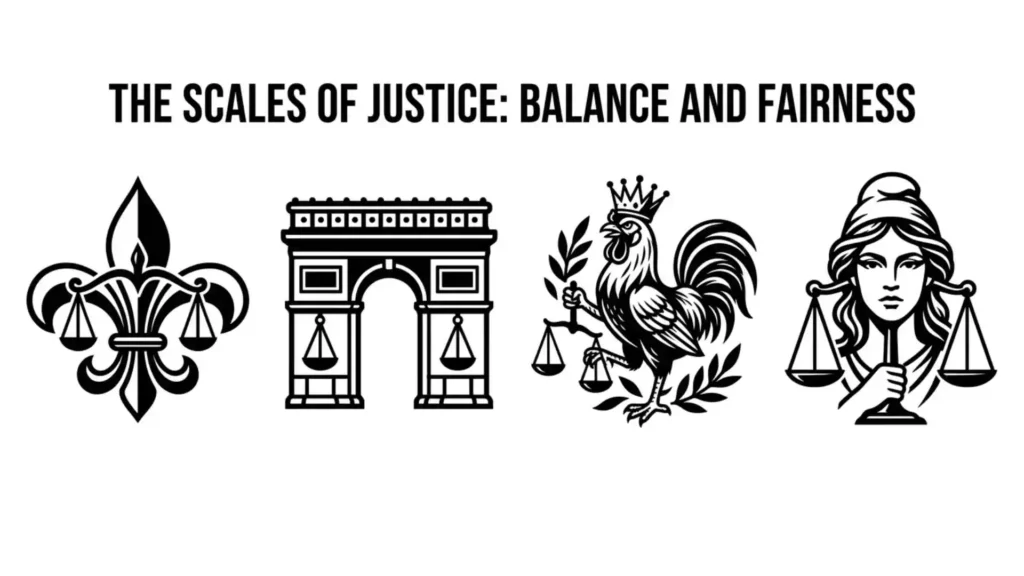
The scales of justice are one of the most recognized symbols worldwide. They represent balance, equality, and the careful weighing of evidence before making a decision.
Historical Origin
The idea dates back to ancient Egypt, where the goddess Ma’at used scales to weigh the heart of a person against a feather. If the heart was pure, the soul was granted peace. Later, the Greeks adopted similar imagery through Themis, the goddess of law.
Emotional Meaning
The scales connect deeply with our sense of fairness. People want to feel that their voice matters equally. When we see scales, we instinctively think of balance, truth, and neutrality.
Cultural Perspective
- USA & Europe: Seen as a symbol of legal fairness and court systems
- Asia: Often linked with karma and moral balance
- Africa: Reflects community justice and fairness in social harmony
Did you know?
The scales are often slightly uneven in artistic depictions to remind us that achieving perfect justice is challenging.
🗡️ The Sword: Power and Authority
The sword is another essential justice symbol, representing strength, authority, and the ability to enforce law.
Historical Origin
In Roman mythology, the sword was associated with Justitia, the Roman goddess of justice. It symbolized the power of the state to punish wrongdoing.
Psychological Meaning
The sword creates a sense of seriousness and consequence. Justice is not only about fairness but also about action. Without enforcement, justice loses meaning.
Cultural Comparison
- Western cultures: Represents law enforcement and punishment
- Asian traditions: Often symbolizes protection and moral discipline
- African traditions: Linked with leadership and protection of community values
The sword reminds us that justice requires courage and responsibility.
👁️ The Blindfold: Impartiality and Equality
The blindfold is one of the most debated symbols of justice. It represents impartiality, meaning justice should not be influenced by wealth, power, or identity.
Historical Background
Interestingly, the blindfold was not part of early justice imagery. It appeared during the Renaissance as a way to emphasize fairness and objectivity.
Emotional Connection
The blindfold speaks to a deep human desire for equality. People want to believe that everyone is treated the same, regardless of status.
Cultural Interpretations
- USA & Europe: Strong symbol of fairness and neutrality
- Asia: Sometimes viewed critically, suggesting lack of awareness
- Africa: Mixed interpretations depending on local justice traditions
Did you know?
Some modern representations remove the blindfold to suggest that justice should be aware of social inequalities.
🏛️ The Pillars: Strength and Stability
Columns or pillars often appear in courts and government buildings. They symbolize structure, support, and the foundation of law.
Historical Origin
Inspired by ancient Greek and Roman architecture, pillars represented strength and order in society.
Psychological Meaning
They give a feeling of trust and permanence. People associate pillars with systems that are stable and reliable.
Cultural Meaning
- Europe: Linked with classical democracy and law
- USA: Represents constitutional strength
- Asia & Africa: Seen as symbols of unity and social support systems
Pillars remind us that justice must stand on strong principles to survive.
📜 The Book: Law and Knowledge
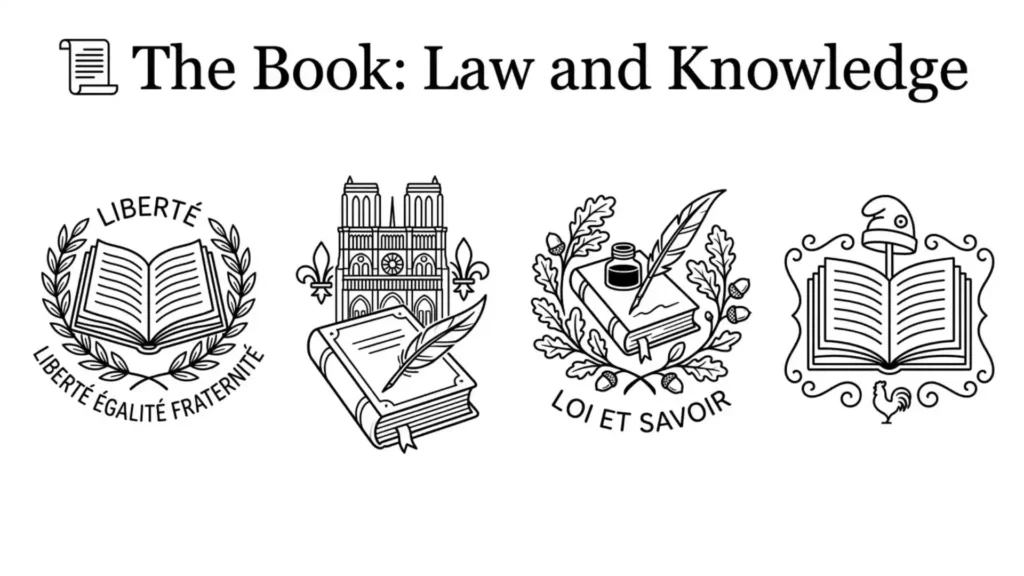
A book or scroll symbolizes written law, knowledge, and the importance of rules in maintaining justice.
Historical Background
From Hammurabi’s Code to modern constitutions, written laws have guided societies for centuries.
Emotional Meaning
The book represents trust. People feel secure knowing that laws are written, not arbitrary.
Cultural Comparison
- USA & Europe: Constitutions and legal codes
- Asia: Ancient texts like Dharma scriptures
- Africa: Combination of written and oral traditions
The book shows that justice is not just an idea but a system built on knowledge and learning.
🕊️ The Dove: Peace and Justice
The dove is often associated with peace, but it also symbolizes justice achieved without conflict.
Historical Origin
The dove gained prominence through religious and cultural symbolism, especially in Christianity.
Psychological Meaning
It represents hope, calm, and resolution. Justice is not always about punishment but also about peace.
Cultural Meaning
- Western cultures: Peace and reconciliation
- Asia: Harmony and spiritual balance
- Africa: Community healing and unity
Justice is truly complete when it leads to peace.
🔥 The Flame: Truth and Enlightenment
Fire or flame is a lesser-known but powerful symbol of justice. It represents truth, clarity, and the burning away of lies.
Historical Background
In many ancient cultures, fire was seen as a purifier. It exposed truth and eliminated falsehood.
Emotional Meaning
Flames evoke intensity and transformation. Justice often requires uncovering hidden truths.
Cultural Perspective
- Europe: Enlightenment and truth
- Asia: Spiritual awakening
- Africa: Cleansing and renewal
The flame reminds us that justice often begins with truth.
⚖️ Lady Justice: The Complete Symbol
Lady Justice combines multiple symbols into one powerful figure: scales, sword, and blindfold.
Historical Origin
Derived from Greek and Roman goddesses like Themis and Justitia, she became the universal symbol of justice.
Psychological Meaning
She represents the ideal system people trust. Balanced, fair, and strong.
Cultural Impact
- Found in courts worldwide
- Represents legal systems globally
- Symbol of fairness across cultures
Lady Justice is not just a figure. She is a vision of what justice should be.
🌍 How Different Cultures Interpret Justice Symbols
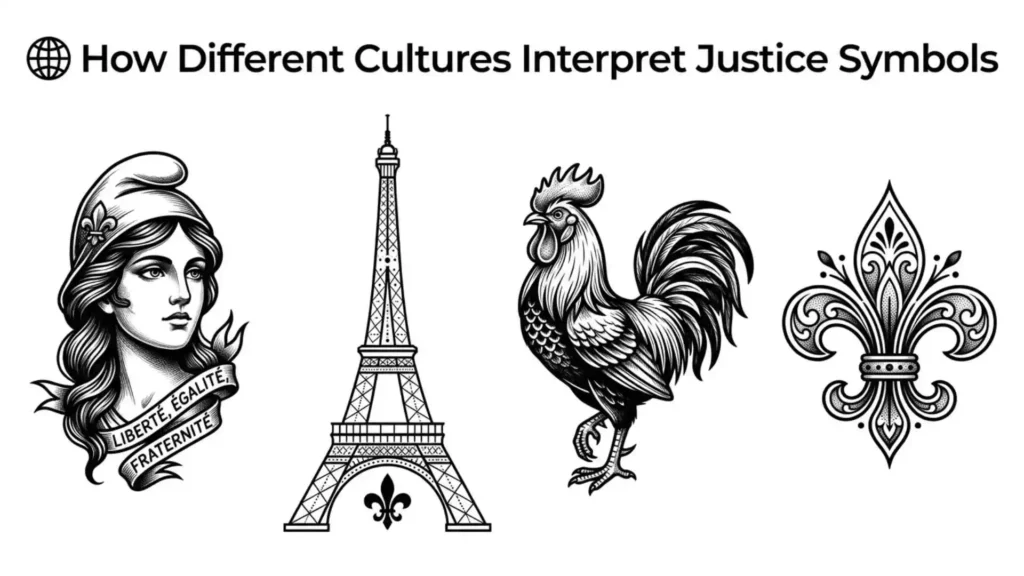
Justice is universal, but its symbols vary across cultures.
United States
Focus on equality, rights, and legal fairness. Symbols emphasize impartiality.
Europe
Strong connection to tradition, philosophy, and structured law systems.
Asia
Justice often blends with spirituality, karma, and moral balance.
Africa
Community-based justice systems focus on harmony and restoration rather than punishment.
These differences show that justice is both universal and deeply cultural.
💡 Why Symbols of Justice Matter Today
In modern society, symbols still shape how we see justice.
They influence trust in legal systems
They communicate fairness without words
They inspire accountability and responsibility
In a world full of complexity, symbols simplify powerful ideas.
❓ FAQs About Symbols of Justice
1. What are the main symbols of justice?
The most common ones include the scales, sword, blindfold, Lady Justice, and the book of law.
2. Why is Lady Justice blindfolded?
The blindfold represents impartiality, meaning justice should be fair and unbiased.
3. What do the scales of justice represent?
They symbolize balance, fairness, and weighing evidence before making decisions.
4. Is the sword a negative symbol?
No. It represents authority and the enforcement of justice, which is necessary for order.
5. Do all cultures use the same justice symbols?
No. While some symbols are universal, many cultures have unique interpretations.
6. Why are symbols important in law?
They communicate complex ideas like fairness and authority in a simple, visual way.
7. What is the oldest symbol of justice?
The scales are among the oldest, dating back to ancient Egyptian civilization.
✨ Conclusion: The Timeless Power of Justice Symbols
Symbols of justice are more than images. They are reflections of human values, struggles, and hopes for fairness. From ancient Egypt to modern courtrooms, these symbols remind us that justice is not just about laws but about balance, truth, and humanity.
They connect emotion with logic, culture with morality, and past with present. In a world that constantly changes, these symbols remain steady reminders of what we all seek a fair and just society.
Understanding them helps us not only see justice but feel it, question it, and strive to uphold it in our own lives.

Joseph Walker is a passionate writer and researcher focused on symbols, hidden meanings, ancient signs, and cultural symbolism from around the world. He enjoys exploring the stories and mysteries behind spiritual icons, mythological signs and historical emblems.
He is the author of “The Power Behind Timeless Symbols”. His work helps readers understand the deeper meanings of symbols in a simple and engaging way.
Through his articles, Joseph aims to make symbolism easier to explore for curious minds and modern readers.