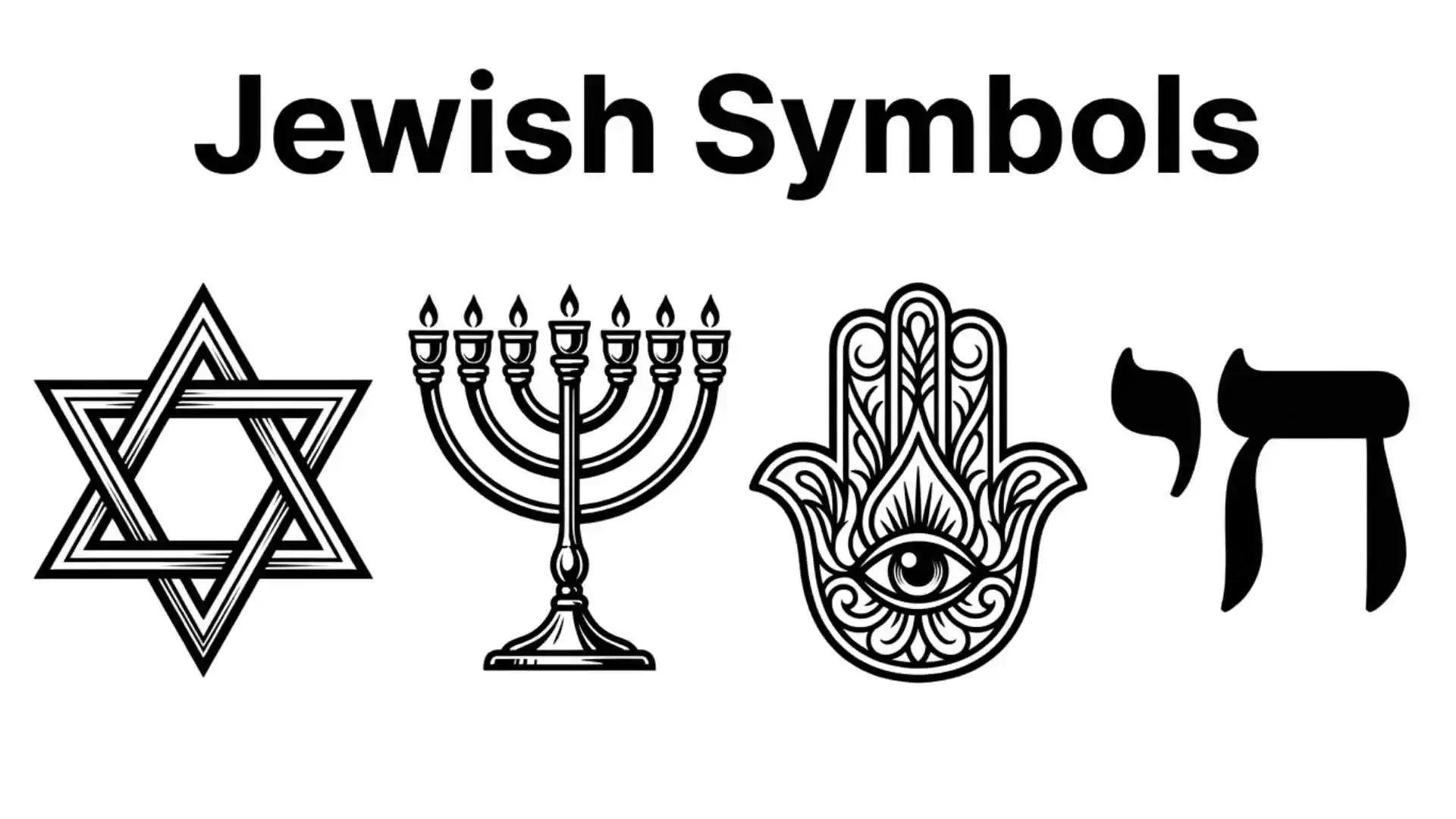
Jewish symbols carry centuries of history, emotion, identity, and spiritual depth. When we explore Jewish symbols, we are not just looking at ancient signs, we are stepping into a living story of faith, survival, and cultural identity that continues to shape millions of lives today. These symbols are not only religious markers but also emotional anchors that connect generations across time.
From sacred objects placed in homes to powerful emblems worn as jewelry, each symbol reflects a deeper meaning that goes beyond appearance. Some represent protection, some represent faith in one God, and others express hope, resilience, and life itself.
Understanding these symbols helps us see how Judaism blends spirituality with everyday life in a way that feels both ancient and deeply human. Let’s explore the most important Jewish symbols, their meanings, origins, and the emotional stories they continue to tell across cultures.
History of Jewish Symbols and Their Spiritual Foundation
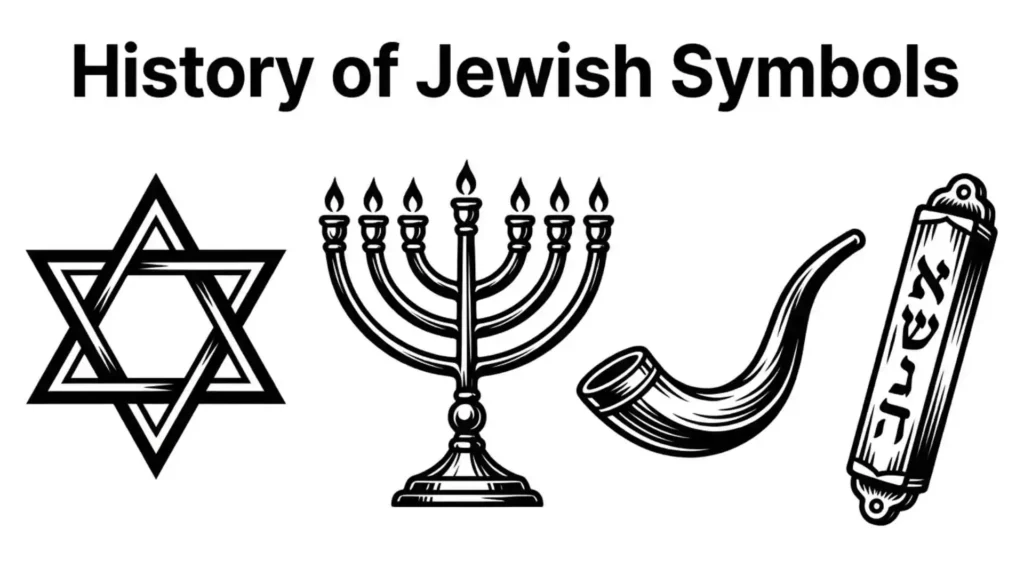
The history of Jewish symbols is deeply connected to the evolution of Judaism itself. Many of these symbols originated thousands of years ago during the time of the ancient Israelites. They were used in temples, sacred texts, and community rituals to express devotion and identity.
In early Jewish tradition, symbols were not just decorative. They were spiritual reminders of God’s presence and commandments. For example, objects used in the Temple in Jerusalem carried divine significance and were often symbolic representations of spiritual concepts like purity, light, and unity.
As Jewish communities spread across Europe, Asia, Africa, and the Middle East, these symbols evolved while still preserving their core meanings. In times of exile and persecution, symbols became even more important. They acted as silent declarations of identity and faith when open practice was restricted.
Psychologically, these symbols helped communities maintain hope and emotional strength. Even today, Jewish symbols continue to offer comfort, grounding, and belonging.
Star of David Meaning and Symbolism
The Star of David, also known as Magen David, is one of the most recognized Jewish symbols in the world. It is a six-pointed star formed by two overlapping triangles.
One triangle points upward, symbolizing humanity reaching toward God. The other points downward, representing divine connection reaching toward humanity. Together, they express balance between the spiritual and physical world.
Historically, the Star of David became widely associated with Judaism in the Middle Ages, although its symbolic roots may go back even further.
Emotionally, this symbol represents unity, protection, and identity. For many Jewish people, it is a symbol of survival, especially considering its painful history during the Holocaust when it was forcibly worn as identification.
Across cultures, interpretations vary. In Western societies, it is strongly associated with Judaism and Israel. In some Asian and African spiritual traditions, similar star shapes are seen as symbols of harmony and cosmic balance, showing how universal geometric meaning can be.
Psychologically, people often feel a sense of belonging and strength when wearing or seeing the Star of David, as it connects them to centuries of heritage.
Menorah Significance and the Symbol of Light
The Menorah is a seven branched candelabrum and one of the oldest Jewish symbols. It originally stood in the ancient Temple in Jerusalem and represents divine wisdom and enlightenment.
The Menorah symbolizes light overcoming darkness. Each branch is often interpreted as representing days of creation, spiritual awareness, or divine presence in the world.
During the festival of Hanukkah, a related version called the Hanukkiah is used with nine branches to commemorate the miracle of the oil that lasted eight days.
Emotionally, the Menorah represents hope during dark times. It reminds people that even a small amount of light can overcome great darkness.
In European Jewish history, the Menorah became a symbol of resistance and survival. In modern Israel, it is a national symbol that represents continuity and identity.
Across cultures, light symbols are powerful. In Christianity, light represents divinity, while in Eastern philosophies, light represents enlightenment and truth. This shows a shared human understanding of light as hope and wisdom.
Hamsa in Jewish Culture and Protective Energy
The Hamsa is a hand shaped symbol with an eye in the center, widely used in Jewish communities as a symbol of protection.
It is believed to protect against the evil eye and negative energy. The Hamsa is often placed in homes, worn as jewelry, or displayed near entrances.
Although it is used in Jewish culture, the Hamsa also appears in Islamic and Middle Eastern traditions, showing cultural overlap across regions.
Psychologically, the Hamsa gives a sense of safety and emotional comfort. People often associate it with protection from jealousy, harm, and misfortune.
In North African Jewish communities, it is deeply integrated into daily life. In European and American Jewish communities, it is often used more as a spiritual charm and cultural symbol.
The open hand represents blessings, kindness, and divine protection. The eye represents awareness and spiritual watchfulness.
Mezuzah Meaning and Protection in Everyday Life
The Mezuzah is a small case placed on the doorframe of Jewish homes. Inside it is a scroll containing verses from the Torah.
This symbol represents the presence of God in daily life. Every time a person enters or leaves a home, they touch or kiss the Mezuzah as a reminder of faith and spiritual connection.
Historically, the Mezuzah has been a defining symbol of Jewish homes for centuries. It marks not just physical space but spiritual identity.
Emotionally, the Mezuzah creates a sense of protection and grounding. It turns a house into a sacred space.
In Europe, during times of persecution, hidden Mezuzahs were used to preserve identity secretly. In modern America and Israel, they are proudly displayed as symbols of faith.
Psychologically, rituals connected to the Mezuzah create mindfulness and emotional stability in daily routines.
Chai Symbol Meaning and the Celebration of Life
The Chai symbol is formed from two Hebrew letters that represent the word “life.” It is one of the most positive and uplifting Jewish symbols.
Chai represents living energy, spiritual vitality, and appreciation of life itself. It is often worn as jewelry or gifted during celebrations.
In Jewish culture, the number 18 is considered lucky because it corresponds to the numerical value of Chai.
Emotionally, this symbol reflects gratitude and the celebration of existence. It is often used during birthdays, weddings, and important milestones.
Across cultures, life symbols appear in many forms. In Asian traditions, life energy is often connected to chi or qi. In African traditions, life symbols are deeply connected to ancestry and continuity.
Psychologically, Chai reinforces positive thinking and appreciation for everyday life.
Lion of Judah Symbolism and Strength of Identity
The Lion of Judah is a powerful symbol representing strength, leadership, and the tribe of Judah, one of the ancient tribes of Israel.
It is often associated with courage, royalty, and divine protection. The lion appears in religious texts as a symbol of power and authority.
Emotionally, the Lion of Judah represents resilience. It reflects the ability to survive challenges and maintain dignity.
In African Jewish communities such as Ethiopian Jews, the lion also connects to cultural pride and heritage. In Western interpretations, it is often seen as a symbol of spiritual strength.
Psychologically, the lion symbolizes confidence, leadership, and inner courage.
Modern Jewish Symbols in Contemporary Identity
Today, Jewish symbols continue to evolve in modern culture. They appear in art, fashion, architecture, and digital spaces.
Symbols like the Star of David and Chai are often used in modern jewelry and design to express identity and pride.
In Israel, national symbols such as the Menorah are integrated into government emblems and public spaces. In the United States and Europe, Jewish symbols are often used in cultural and educational contexts.
Modern interpretations also focus on inclusivity, identity, and cultural pride rather than only religious meaning.
Social media has also played a role in making Jewish symbols more visible globally, allowing younger generations to reconnect with heritage in new ways.
FAQs About Jewish Symbols
What are the most important Jewish symbols?
The most important Jewish symbols include the Star of David, Menorah, Hamsa, Mezuzah, Chai, and Lion of Judah.
What does the Star of David represent?
It represents the connection between God and humanity, unity, and Jewish identity.
Is the Hamsa a Jewish symbol?
Yes, it is widely used in Jewish culture for protection, although it is also shared across Middle Eastern traditions.
Why is the Menorah important?
It symbolizes divine light, wisdom, and spiritual enlightenment, and is linked to the ancient Temple in Jerusalem.
What does Chai mean in Judaism?
Chai means “life” and represents vitality, gratitude, and celebration of living.
Where is the Mezuzah placed?
It is placed on the doorframe of Jewish homes as a reminder of faith and divine presence.
What does the Lion of Judah symbolize?
It symbolizes strength, courage, leadership, and the ancient tribe of Judah.
Conclusion
Jewish symbols are more than cultural designs, they are powerful expressions of faith, identity, and emotional strength. Each symbol carries deep meaning that connects history with present life. From the protective Mezuzah to the life affirming Chai, these symbols reflect a rich spiritual tradition that continues to inspire people across the world. They remind us of resilience, unity, and the importance of remembering where we come from while moving forward with hope.

Nicholas Allen is a passionate writer and symbolism researcher who explores the hidden meanings behind ancient signs, spiritual icons and cultural symbols from around the world. His work focuses on making complex symbolism easy to understand for modern readers.
He is the author of “Mystic Signs and Their Hidden Meanings”. Through his writing, Nicholas helps readers discover the stories, beliefs and mysteries connected to symbols across history and different cultures.