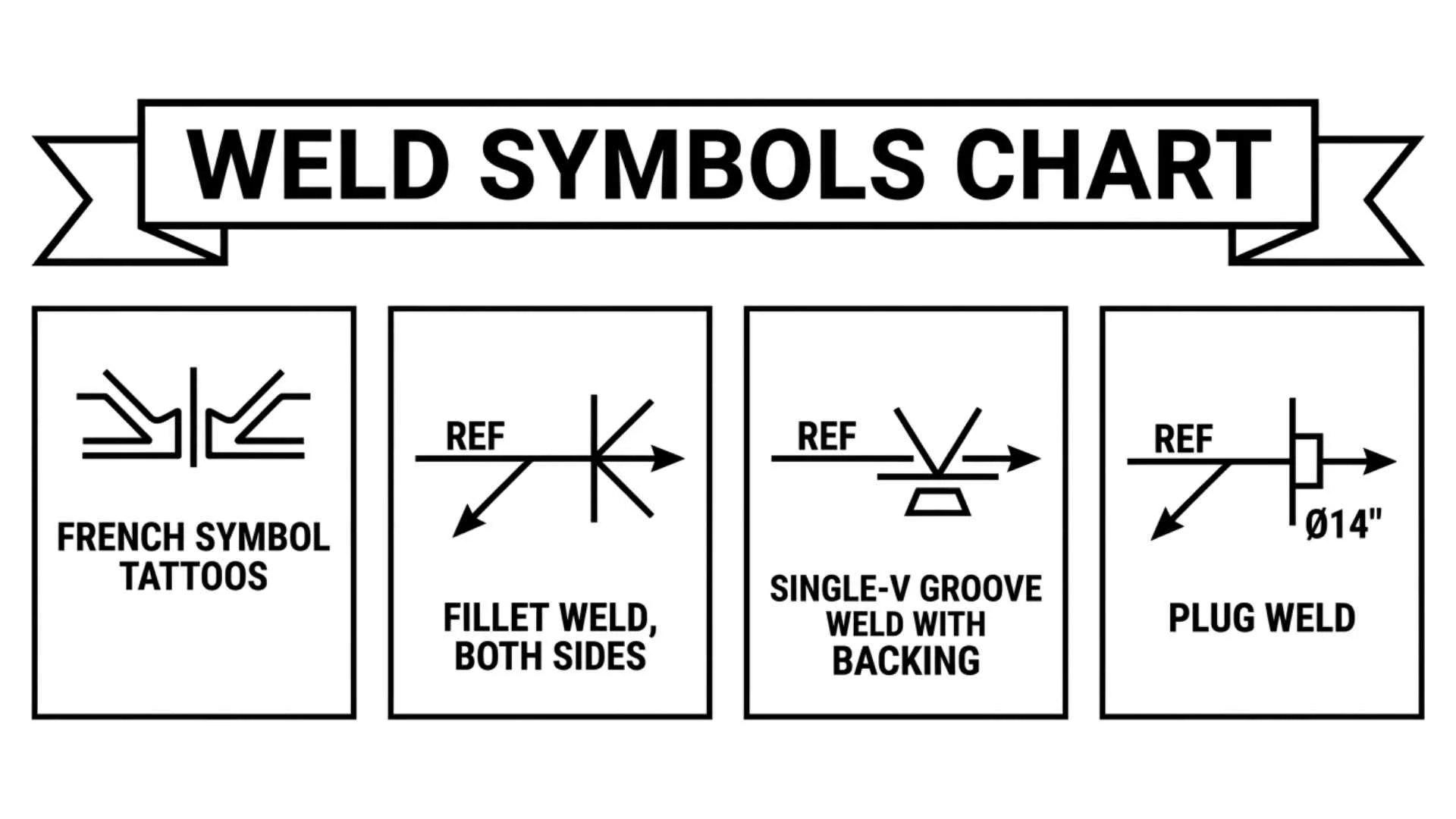
Have you ever looked at a welding drawing and felt completely lost staring at lines, arrows, and strange shapes? You are not alone. A weld symbols chart is like a secret language used by engineers, fabricators, and welders across the world. Once you understand it, everything becomes clearer, faster, and more precise. In the first few seconds of reading a blueprint, these symbols tell you exactly what to do, how to do it, and where it matters most.
This guide is not just about memorizing symbols. It is about understanding their meaning, their purpose, and even the deeper logic behind why they exist. Whether you are a beginner or someone looking to sharpen your skills, this article will help you read weld symbols with confidence and clarity.
What Is a Weld Symbols Chart and Why It Matters
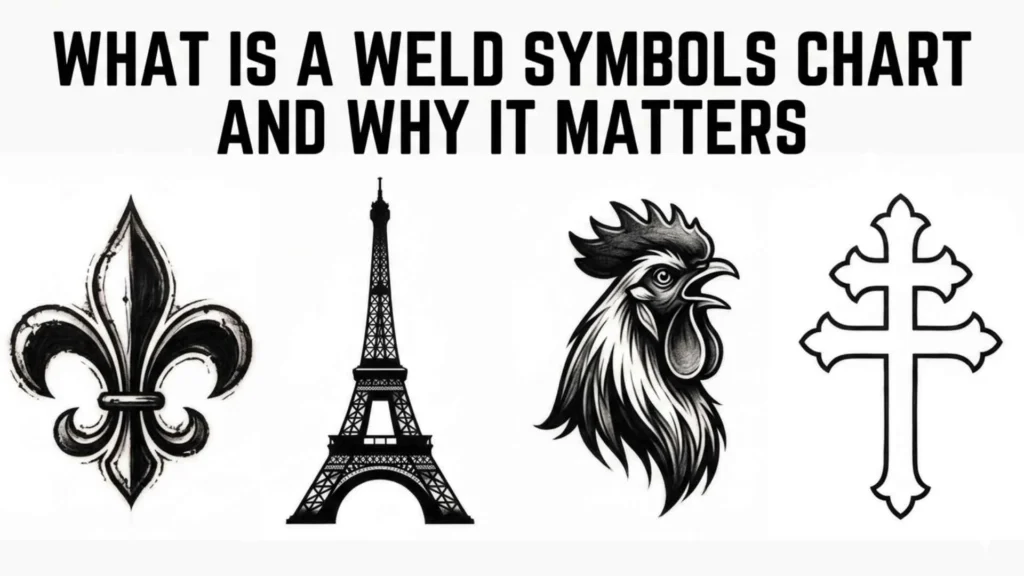
A weld symbols chart is a visual reference that shows standardized symbols used in welding drawings. These symbols communicate instructions without long descriptions, saving time and avoiding costly mistakes.
Think of it like road signs. You do not need a paragraph to understand a stop sign. In the same way, weld symbols instantly communicate essential details such as:
- Type of weld
- Size and depth
- Location of the weld
- Finishing requirements
Emotional and Practical Meaning
On a deeper level, weld symbols represent precision, trust, and communication. In industries like construction or manufacturing, a small misunderstanding can lead to serious consequences. These symbols create a shared language that connects people across different countries and skill levels.
Did you know?
Welding symbols are standardized globally, but slight variations exist depending on the system used, such as American or ISO standards.
The Basic Elements of Welding Symbols
Before diving into a full weld symbols chart, you need to understand the building blocks. Every welding symbol is made up of a few key parts.
1. Reference Line
This is the horizontal line where all symbols are placed. It acts like the foundation.
2. Arrow
The arrow points to the exact location of the weld on the material.
3. Tail
The tail provides additional information such as welding process or specifications.
4. Weld Symbol
This is the core symbol that represents the type of weld.
Psychological Insight
These elements reflect clarity and direction. The arrow guides action, the line organizes information, and the symbol delivers meaning. It mirrors how humans process instructions visually rather than textually.
Common Weld Symbols and Their Meanings
Understanding the most common symbols is the key to mastering any weld symbols chart.
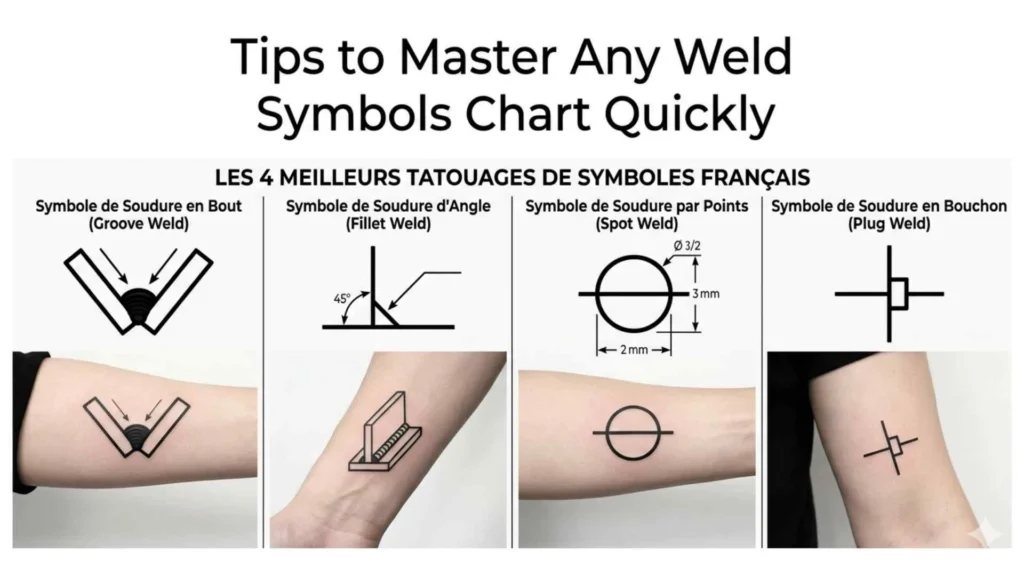
Fillet Weld Symbol
This is the most widely used weld symbol. It looks like a triangle.
Meaning: Used for joining two surfaces at a right angle
Emotional meaning: Stability and support, like a strong corner holding everything together
Groove Weld Symbol
This symbol represents welds made in grooves between materials.
Types include:
- V groove
- U groove
- Bevel groove
Meaning: Deep penetration and strong bonding
Symbolic interpretation: Depth, connection, and strength beneath the surface
Plug and Slot Weld Symbols
These indicate welds used to fill holes or slots.
Meaning: Filling gaps and reinforcing structures
Emotional meaning: Completion and reinforcement
Spot Weld Symbol
A simple circular symbol.
Meaning: Used for joining metal sheets at specific points
Symbolic meaning: Precision and minimalism
Seam Weld Symbol
Similar to spot weld but continuous.
Meaning: Continuous weld along a seam
Emotional meaning: Continuity and unity
How to Read a Weld Symbols Chart Step by Step
Reading a weld symbols chart becomes easy when you follow a simple process.
Step 1: Identify the Reference Line
Everything starts here. It organizes all information.
Step 2: Look at the Arrow
This tells you where the weld is applied.
Step 3: Check the Symbol Placement
- Below the line means weld on the arrow side
- Above the line means weld on the opposite side
Step 4: Read Dimensions
Numbers indicate size, length, and spacing.
Step 5: Look for Additional Notes
The tail may include process details like MIG or TIG welding.
Real World Insight
Professional welders often say that reading symbols correctly is more important than the welding itself. A perfect weld in the wrong place is still a mistake.
Differences in Weld Symbols Across Cultures
Although welding symbols are standardized, cultural and regional differences still exist.
United States
Uses AWS standards. Symbols are very detailed and widely used in construction and manufacturing.
Europe
Follows ISO standards. Slight differences in placement and interpretation.
Asia
Countries like Japan and China use ISO but may include additional notations.
Africa
Standards vary depending on region, often influenced by European or American systems.
Cultural Meaning
Across cultures, weld symbols represent precision and discipline. In industrial societies, they symbolize progress and engineering excellence.
The Hidden Psychology Behind Welding Symbols
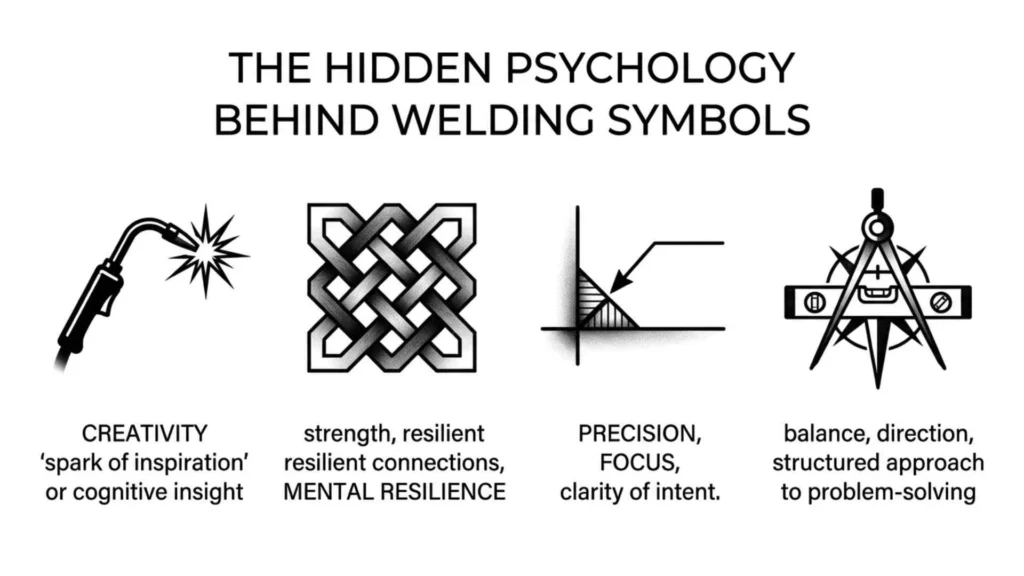
At first glance, weld symbols seem purely technical. But there is a deeper layer.
- Triangles represent strength and balance
- Circles symbolize unity and completeness
- Lines show direction and structure
Humans naturally understand shapes before words. That is why weld symbols are so effective. They tap into visual cognition, making communication faster and more intuitive.
Advanced Welding Symbols You Should Know
Once you master the basics, advanced symbols help you read complex drawings.
Contour Symbols
Indicate the shape of the finished weld:
- Flat
- Convex
- Concave
Finish Symbols
Show how the weld should be finished:
- Grinding
- Machining
- Chipping
Field Weld Symbol
A flag symbol that indicates welding must be done on site.
Back or Backing Weld Symbol
Used for welds applied on the opposite side for reinforcement.
Did you know?
Some weld symbols include multiple layers of information in a single compact design. This allows engineers to communicate complex instructions instantly.
Common Mistakes When Reading Weld Symbols
Even experienced welders can make mistakes if they overlook details.
Misinterpreting Symbol Placement
Confusing arrow side and other side is one of the most common errors.
Ignoring Dimensions
Skipping numbers can lead to weak or oversized welds.
Overlooking the Tail
Important instructions are often hidden in the tail.
Assuming Instead of Reading
Never assume. Always follow the symbol exactly.
Emotional Insight
Mistakes often come from overconfidence or rushing. Welding symbols remind us to slow down, observe, and respect precision.
Tips to Master Any Weld Symbols Chart Quickly
If you want to become confident in reading welding symbols, follow these practical tips.
Practice with Real Drawings
Theory alone is not enough. Practice regularly.
Use a Printed Chart
Keep a weld symbols chart nearby for quick reference.
Break Down Complex Symbols
Focus on one element at a time.
Learn by Doing
Hands on experience helps reinforce understanding.
Stay Updated
Standards evolve, so keep learning.
FAQs About Weld Symbols Chart
1. What is the purpose of a weld symbols chart?
It provides a standardized way to communicate welding instructions clearly and quickly.
2. Are weld symbols the same worldwide?
Mostly yes, but slight differences exist between AWS and ISO standards.
3. What does a triangle symbol mean in welding?
It represents a fillet weld, commonly used for joining surfaces at right angles.
4. How do I know which side to weld?
Check the symbol placement relative to the reference line. Below means arrow side, above means opposite side.
5. Why are welding symbols important?
They prevent errors, save time, and ensure structural safety.
6. Can beginners learn weld symbols easily?
Yes, with practice and a good weld symbols chart, anyone can learn them.
7. What does the tail in a welding symbol indicate?
It provides additional information such as welding process or special instructions.
Conclusion
A weld symbols chart is more than just a technical guide. It is a universal language that connects engineers, designers, and welders across the world. Each symbol carries meaning, precision, and purpose. When you learn to read these symbols, you gain the ability to understand complex designs with ease and confidence.
Mastering welding symbols is not just about skill, it is about clarity, discipline, and attention to detail. The more you practice, the more intuitive it becomes. Over time, what once looked confusing will feel like second nature.
If you take one thing from this guide, let it be this. Every line, arrow, and symbol tells a story. Learn to read that story, and you will unlock a powerful skill that sets you apart.

Nicholas Allen is a passionate writer and symbolism researcher who explores the hidden meanings behind ancient signs, spiritual icons and cultural symbols from around the world. His work focuses on making complex symbolism easy to understand for modern readers.
He is the author of “Mystic Signs and Their Hidden Meanings”. Through his writing, Nicholas helps readers discover the stories, beliefs and mysteries connected to symbols across history and different cultures.