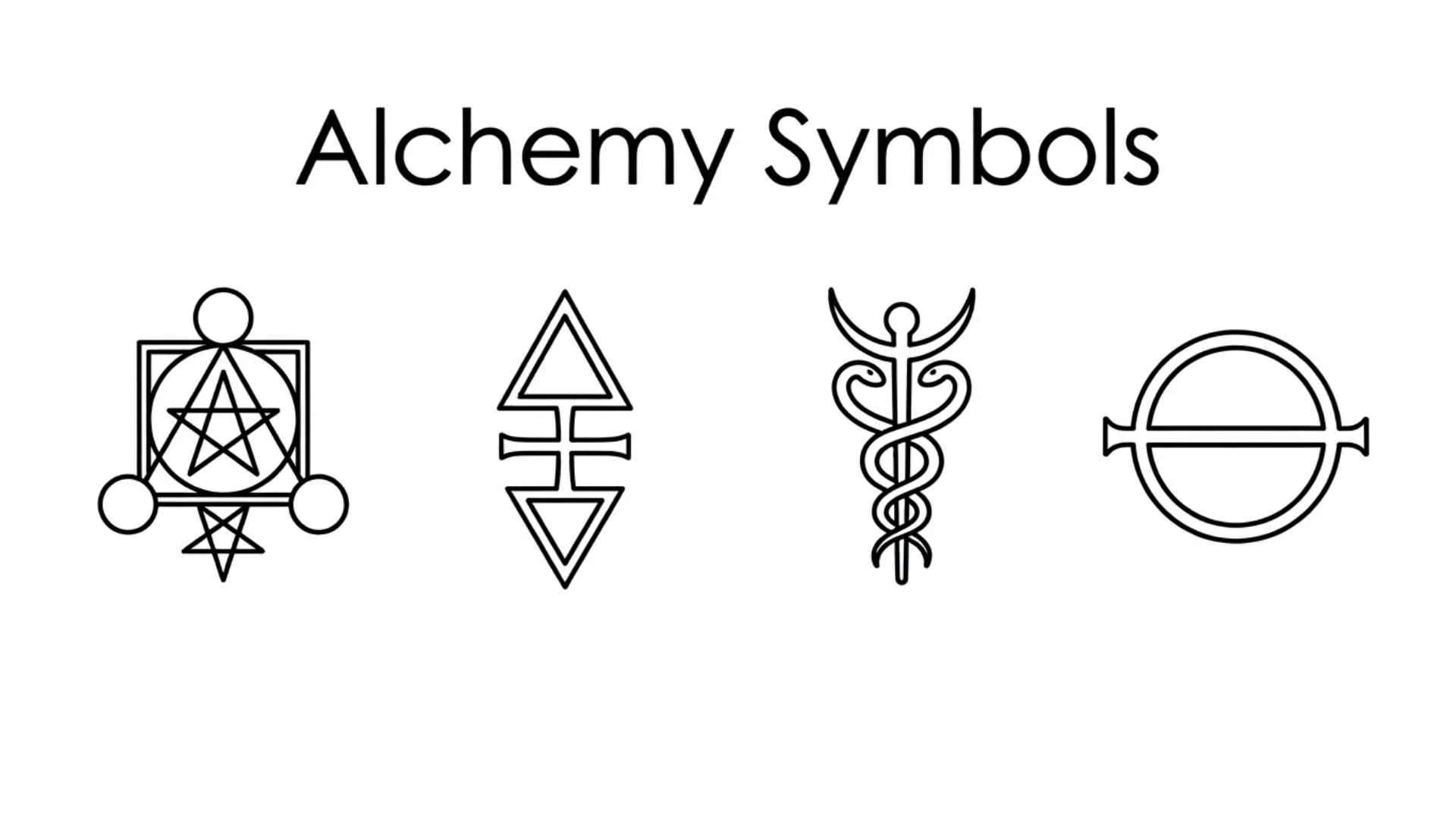
Alchemy symbols have fascinated humanity for centuries because they combine mystery, spirituality, science, and emotional transformation into one visual language. From ancient manuscripts to modern tattoos, these sacred signs continue to capture attention because they represent more than physical elements. They reflect human desires, fears, growth, wisdom, and the search for purpose.
Imagine a medieval alchemist sitting beside a glowing furnace, sketching strange markings into a dusty journal while searching for eternal life or hidden truth. Those symbols were never random. Each one carried a deeper message about the soul, nature, and the universe itself.
Today, people still search for the meaning of alchemy symbols because these ancient designs feel personal and powerful. Some represent inner balance, while others symbolize transformation, protection, healing, or spiritual awakening. Across Europe, Asia, Africa, and the Americas, similar symbolic systems emerged because humans everywhere wanted to understand life beyond the visible world.
This guide explores the most important alchemy symbols, their origins, emotional meanings, cultural interpretations, and why they still inspire modern art, spirituality, psychology, and self discovery.
What Are Alchemy Symbols and Why Were They Created?
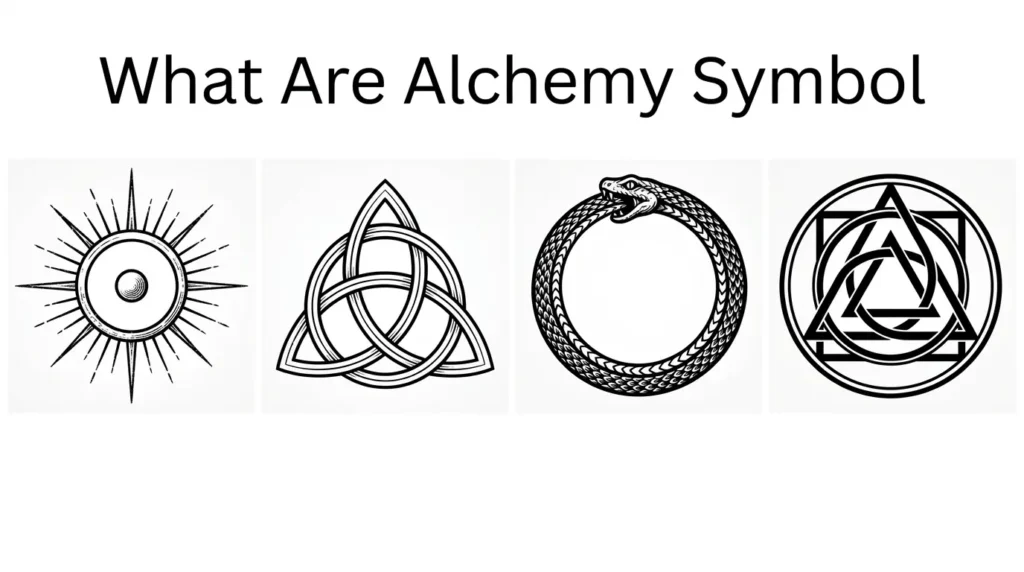
Alchemy symbols are ancient visual signs used by alchemists to represent elements, metals, planets, spiritual ideas, and stages of transformation. Alchemy itself was an early philosophical and scientific tradition practiced in ancient Egypt, Greece, China, India, the Islamic world, and medieval Europe.
At its core, alchemy was not only about turning lead into gold. It was also about transforming the human soul from ignorance into wisdom. Because much of alchemical knowledge was secret, symbols became a hidden language understood only by initiates.
Many symbols represented physical materials like mercury, sulfur, salt, gold, silver, fire, air, earth, and water. Others described emotional or spiritual states such as purification, enlightenment, destruction, rebirth, and immortality.
Did you know?
Modern chemistry evolved partly from alchemy. Many laboratory tools and experimental methods used today originated from alchemical practices.
Why Symbols Were So Important
Alchemists used symbols because they believed truth could not always be explained with ordinary language. A symbol could express multiple meanings at once.
For example:
- Gold symbolized both physical wealth and spiritual perfection
- Fire represented destruction but also purification
- Water symbolized intuition, healing, and emotional depth
- Mercury reflected intelligence, transformation, and unpredictability
This layered meaning is why alchemy symbols still feel mysterious and emotionally powerful today.
The Four Classical Element Symbols and Their Deep Spiritual Meaning
The four classical elements are among the most recognized alchemy symbols in history. These elemental symbols formed the foundation of ancient alchemical philosophy.
Fire Symbol
The fire symbol appears as an upward triangle. It represents passion, energy, transformation, courage, and desire.
△\triangle△
In European traditions, fire was connected with masculine energy and divine power. In Asian philosophy, fire often represented life force and ambition. African spiritual systems sometimes viewed fire as a bridge between ancestors and the living world.
Psychologically, fire symbolizes motivation and inner strength. People drawn to this symbol often seek personal growth, confidence, or emotional renewal.
Water Symbol
The water symbol is a downward facing triangle. It represents emotion, intuition, healing, femininity, and subconscious wisdom.
▽\triangledown▽
Ancient cultures saw water as the source of life. In Chinese traditions, water symbolized flexibility and wisdom. In Native American beliefs, water often represented spiritual cleansing and emotional balance.
Emotionally, this symbol connects with empathy, sensitivity, and emotional depth.
Air Symbol
The air symbol looks like an upward triangle crossed with a horizontal line. It symbolizes intellect, communication, imagination, and freedom.
In Greek philosophy, air represented logic and consciousness. Across many cultures, air became associated with breath, life energy, and inspiration.
People attracted to air symbols are often creative thinkers who value knowledge and mental clarity.
Earth Symbol
The earth symbol is a downward triangle crossed by a line. It represents stability, grounding, fertility, and physical reality.
▽ aaa‾\triangledown\!\!\!\!\!\!\!\!\!\!\!\!\!\!\!\!\!\!\!\!\!\!\!\!\!\!\!\!\!\!\!\!\!\!\!\!\!\!\!\!\!\!\!\!\!\!\!\!\!\!\overline{\phantom{aaa}}▽aaa
European alchemists linked earth with patience and endurance. In African and Indigenous traditions, earth represented ancestry, community, and survival.
Emotionally, earth symbols create feelings of safety, balance, and connection to nature.
The Philosopher’s Stone Symbol and the Dream of Transformation
No alchemy symbol is more legendary than the Philosopher’s Stone. This mythical substance was believed to transform ordinary metals into gold and grant spiritual enlightenment or immortality.
The symbol often appeared as a circle inside a square, inside a triangle, enclosed by another circle.
This complex design represented harmony between body, mind, spirit, and the universe.
Emotional and Psychological Meaning
The Philosopher’s Stone became a symbol of personal transformation. It reflects the human desire to become wiser, stronger, and more complete.
Carl Jung, the famous psychologist, believed alchemy symbols mirrored the journey of psychological growth. According to Jung, the Philosopher’s Stone represented the fully integrated self.
Cultural Interpretations
- European alchemists saw it as ultimate perfection
- Chinese alchemy connected it with immortality and energy balance
- Indian traditions linked similar ideas to enlightenment and spiritual awakening
Today, many people view the Philosopher’s Stone as a metaphor for self improvement and inner healing.
The Meaning of Metal Symbols in Alchemy
Ancient alchemists believed metals carried spiritual energy. Each metal had a unique symbol and emotional meaning.
Gold Symbol
Gold represented perfection, divine consciousness, wealth, and enlightenment. It was associated with the sun and spiritual mastery.
Emotionally, gold symbolizes confidence, achievement, and inner brilliance.
Silver Symbol
Silver symbolized intuition, feminine energy, purity, and the moon. It represented emotional intelligence and spiritual reflection.
In many cultures, silver was connected with protection and psychic awareness.
Mercury Symbol
Mercury was one of the most important alchemy symbols because it represented transformation itself.
\mercury\mercury\mercury
Mercury symbolized movement, intelligence, adaptability, and duality. Ancient alchemists saw it as the bridge between physical and spiritual worlds.
Psychologically, mercury reflects curiosity, flexibility, and emotional complexity.
Lead Symbol
Lead represented heaviness, limitation, suffering, and the imperfect human condition. Yet alchemists believed lead could evolve into gold through transformation.
This idea became a powerful metaphor for personal growth. Human struggles could eventually lead to wisdom and strength.
Did you know?
Many motivational teachings today still use the alchemical idea of turning emotional “lead” into personal “gold.”
Sacred Alchemy Symbols Connected to Life and Death
Alchemy was deeply connected with cycles of destruction and rebirth. Several ancient symbols represented life transitions and spiritual evolution.
Ouroboros
The Ouroboros shows a serpent eating its own tail. It symbolizes eternity, rebirth, cycles, and infinite transformation.
4
This symbol appeared in Egyptian, Greek, African, and Norse traditions. Across cultures, it represented the endless cycle of life, death, and renewal.
Emotionally, the Ouroboros reflects healing after hardship and the ability to reinvent oneself.
The Phoenix
Although not exclusive to alchemy, the phoenix became strongly linked with alchemical transformation. The mythical bird burns into ashes and rises again stronger than before.
The phoenix symbolizes resilience, hope, survival, and emotional rebirth.
In Asian mythology, phoenix imagery often represented harmony and prosperity. In Western traditions, it symbolized triumph over suffering.
Skull Symbol
Skulls in alchemy were not only symbols of death. They represented mortality, reflection, and spiritual awakening.
Alchemists believed confronting death helped people understand the deeper meaning of life.
Alchemy Symbols in Different Cultures Around the World
Alchemy was never limited to Europe. Many civilizations developed symbolic systems connected with transformation and hidden wisdom.
European Alchemy Symbols
European alchemy blended Greek philosophy, Egyptian mysticism, Christian spirituality, and medieval science. Symbols often appeared in secret manuscripts filled with coded illustrations.
European traditions emphasized turning base materials into spiritual perfection.
Chinese Alchemy Symbols
Chinese alchemy focused heavily on balance, longevity, and harmony with nature. Symbols often connected with Yin and Yang, energy flow, and immortality.
The Chinese approach emphasized internal transformation rather than material wealth.
Indian Alchemy and Sacred Signs
Indian alchemical traditions, known as Rasayana, explored spiritual purification and healing. Symbols were connected with chakras, meditation, and sacred geometry.
These systems viewed transformation as a path toward enlightenment.
African Symbolic Traditions
Many African cultures used symbolic systems tied to wisdom, ancestry, protection, and community. Adinkra symbols from West Africa, for example, share similarities with alchemical ideas of spiritual growth and human connection.
Native American Symbolic Meanings
Indigenous American traditions often used nature based symbols representing harmony, balance, and spiritual guidance.
Like alchemy, these traditions believed humans were deeply connected to natural forces.
Why Alchemy Symbols Still Matter in Modern Life
Even in the digital age, alchemy symbols remain popular in tattoos, jewelry, fashion, movies, books, meditation practices, and psychology.
Why do people still feel drawn to them? Because these symbols speak directly to universal emotions.
Symbols Help People Express Identity
A person wearing a fire symbol may identify with passion and courage. Someone choosing water symbolism may value healing and emotional depth.
Symbols provide emotional language when ordinary words feel limited.
Spiritual and Psychological Healing
Many people use alchemy symbols during meditation, journaling, or therapy because they represent transformation and self awareness.
Carl Jung believed ancient symbols help people connect with the unconscious mind. Modern psychology still explores how symbolic imagery influences emotions and personal growth.
Pop Culture and Modern Media
Alchemy symbols appear everywhere today:
- Fantasy novels
- Video games
- Movies
- Anime
- Music artwork
- Spiritual communities
Their mysterious appearance continues to inspire curiosity and emotional fascination.
Did you know?
The popular anime series “Fullmetal Alchemist” introduced millions of younger viewers to real alchemical concepts and symbols.
Hidden Meanings Behind Popular Alchemy Symbols
Some alchemy symbols contain deeper messages that many people overlook.
Triangle Symbols and Emotional Balance
Triangles often represented balance between mind, body, and spirit. Upward triangles symbolized masculine or active energy. Downward triangles reflected feminine or intuitive energy.
Together, they symbolized harmony and unity.
Circles and Eternal Wisdom
Circles represented eternity, wholeness, and divine connection. Since circles have no beginning or end, they became symbols of infinite existence.
Squares and Stability
Squares symbolized structure, order, and the material world. Alchemists used square imagery to represent grounding and practical reality.
Combining Symbols
Many alchemical symbols combined shapes to express multiple layers of meaning. This is why ancient manuscripts often look mysterious or puzzle like.
The symbols were designed to teach deeper truths slowly over time.
How to Use Alchemy Symbols for Personal Growth Today
Modern people often use alchemy symbols as tools for mindfulness and emotional awareness.
Meditation and Reflection
Focusing on a symbol during meditation can help strengthen emotional intention. For example:
- Fire for courage
- Water for healing
- Earth for stability
- Air for clarity
Journaling and Self Discovery
Some people draw alchemy symbols in journals to reflect personal goals or emotional challenges. This practice helps connect abstract feelings with visual meaning.
Tattoos and Personal Identity
Alchemy symbol tattoos have become popular because they carry deep personal significance. Unlike decorative designs, these symbols often represent emotional journeys or life philosophies.
Home and Spiritual Spaces
Many people place alchemy symbols in homes, yoga studios, or creative spaces to inspire peace, creativity, and transformation.
Frequently Asked Questions About Alchemy Symbols
What do alchemy symbols represent?
Alchemy symbols represent elements, metals, spiritual concepts, emotional states, and stages of transformation. They were used as a secret language by ancient alchemists.
What is the most powerful alchemy symbol?
The Philosopher’s Stone is often considered the most powerful alchemy symbol because it represents ultimate transformation, enlightenment, and perfection.
Are alchemy symbols spiritual?
Yes, many alchemy symbols carry spiritual meaning. They often represent inner growth, emotional healing, balance, and connection with the universe.
Why are alchemy symbols still popular today?
People remain fascinated by alchemy symbols because they combine mystery, psychology, spirituality, and personal meaning. They are widely used in art, tattoos, fashion, and meditation.
What does the Ouroboros symbolize?
The Ouroboros symbolizes eternity, rebirth, renewal, and the endless cycle of life and transformation.
Is alchemy connected to modern science?
Yes, early alchemy contributed to the development of chemistry, medicine, and laboratory experimentation. Many scientific practices evolved from alchemical traditions.
Which alchemy symbol represents transformation?
Mercury and the Philosopher’s Stone are strongly associated with transformation because they symbolize change, evolution, and spiritual growth.
Conclusion
Alchemy symbols continue to fascinate humanity because they speak to something timeless inside us. These ancient signs are not only relics of forgotten science. They are mirrors of human emotion, spiritual curiosity, and personal transformation. Across centuries and cultures, people have turned to these symbols to understand fear, hope, healing, wisdom, and the search for meaning.
Whether it is the fiery energy of transformation, the calming depth of water, or the eternal cycle represented by the Ouroboros, every alchemy symbol carries emotional and psychological power. Their meanings remain relevant because humans still seek balance, purpose, and inner growth in a constantly changing world.
In modern life, alchemy symbols continue to inspire art, spirituality, storytelling, and self discovery. They remind us that transformation is possible, even in difficult times. Like ancient alchemists searching for gold, people today still search for something deeper within themselves.

Amelia Scott is a passionate writer and symbolism researcher who explores the hidden meanings behind ancient signs, spiritual icons and cultural symbols. She enjoys uncovering the stories and mysteries connected to symbols from around the world.
She is the author of “Mystic Marks And Secret Meanings” and “Echoes Of Forgotten Symbols”. Her work combines history, spirituality and mythology to help readers better understand the deeper meaning of symbols in everyday life.
Through her writing, Amelia aims to make the world of symbols fascinating, meaningful and easy to explore.