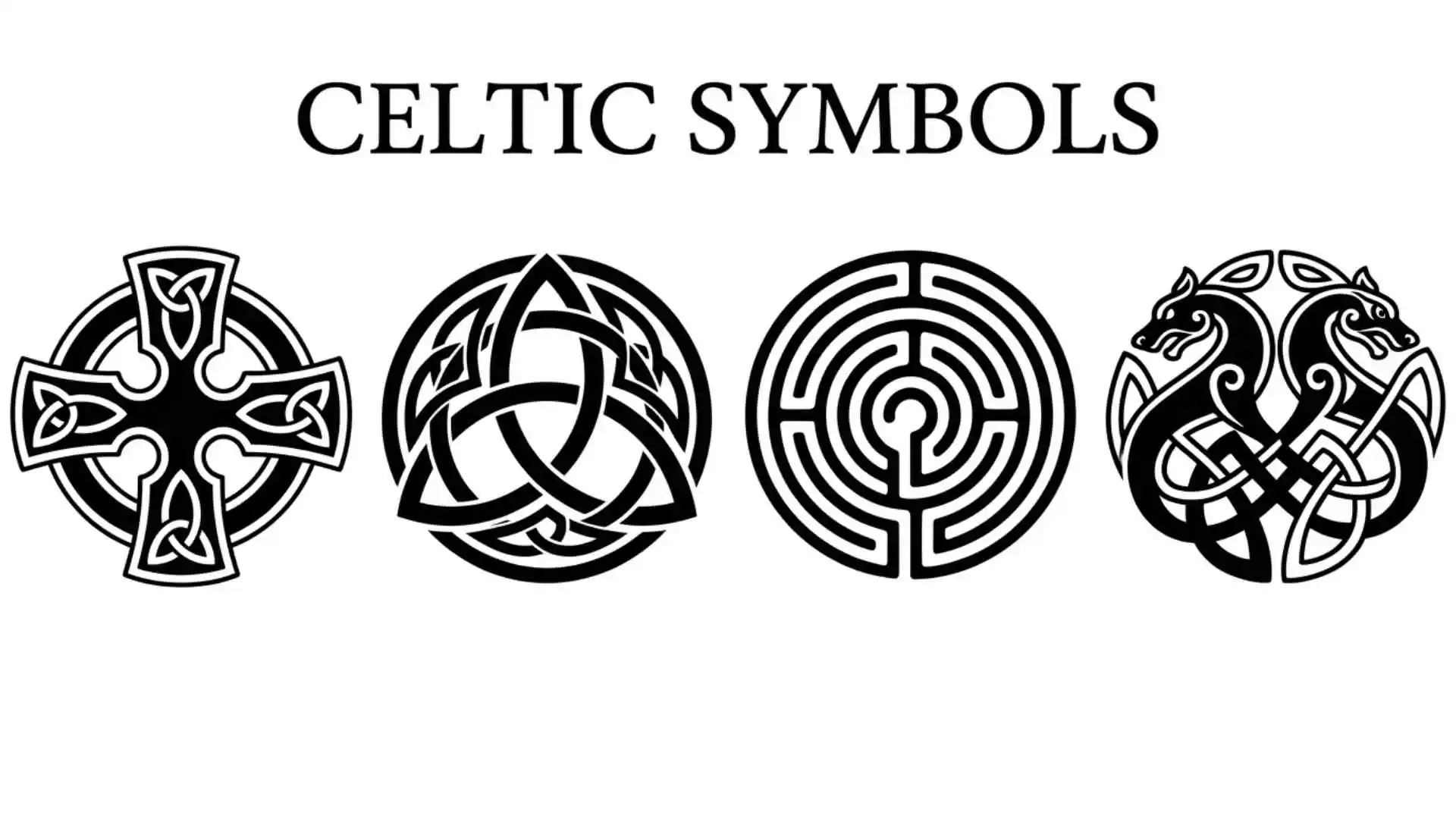
Celtic symbols have fascinated people for centuries because they carry mystery, beauty, and deep spiritual meaning. When you first see Celtic symbols, you might feel drawn to their endless knots, crosses, and natural patterns that seem to tell a silent story from the past. These ancient designs are more than decoration, they are a connection between humans, nature, and the spiritual world.
From Ireland to Scotland and beyond, Celtic culture created symbols that still inspire tattoos, jewelry, and spiritual beliefs today. Many people across the world use them for protection, love, strength, and eternal connection.
In this article, you will discover the true meaning behind Celtic symbols, their history, emotional symbolism, psychological impact, and how they are still relevant in modern life.
Celtic Symbols and Meanings
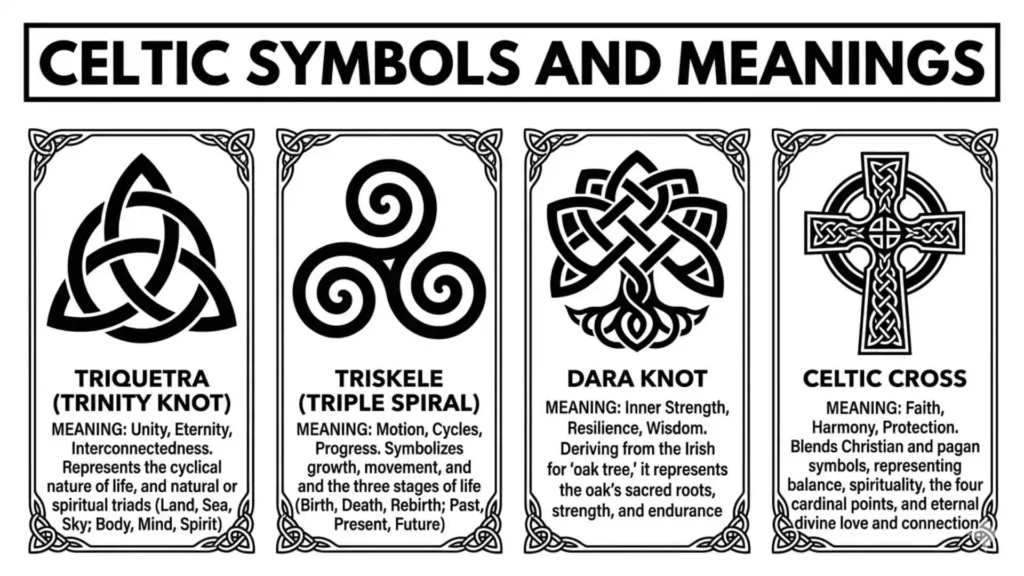
Celtic symbols are some of the most recognized ancient symbols in the world. They come from Celtic culture and are known for their detailed knotwork, spiritual meanings, and timeless designs. These symbols often represent life, nature, protection, love, and family connections.
Many people study Celtic symbols to learn about ancient traditions and Celtic heritage. Popular symbols include the Celtic Knot, Trinity Knot, Dara Knot, and Celtic Cross.
NLP Keywords: Celtic symbols, Celtic symbols and meanings, Celtic culture, Celtic heritage, Celtic traditions
LSI Keywords: ancient Celtic signs, Celtic knotwork, spiritual symbols, Celtic artwork, historical symbols
Celtic Symbols Tattoos
Celtic symbols tattoos are popular because of their unique designs and deep meanings. Many tattoo lovers choose Celtic tattoos to honor their ancestry, express personal beliefs, or celebrate important relationships.
Common Celtic tattoo designs include:
- Trinity Knot
- Celtic Cross
- Dara Knot
- Shield Knot
- Celtic Tree of Life
These tattoos are often chosen for their connection to strength, eternity, wisdom, and protection.
Semantic Keywords: Celtic tattoo designs, knot tattoos, symbolic tattoos, heritage tattoos
Celtic Symbols for the 4 Elements
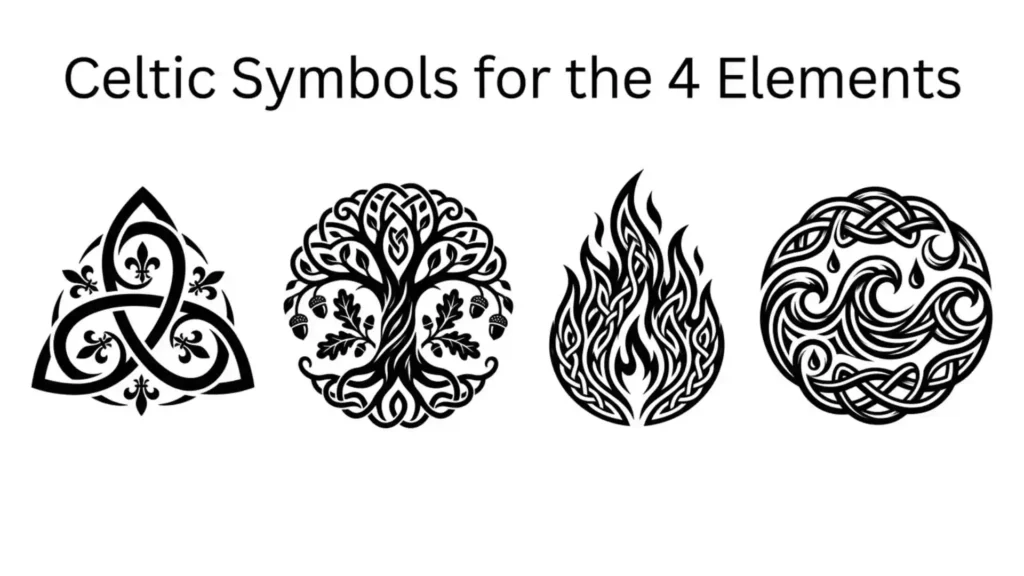
In Celtic tradition, nature played an important role in daily life and spiritual beliefs. The four elements were seen as powerful forces that shaped the world.
Earth
Represents stability, growth, and strength.
Water
Symbolizes healing, emotions, and intuition.
Air
Represents wisdom, communication, and inspiration.
Fire
Stands for energy, transformation, and courage.
Many modern Celtic-inspired designs use circles, spirals, and knot patterns to represent these natural elements.
NLP Keywords: Celtic elements, earth water air fire symbols, Celtic nature symbols
Ancient Celtic Symbols
Ancient Celtic symbols have been used for thousands of years. These symbols appeared in carvings, jewelry, monuments, and religious artwork throughout Celtic regions.
Some well-known ancient Celtic symbols include:
Triple Spiral (Triskele)
Represents progress, personal growth, and life’s journey.
Celtic Cross
Symbolizes faith, spirituality, and unity.
Shield Knot
Associated with protection and defense.
Green Man
Represents nature, renewal, and the cycle of life.
These ancient symbols continue to inspire artists, historians, and spiritual seekers today.
LSI Keywords: Celtic history, ancient traditions, Celtic mythology, sacred symbols
Celtic Symbols Tattoos and Meanings
Many Celtic tattoos are chosen because of the meanings behind their designs.
Trinity Knot Tattoo
Represents eternity, unity, and spiritual connection.
Dara Knot Tattoo
Symbolizes inner strength and wisdom.
Celtic Cross Tattoo
Represents faith, hope, and heritage.
Tree of Life Tattoo
Stands for balance, growth, and the connection between all living things.
Choosing a tattoo with meaning makes the design more personal and memorable.
Semantic Keywords: meaningful tattoos, Celtic symbolism, traditional tattoo meanings
Celtic Symbols for Love
Several Celtic symbols are linked to love, friendship, and lasting relationships.
Celtic Love Knot
Represents eternal love with no beginning or end.
Trinity Knot
Often symbolizes everlasting connection and unity.
Claddagh Symbol
Features hands, a heart, and a crown. It represents love, loyalty, and friendship.
These symbols are commonly used in jewelry, wedding gifts, and romantic tattoos.
NLP Keywords: Celtic love symbols, Celtic relationship symbols, eternal love knot
Celtic Symbols and Meanings PDF
Many people look for a Celtic symbols and meanings PDF to study Celtic history and symbolism. A complete PDF guide often includes symbol images, historical explanations, and cultural meanings.
A quality Celtic symbols PDF may cover:
- Trinity Knot
- Dara Knot
- Celtic Cross
- Tree of Life
- Triskele
- Shield Knot
- Claddagh Symbol
These resources are useful for students, researchers, artists, and history enthusiasts.
LSI Keywords: Celtic symbol guide, downloadable PDF, Celtic reference material
Celtic Symbols for Family
Family is an important theme in Celtic culture. Several symbols represent family bonds, unity, and lasting connections.
Celtic Tree of Life
Represents the connection between generations and the strength of family roots.
Trinity Knot
Can symbolize the bond between family members and eternal unity.
Dara Knot
Represents strength, resilience, and support within a family.
Celtic Family Knot
A modern design inspired by traditional Celtic knotwork that symbolizes endless family love and togetherness.
These symbols are often used in family tattoos, jewelry, and home decorations.
Semantic Keywords: family symbols, Celtic family knot, family unity symbol, heritage and ancestry
Origins of Celtic Symbols and Ancient Celtic Civilization
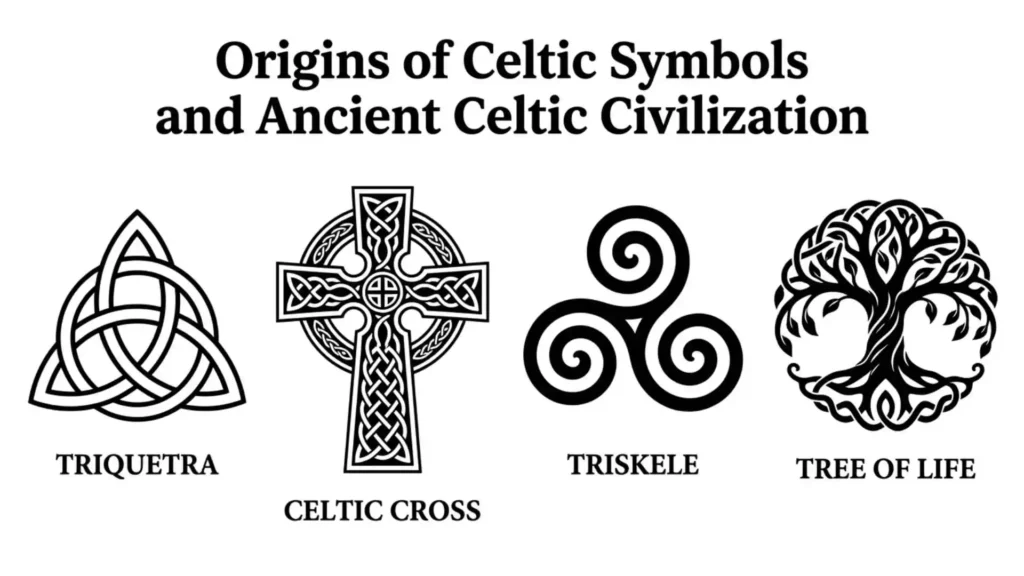
Celtic symbols come from the ancient Celtic civilization that existed over 2,000 years ago in Europe, especially in regions like Ireland, Scotland, Wales, and parts of France. The Celts were not a single empire but a group of tribes who shared language, culture, and spiritual beliefs.
They did not leave behind written records like many other civilizations. Instead, they expressed their identity through art, carvings, and symbolic patterns. This is why ancient Celtic symbols are so important, they are visual stories carved into stone, metal, and manuscripts.
Nature played a huge role in Celtic life. Trees, animals, water, and the cycles of life and death were deeply respected. This belief shaped many Celtic symbols meaning, often representing balance, eternity, and spiritual connection.
Did you know? Many Celtic symbols were originally carved into stones used as boundary markers or sacred ritual sites, not just decorative art.
The Most Famous Celtic Symbols and Their Meanings
Celtic culture created many powerful symbols, each with its own emotional and spiritual meaning. Some of the most well known include:
- Celtic knot
- Celtic cross
- Triquetra
- Triskelion
- Tree of Life
The meaning of Celtic symbols often revolves around eternity, unity, protection, and spiritual growth.
The Triquetra, for example, represents three connected forces such as life, death, and rebirth or mind, body, and spirit. The Triskelion shows motion and progress, symbolizing life moving forward no matter what happens.
The Tree of Life represents balance between heaven, earth, and underworld, showing how everything in nature is connected.
Across cultures, these meanings change slightly. In Europe, they are seen as spiritual heritage. In modern USA culture, they are often used in tattoos and jewelry for personal identity. In Asia, they are appreciated for harmony and balance, while in Africa, similar patterns are linked with ancestral respect and continuity of life.
Celtic Knot Meaning and Eternal Life Symbolism
One of the most recognized Celtic symbols is the Celtic knot. These endless loops have no beginning and no end, which makes them a powerful symbol of eternity.
Celtic Knot→Infinity, Eternity, Connection\text{Celtic Knot} \rightarrow \text{Infinity, Eternity, Connection}Celtic Knot→Infinity, Eternity, Connection
The Celtic knot meaning is often associated with eternal love, loyalty, and spiritual connection. Couples often choose Celtic knot designs for wedding rings to represent unbreakable bonds.
Psychologically, Celtic knots represent the human desire for continuity and stability. People naturally seek patterns that feel complete and never-ending, and Celtic knots give that feeling visually.
There are different types of knots:
- Love knots representing romantic connection
- Shield knots representing protection
- Trinity knots representing spiritual balance
In modern life, Celtic knot tattoos are popular among people who want to express eternal relationships, personal strength, or connection with heritage.
The Celtic Cross: Spiritual and Historical Significance
The Celtic cross meaning blends Christian and ancient Celtic traditions. It features a traditional cross combined with a circle around the intersection.
This circle is believed to represent eternity, unity, and the sun. It connects the spiritual and physical world, showing balance between heaven and earth.
Historically, Celtic crosses were carved into stone in Ireland and used as religious markers or teaching tools for early Christianity. Over time, they became symbols of faith, heritage, and identity.
Psychologically, the Celtic cross represents stability and spiritual grounding. Many people find comfort in its balanced design because it feels structured yet infinite.
Across cultures:
- In Europe, it represents Christian Celtic heritage
- In the USA, it is often worn as a cultural identity symbol
- In spiritual communities, it is used as a protection symbol
Even today, Celtic crosses are widely used in cemeteries, churches, and memorial art.
Nature Inspired Celtic Symbols Tree of Life and Animal Meanings
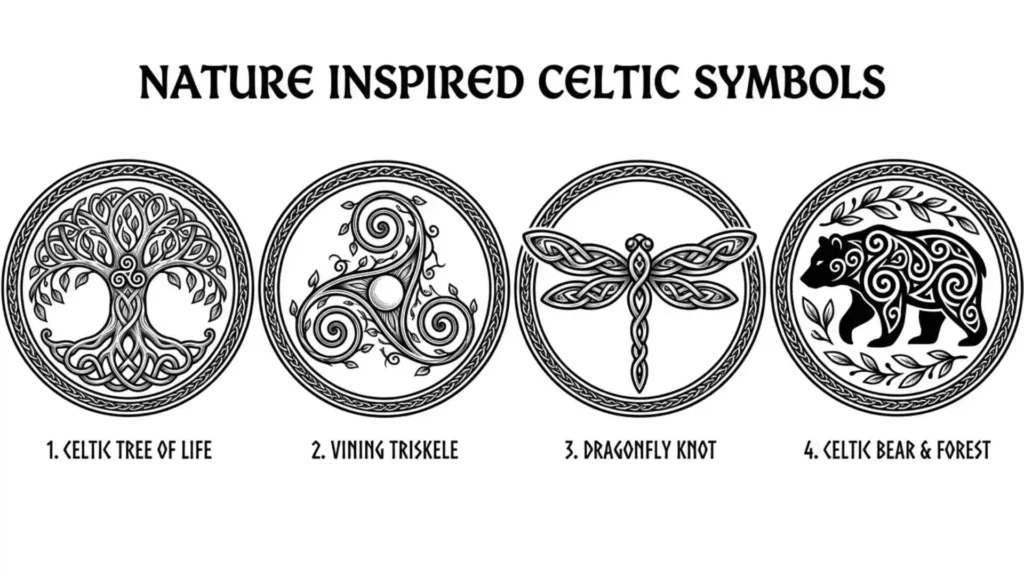
Nature is at the heart of Celtic spirituality. The Celts believed everything in nature had a soul and energy.
The Tree of Life Celtic symbol is one of the most powerful representations. It shows roots deep in the earth and branches reaching the sky, symbolizing balance between physical life and spiritual growth.
Tree of Life→Earth Connection + Spiritual Growth + Balance\text{Tree of Life} \rightarrow \text{Earth Connection + Spiritual Growth + Balance}Tree of Life→Earth Connection + Spiritual Growth + Balance
Animals also played a major role in Celtic symbols meaning:
- Deer symbolize gentleness and intuition
- Wolves represent loyalty and protection
- Birds represent freedom and spiritual messages
- Serpents symbolize healing and transformation
These symbols reflect how the Celts saw humans as part of nature, not separate from it.
In modern psychology, nature-based symbols like these are linked to grounding, emotional healing, and inner peace. People often feel calm and connected when they see these natural patterns.
Psychological Meaning of Celtic Symbols in Modern Life
Celtic symbols are not only historical artifacts, they also have strong psychological meanings today.
Humans are naturally drawn to patterns, symmetry, and repetition. Celtic designs use these elements in a way that feels calming and meaningful.
The meaning of Celtic symbols in psychology often relates to:
- Stability and emotional balance
- Sense of identity and belonging
- Connection to heritage and ancestry
- Spiritual grounding
For example, someone wearing a Celtic knot may feel a sense of emotional continuity, especially during difficult life changes. Similarly, Celtic crosses often provide comfort and spiritual reassurance.
In modern therapy and wellness culture, symbolic art is sometimes used to help people express emotions that are hard to put into words. Celtic symbols fit well into this because they carry layered meanings.
Across cultures:
- In Western psychology, they are seen as archetypal symbols
- In Eastern traditions, they resemble mandala-like balance patterns
- In African symbolism, similar patterns represent life cycles and community unity
Celtic Symbols Across Cultures USA Europe Asia and Africa
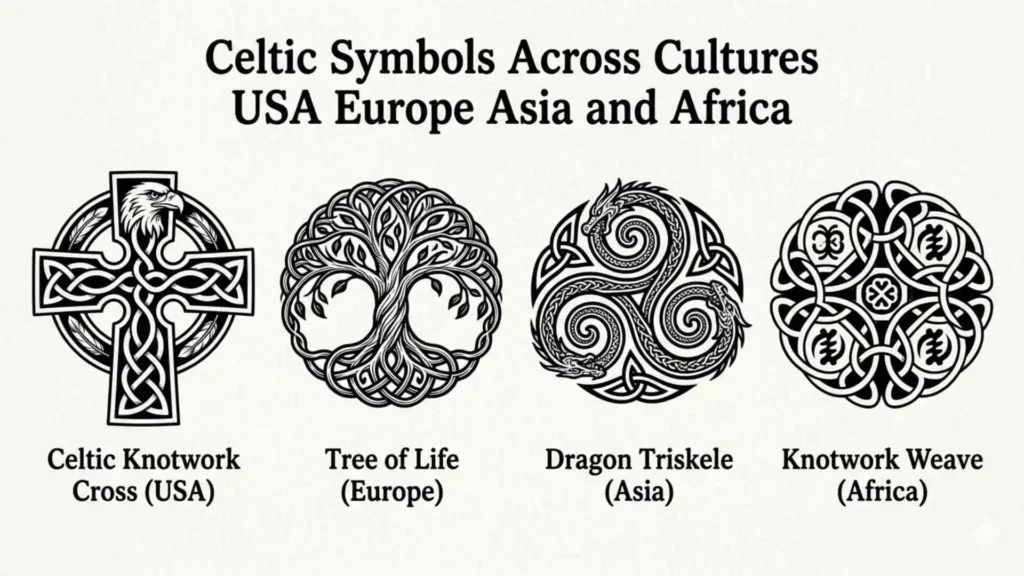
Although Celtic symbols originated in Europe, their meaning has spread globally and evolved in different cultures.
In Europe, especially Ireland and Scotland, Celtic symbols are a proud part of national identity. They represent history, resistance, and spiritual tradition.
In the USA, Celtic symbols are widely used in tattoos, fashion, and jewelry. Many people with Irish or Scottish ancestry use them to connect with their roots.
In Asia, people are often drawn to Celtic symbols because they resemble harmony-based designs like mandalas. The focus is usually on balance and energy flow.
In Africa, similar symbolic patterns exist in tribal art, where repeating designs represent community, life cycles, and ancestral connection.
This global appreciation shows how ancient Celtic symbols carry universal meanings that go beyond geography.
Did you know? Some researchers believe Celtic knot patterns share similarities with ancient Indian and Islamic geometric art, showing how human creativity often connects across cultures.
How to Use Celtic Symbols in Jewelry Tattoos and Modern Art
Today, Celtic symbols are widely used in fashion, design, and personal expression.
In jewelry, Celtic knots, crosses, and Tree of Life pendants are popular for their deep meaning. People wear them as a reminder of love, protection, or personal strength.
In tattoos, Celtic symbols are chosen for their emotional storytelling. A Celtic knot tattoo can represent eternal love, while a Triskelion can symbolize personal growth and life journey.
In modern art and home decor, Celtic patterns are used to create a sense of heritage and spiritual calmness. They are often included in wall art, mandalas, and digital design.
When choosing a Celtic symbol, people often connect it with personal life experiences. This makes the symbol not just decorative but emotionally meaningful.
The rise of Celtic-inspired design in modern culture shows that ancient symbolism still has strong relevance today.
FAQs About Celtic Symbols
1. What do Celtic symbols really mean?
Celtic symbols represent eternity, nature, spirituality, and connection between life forces such as mind, body, and spirit.
2. What is the most powerful Celtic symbol?
The Celtic knot and Tree of Life are considered the most powerful because they represent eternity and universal balance.
3. Are Celtic symbols religious?
Some Celtic symbols, like the Celtic cross, have Christian influence, but many come from ancient pagan nature-based beliefs.
4. Why are Celtic knots never ending?
They are designed with continuous loops to represent infinity, eternal love, and unbreakable connections.
5. Can anyone wear Celtic symbols?
Yes, anyone can wear them, but many people choose them based on cultural heritage or personal meaning.
6. What is the difference between Celtic and Irish symbols?
Celtic symbols come from a broader ancient culture, while Irish symbols are specific to Ireland, though many overlap.
7. Are Celtic symbols still relevant today?
Yes, they are widely used in tattoos, jewelry, spirituality, and modern design because of their timeless meanings.
Conclusion
Celtic symbols are more than ancient artwork, they are powerful expressions of life, nature, and spirituality. From Celtic knots representing eternity to the Celtic cross symbolizing faith and balance, each design carries deep emotional meaning. These symbols continue to connect people across cultures, reminding us of our shared human journey. Their timeless beauty and layered symbolism make them relevant even in today’s modern world.

Amelia Scott is a passionate writer and symbolism researcher who explores the hidden meanings behind ancient signs, spiritual icons and cultural symbols. She enjoys uncovering the stories and mysteries connected to symbols from around the world.
She is the author of “Mystic Marks And Secret Meanings” and “Echoes Of Forgotten Symbols”. Her work combines history, spirituality and mythology to help readers better understand the deeper meaning of symbols in everyday life.
Through her writing, Amelia aims to make the world of symbols fascinating, meaningful and easy to explore.