Satanic symbols have long fascinated, confused, and even frightened people across different cultures and generations. The phrase satanic symbols often brings strong emotional reactions, but most people do not truly understand their origin, meaning, or historical background.
In reality, many satanic symbols are not what popular culture claims them to be. Some are ancient spiritual icons, others are philosophical representations, and many are modern reinterpretations shaped by media, religion, and fear.
Understanding satanic symbols is not about promoting belief systems. It is about exploring human psychology, cultural history, and how meaning is created over time.
This article takes you deep into the real history, symbolism, and psychological meaning behind these icons. You will discover how symbols like the pentagram, inverted cross, and Baphomet evolved into powerful cultural images.
By the end, you will see satanic symbolism in a completely new light, one rooted in history, not myth or misinformation.
Satanic Symbols Tattoos
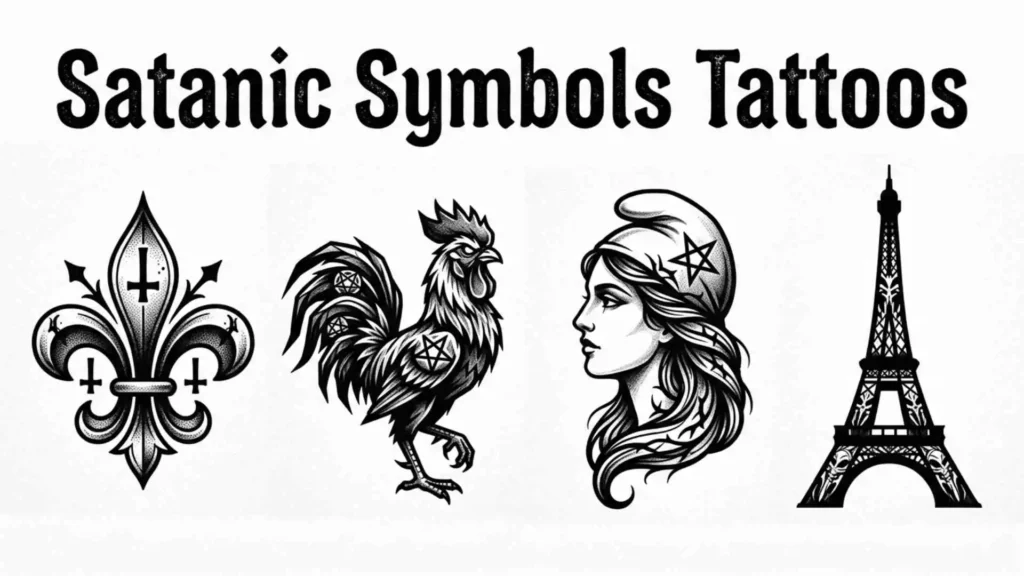
Satanic symbols tattoos are popular among people interested in alternative beliefs, gothic art, heavy metal culture, and dark symbolism. Some individuals choose these tattoos for artistic expression, while others use them to represent personal beliefs or philosophies.
Common satanic tattoo designs include the Sigil of Baphomet, inverted pentagram, Leviathan Cross, and goat head symbols. Before getting a tattoo, it is important to understand the history and meaning behind the design.
NLP Keywords: satanic tattoos, satanic symbols tattoos, dark symbol tattoos, occult tattoos
LSI Keywords: gothic tattoos, symbolic tattoos, occult imagery, alternative culture tattoos
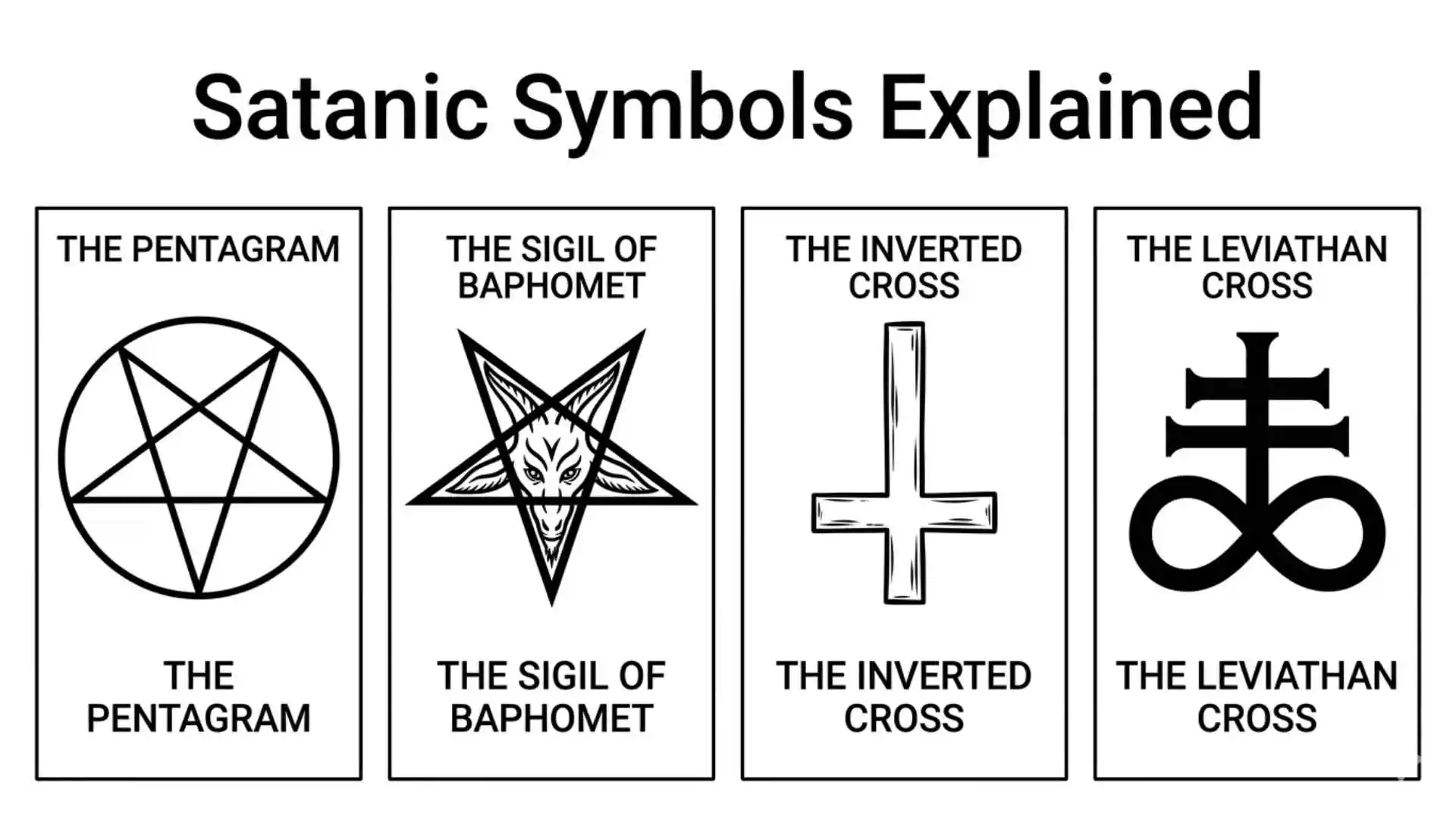
Satanic Symbols and Meanings
Satanic symbols have different meanings depending on historical, religious, and cultural contexts. Some are connected to modern Satanism, while others come from older occult traditions.
Inverted Pentagram
Often associated with rebellion, individuality, and certain satanic beliefs.
Sigil of Baphomet
A well-known symbol used by some modern satanic organizations. It features a goat’s head inside an inverted pentagram.
Leviathan Cross
Represents balance, eternity, and philosophical ideas connected to occult traditions.
Baphomet
A symbolic figure often linked to duality, knowledge, and spiritual exploration in occult literature.
Understanding the background of these symbols helps avoid misunderstandings and misinformation.
Semantic Keywords: occult symbols, satanic iconography, symbolic meanings, esoteric symbols
Satanic Symbols with Hands
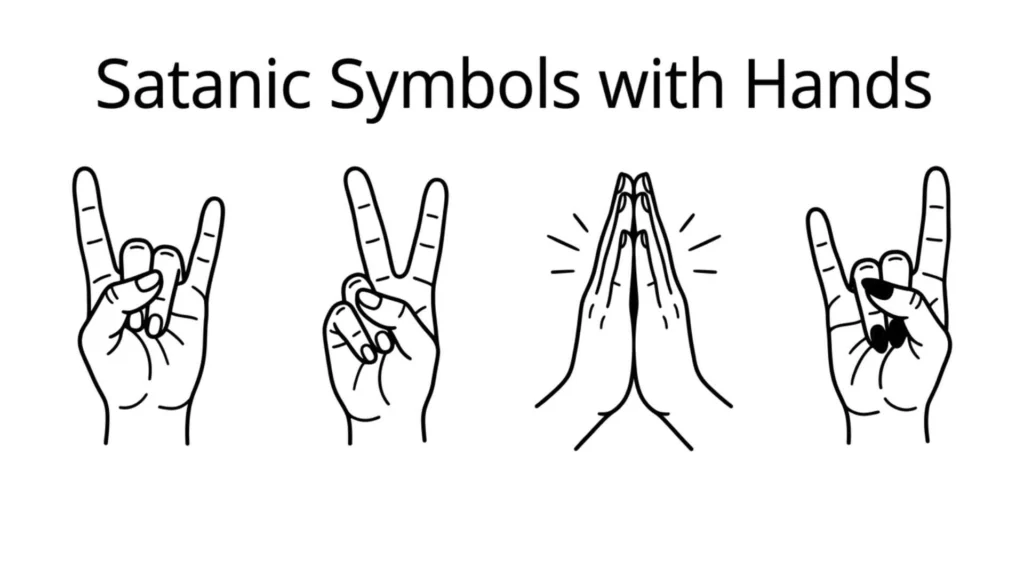
Hand gestures are sometimes associated with satanic symbolism, although many gestures have multiple meanings depending on culture and context.
Horns Hand Sign
The “sign of the horns” is commonly seen in rock and metal music. While some people associate it with satanic imagery, it has different meanings in various cultures.
Raised Hand Gestures
Certain ceremonial traditions use symbolic hand positions during rituals or artistic performances.
It is important to remember that hand symbols can have different interpretations around the world.
NLP Keywords: satanic hand signs, symbolic hand gestures, occult hand symbols
Satanic Symbols Copy and Paste
People often look for satanic-style symbols they can copy and paste for artistic or decorative purposes.
Examples include:
- ⛧
- ♄
- ⚝
- ✦
- ✶
These symbols are commonly used in artwork, social media profiles, creative designs, and fantasy themes.
LSI Keywords: copy paste symbols, decorative symbols, symbolic characters
Satanic Symbols Keyboard
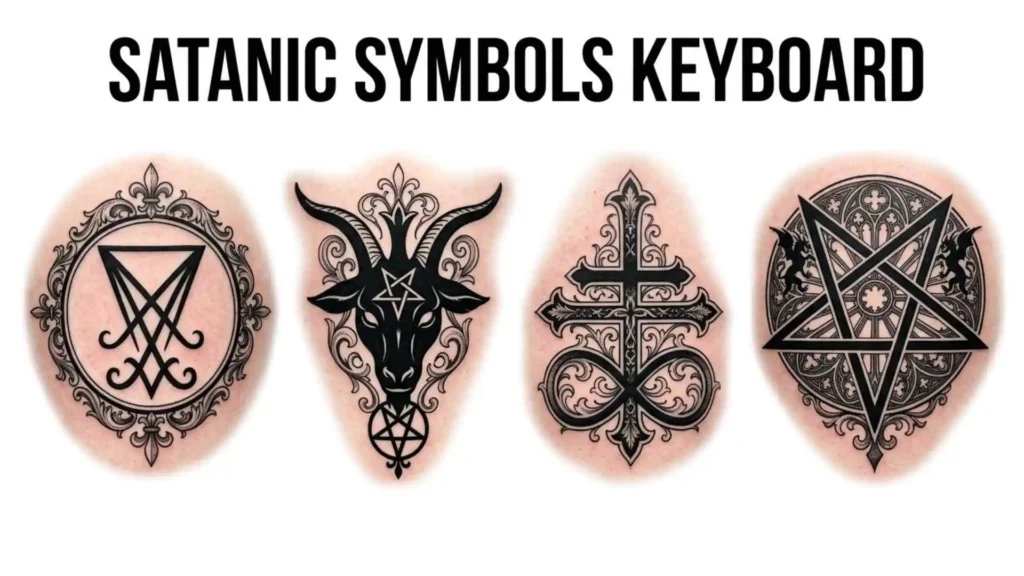
There is no dedicated satanic symbols keyboard on standard devices. However, users can insert special symbols using character maps, Unicode characters, or symbol libraries.
Popular methods include:
- Unicode symbol tools
- Character map applications
- Symbol generator websites
- Custom keyboard extensions
These tools allow users to access unique symbols for creative projects and graphic design.
Semantic Keywords: Unicode symbols, special characters, keyboard symbols, symbol generator
Satanic Symbols Names
Here are some commonly recognized satanic symbol names:
- Sigil of Baphomet
- Inverted Pentagram
- Leviathan Cross
- Baphomet
- Lucifer Sigil
- Goat Head Symbol
- Sulfur Symbol
These names frequently appear in discussions about occult history, symbolism, and alternative spiritual movements.
NLP Keywords: satanic symbol names, occult symbols list, satanic icon names
Satanic Symbols Goat
The goat is one of the most recognized images connected to satanic symbolism. The most famous example is Baphomet, often shown with a goat head.
Historically, goat imagery has been used in mythology, folklore, and religious symbolism. In modern occult traditions, the goat can represent independence, knowledge, and duality.
Because of its strong visual appearance, goat symbolism is commonly used in artwork, literature, and tattoo designs.
LSI Keywords: Baphomet goat, goat symbolism, occult goat symbol, symbolic imagery
Satanic Symbols Text
Many people search for satanic symbols in text format for creative or decorative use. Text-based symbols can be used in usernames, biographies, graphic designs, and digital artwork.
Examples include:
- ⛧
- ☽
- ⚝
- ♄
- ✶
These characters are often used as decorative elements rather than religious statements.
Semantic Keywords: text symbols, occult text characters, decorative Unicode symbols, symbolic text icons
What Are Satanic Symbols? Origins, Meaning, and Historical Background
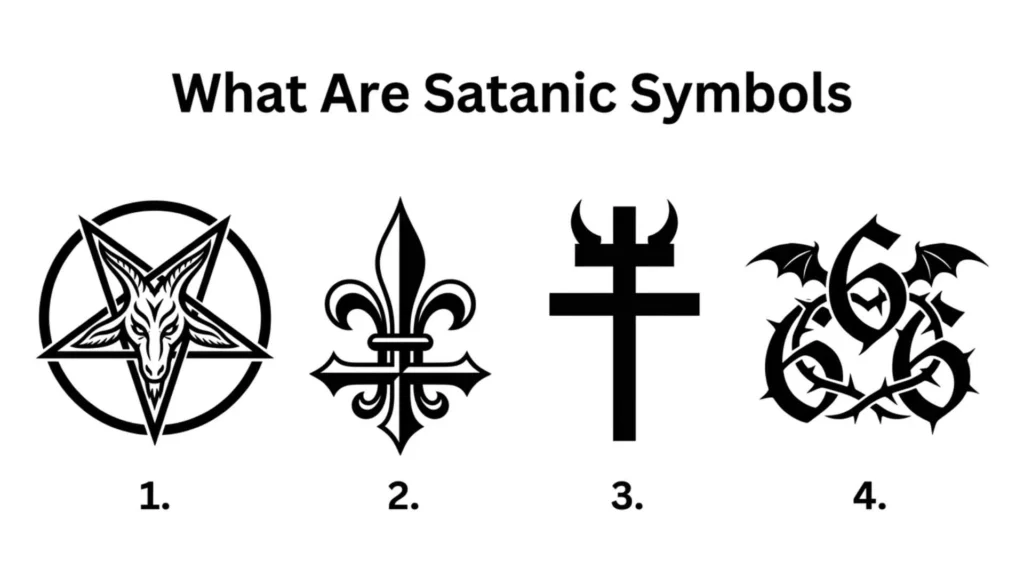
Satanic symbols refer to visual icons associated with Satanism, occult practices, or anti-establishment spiritual philosophies. However, their meanings are far more complex than simple labels.
Historically, many of these symbols were not originally linked to evil or Satan. Instead, they were part of ancient religions, pagan traditions, or philosophical systems that predate modern Christianity.
For example, the pentagram was once a symbol of protection and balance in ancient Greece. Over time, religious shifts and cultural conflicts transformed its meaning in Western societies.
The idea of “satanic symbols meaning” often depends on cultural perspective rather than universal truth. In some cases, the same symbol can represent protection in one culture and rebellion in another.
From an SEO and semantic perspective, related concepts include:
- occult symbols meaning
- dark symbolism in religion
- spiritual iconography history
- hidden meanings of symbols
- esoteric and mystical signs
These terms show how deeply connected satanic symbolism is with human history and belief systems.
The Pentagram: From Ancient Protection to Modern Misinterpretation
One of the most recognized satanic symbols is the pentagram, a five-pointed star. Today, many associate it with dark rituals, but its origin tells a different story.
In ancient Greece and Babylon, the pentagram represented harmony, health, and mathematical perfection. It was linked to the five elements: earth, air, fire, water, and spirit.
Upright Pentagram Meaning
When the pentagram points upward, it traditionally symbolizes:
- Balance between elements
- Spiritual protection
- Human connection with nature
- Harmony and wholeness
Inverted Pentagram Meaning
The inverted version, where one point faces downward, is often associated with modern Satanism. It is commonly interpreted as:
- Material dominance over spirit
- Rebellion against traditional religious systems
- Emphasis on physical desires
However, even this interpretation is relatively modern and influenced by 19th and 20th-century occult movements rather than ancient tradition.
Psychologically, the pentagram represents human attempts to understand order and chaos. Its meaning changes depending on context, belief, and intent.
Across cultures:
- In Europe, it was once a protection symbol in folk traditions
- In Asia, five-point symbolism often represents elemental balance
- In modern Western media, it is linked to occult themes
The Inverted Cross: Misunderstood Symbol of Reversal and Identity
The inverted cross is one of the most controversial satanic symbols in modern culture. It is often seen as a direct sign of anti-Christian belief, but its history is more complex.
Originally, the inverted cross is known as the Cross of Saint Peter. According to Christian tradition, Saint Peter was crucified upside down because he felt unworthy to die in the same way as Jesus.
Traditional Meaning
- Humility
- Faith through suffering
- Martyrdom in Christianity
Modern Satanic Interpretation
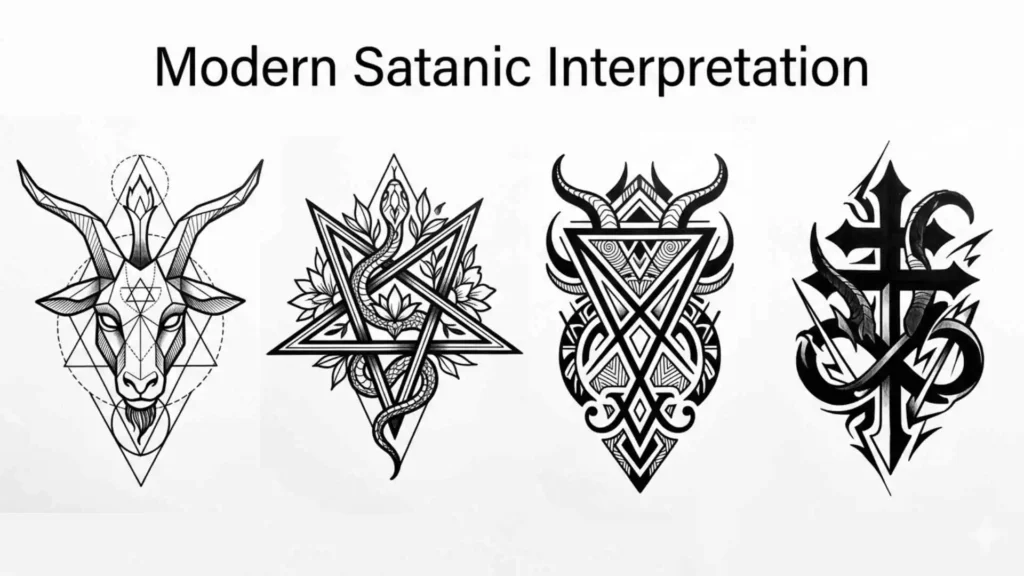
In contemporary symbolism, especially in media and occult contexts, the inverted cross is sometimes used to represent:
- Reversal of religious authority
- Questioning traditional belief systems
- Symbolic rebellion
Psychologically, the inverted cross represents inversion of values rather than literal worship or belief. It reflects human tendencies to challenge authority and explore identity through symbols.
In Western pop culture, it is often exaggerated, while in academic religious studies, it is understood in historical context rather than as a literal satanic sign.
Baphomet: The Enigmatic Figure of Duality and Balance
One of the most complex satanic symbols is Baphomet, often depicted as a horned figure with both male and female traits.
The modern image of Baphomet was popularized in the 19th century by occultist Éliphas Lévi. It is not originally a demon, but a symbolic representation of duality.
Symbolic Meaning of Baphomet
- Balance between opposites (light and dark, male and female)
- Harmony between mind and body
- Spiritual enlightenment through duality
- Human nature as a combination of contradictions
The famous depiction shows:
- A goat head symbolizing instinct
- Wings representing higher consciousness
- A torch between horns symbolizing knowledge
- Male and female features showing balance
Psychologically, Baphomet represents inner conflict and integration of opposites within human nature.
Across cultures:
- In Western occultism, it represents philosophical duality
- In Eastern thought, similar ideas exist in yin and yang balance
- In modern media, it is often misunderstood as a literal satanic entity
Sigil of Lucifer and Other Occult Symbols in Modern Interpretation
The Sigil of Lucifer is another symbol often labeled as satanic. It is a stylized design associated with the concept of Lucifer, often interpreted as the “light bearer.”
Meaning of the Sigil of Lucifer
- Enlightenment and knowledge
- Independence from authority
- Personal transformation
- Spiritual rebellion in symbolic form
It is important to note that symbolic interpretation varies widely. In some occult traditions, Lucifer represents enlightenment rather than evil.
Other related occult symbols include:
- The Sigil of Baphomet
- The Eye of Providence (often misinterpreted in conspiracy theories)
- Ouroboros (snake eating its tail, symbol of eternity)
- Black sun symbolism in esoteric traditions
These symbols are part of broader occult symbolism systems that explore knowledge, transformation, and hidden meaning.
Psychological Meaning of Satanic Symbols: Fear, Rebellion, and Identity
From a psychological perspective, satanic symbols are powerful because they trigger emotional responses.
Why These Symbols Affect People Strongly
- They are associated with fear-based cultural narratives
- They represent taboo and forbidden knowledge
- They challenge established belief systems
- They are visually striking and memorable
In psychology, symbols act as mental shortcuts. The human brain assigns meaning based on cultural conditioning rather than objective truth.
For example:
- A pentagram may evoke fear in one culture
- In another, it may represent protection or balance
Satanic symbolism often reflects:
- Rebellion against authority
- Exploration of identity
- Expression of individuality
- Fascination with mystery and the unknown
These interpretations show that symbols are not inherently “good” or “evil,” but shaped by human perception.
Cultural Perspectives on Satanic Symbols Across the World
Satanic symbols do not carry the same meaning everywhere. Cultural context plays a major role in interpretation.
United States and Europe
In Western societies, especially influenced by Christianity, satanic symbols are often associated with:
- Evil or anti-religious sentiment
- Horror culture and entertainment
- Music and fashion subcultures
Asia
In many Asian cultures, these symbols are less connected to Satan and more associated with:
- Foreign cultural influence
- Artistic or aesthetic design
- Spiritual neutrality or misunderstanding
Africa
In African traditions, symbolism is often rooted in indigenous spiritual systems. Satanic symbols may be:
- Misinterpreted through colonial religious influence
- Seen as unrelated to local belief systems
- Interpreted through Christian or Islamic frameworks
Global Media Influence
Movies, music, and social media have amplified satanic symbolism, often removing original meaning and replacing it with dramatic storytelling.
This global spread has created a mix of fear, curiosity, and misunderstanding.
Modern Usage of Satanic Symbols in Media, Music, and Fashion
Today, satanic symbols are widely used in popular culture, often stripped of original meaning.
In Music
Some artists use these symbols to:
- Express rebellion
- Create controversial imagery
- Build artistic identity
In Fashion
Designers sometimes use occult symbolism for:
- Aesthetic appeal
- Dark or gothic styles
- Symbolic storytelling
In Movies and Entertainment
Satanic symbols are frequently used in:
- Horror films
- Supernatural storytelling
- Fictional representations of evil
However, most of these uses are symbolic or artistic, not literal.
This modern adaptation shows how meaning evolves over time and how culture reshapes ancient symbols into new narratives.
Common Misconceptions About Satanic Symbols
There are many misunderstandings surrounding satanic symbolism.
Misconception 1: All Satanic Symbols Are Evil
In reality, many symbols come from ancient or neutral origins.
Misconception 2: They Always Represent Satan Worship
Most modern uses are symbolic, artistic, or philosophical.
Misconception 3: They Have One Fixed Meaning
Symbolism changes depending on culture, time, and context.
Understanding these misconceptions helps reduce fear and promotes informed interpretation.
FAQs About Satanic Symbols
1. What are satanic symbols really used for?
They are often used for symbolism, artistic expression, or philosophical ideas rather than literal belief systems.
2. Is the pentagram always a satanic symbol?
No, the pentagram originally represented protection, balance, and harmony in ancient cultures.
3. Why is the inverted cross considered satanic?
It is often used in modern culture to represent rebellion, but historically it is linked to Saint Peter.
4. What does Baphomet actually represent?
Baphomet symbolizes balance, duality, and the combination of opposites in human nature.
5. Are satanic symbols dangerous?
No symbol is inherently dangerous. Meaning depends on interpretation and cultural context.
6. Why are these symbols popular in media?
They create emotional impact, mystery, and strong visual storytelling.
7. Do satanic symbols mean the same worldwide?
No, their meaning varies greatly across different cultures and belief systems.
Conclusion
Satanic symbols are among the most misunderstood forms of human expression. Their meanings are shaped by history, religion, psychology, and culture rather than fixed definitions.
From the pentagram to Baphomet, each symbol carries layers of interpretation that go far beyond the label of “satanic.”
Understanding these symbols helps us see how human beings create meaning through imagery and how fear and curiosity shape perception.
Instead of viewing them as purely negative, it is more accurate to see them as reflections of human thought, conflict, and creativity.
True understanding comes not from fear, but from knowledge and context.

Amelia Scott is a passionate writer and symbolism researcher who explores the hidden meanings behind ancient signs, spiritual icons and cultural symbols. She enjoys uncovering the stories and mysteries connected to symbols from around the world.
She is the author of “Mystic Marks And Secret Meanings” and “Echoes Of Forgotten Symbols”. Her work combines history, spirituality and mythology to help readers better understand the deeper meaning of symbols in everyday life.
Through her writing, Amelia aims to make the world of symbols fascinating, meaningful and easy to explore.