Egyptian symbols have fascinated people for thousands of years because they carry deep spiritual meaning, mystery, and wisdom from one of the world’s oldest civilizations. When you explore egyptian symbols, you are not just looking at ancient art, but stepping into a world where every shape, animal, and mark tells a powerful story about life, death, protection, and the universe.
These symbols were more than decoration. They were believed to hold magical energy that guided people through life and the afterlife. Even today, they continue to inspire jewelry, tattoos, art, and spiritual beliefs around the world.
Understanding egyptian symbols meaning helps us connect with ancient human thoughts about existence, nature, and the divine. From sacred gods to everyday life, these symbols still speak a language that feels surprisingly modern.
Let’s dive deep into the hidden world of Egyptian symbolism and uncover what makes it so powerful, emotional, and timeless.
Egyptian Symbols and Meanings
Egyptian symbols are famous around the world. These ancient signs tell stories about life, power, protection, and spirituality. People in Ancient Egypt used symbols in temples, tombs, jewelry, and artwork. Today, many people study Egyptian symbols to learn about Egyptian culture and history.
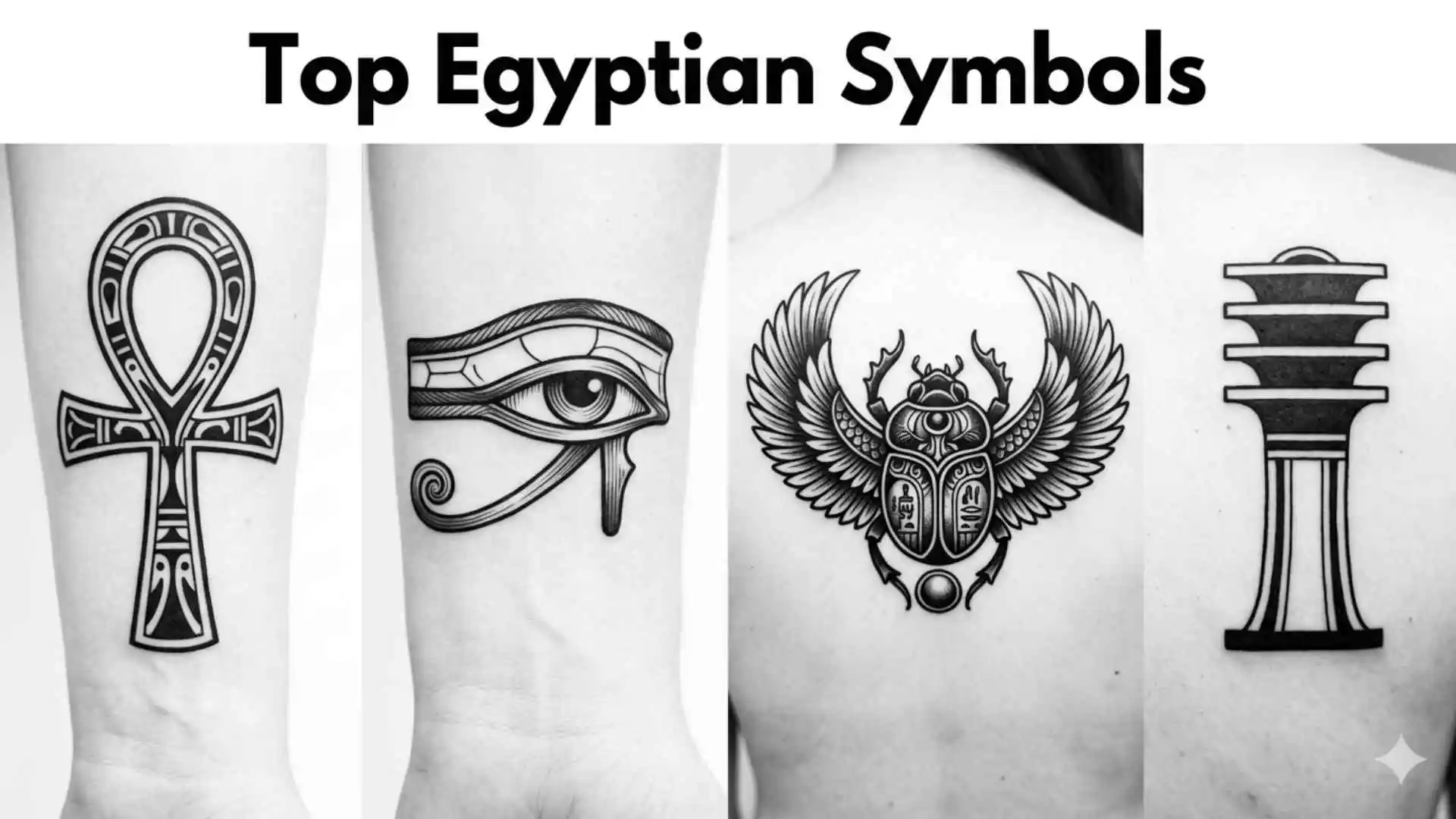
Some of the most popular Egyptian symbols include the Ankh, Eye of Horus, Scarab Beetle, and Djed Pillar. Each symbol has a special meaning and connection to ancient beliefs.
NLP Keywords: Egyptian symbols, ancient Egyptian symbols, Egyptian meanings, Egyptian culture, Egyptian history
LSI Keywords: hieroglyphics, ancient signs, sacred symbols, Egyptian art, pharaoh symbols
Top Egyptian Symbols and Their Meanings
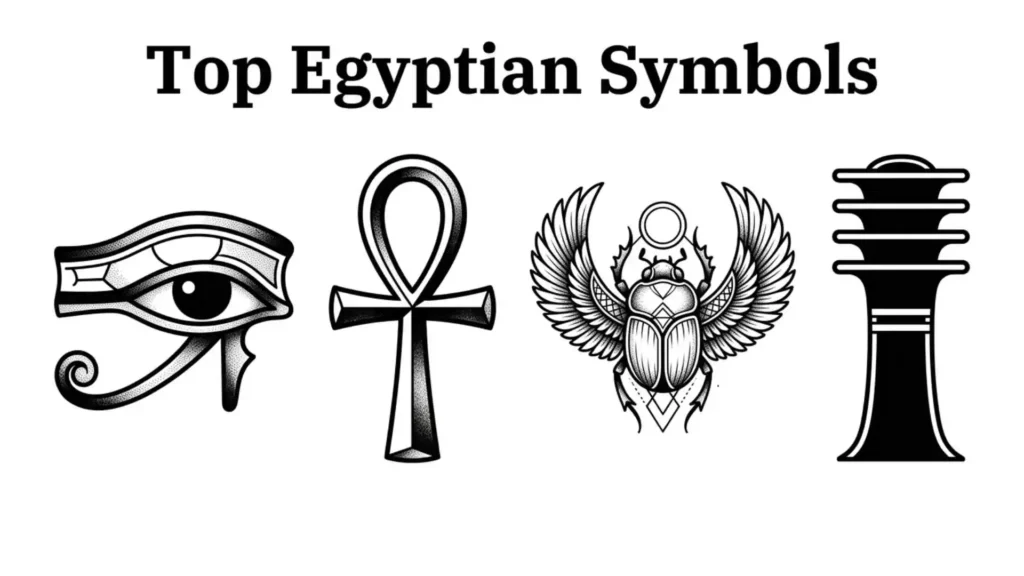
Ancient Egypt had many powerful symbols. Here are some of the most recognized ones:
Ankh
The Ankh is called the symbol of life. It represents eternal life, health, and spiritual power.
Eye of Horus
The Eye of Horus stands for protection, healing, and safety. It was often worn as an amulet.
Scarab Beetle
The Scarab symbolizes rebirth, transformation, and good fortune.
Djed Pillar
This symbol represents stability, strength, and balance.
Was Scepter
The Was Scepter is linked with authority, leadership, and power.
These symbols played an important role in daily life and religious ceremonies.
Semantic Keywords: spiritual symbols, protection symbols, sacred Egyptian icons, religious symbols
Top Egyptian Symbols and Meanings
Many Egyptian symbols have survived for thousands of years because of their deep meanings. The Ankh represents life. The Eye of Horus symbolizes protection. The Lotus Flower stands for purity and rebirth. The Feather of Ma’at represents truth and justice.
These symbols continue to inspire people interested in mythology, archaeology, and ancient civilizations.
LSI Keywords: Egyptian mythology, ancient civilization, symbolic meanings, historical symbols
Egyptian Symbols Text
Many people search for Egyptian symbols in text form to use in messages, social media posts, or creative projects. While ancient Egyptian hieroglyphs are complex, some modern text symbols are used as decorative alternatives.
Examples include:
- ☥ (Ankh Symbol)
- 👁 (Eye Symbol)
- 🪲 (Scarab Beetle Representation)
These symbols are often used to show a connection to Egyptian history and spirituality.
NLP Keywords: Egyptian text symbols, hieroglyphic symbols, Egyptian character symbols
Egyptian Symbols Copy Paste
If you want Egyptian symbols to copy and paste, here are some popular options:
- ☥ Ankh
- 👁 Eye Symbol
- △ Pyramid Symbol
- ☀ Sun Symbol
- 🪲 Scarab Beetle
You can easily copy these symbols and use them in social media bios, graphic designs, educational projects, or personal artwork.
Semantic Keywords: copy and paste symbols, Egyptian icon symbols, decorative symbols
Egyptian Symbols of Life
The most famous Egyptian symbol of life is the Ankh. It is often called the “Key of Life.” Ancient Egyptians believed it represented eternal life and divine energy.
The Lotus Flower is another important symbol connected to life and rebirth. It rises from muddy water and blooms beautifully, making it a symbol of renewal and hope.
These symbols remind us of growth, life, and the journey of the soul.
LSI Keywords: symbol of eternal life, rebirth symbol, spiritual growth, ancient beliefs
Egyptian Symbols and Meanings PDF
Many students, researchers, and history lovers look for an Egyptian symbols and meanings PDF for easy learning. A PDF guide often includes symbol images, definitions, historical background, and cultural significance.
A complete Egyptian symbols PDF may cover:
- Ankh
- Eye of Horus
- Scarab Beetle
- Djed Pillar
- Was Scepter
- Lotus Flower
- Feather of Ma’at
These resources help readers understand ancient Egyptian traditions and symbolism.
NLP Keywords: Egyptian symbols PDF, downloadable symbol guide, Egyptian reference guide
Egyptian Symbols Name
Here are some well-known Egyptian symbol names:
- Ankh
- Eye of Horus
- Eye of Ra
- Scarab Beetle
- Djed Pillar
- Was Scepter
- Lotus Flower
- Feather of Ma’at
- Shen Ring
- Crook and Flail
Each symbol has a unique meaning connected to Egyptian religion, culture, and daily life. Learning these symbol names helps people better understand one of the world’s oldest civilizations.
Semantic Keywords: Egyptian symbol names, ancient Egyptian icons, sacred Egyptian signs, symbolic heritage
The Origins of Egyptian Symbols in Ancient Civilization
The story of Egyptian symbols begins in Egypt, one of the earliest and most advanced civilizations in human history. Ancient Egyptians developed symbols as a way to communicate ideas about gods, nature, and the afterlife long before modern alphabets existed.
These symbols appeared in temples, tombs, pyramids, and sacred texts. They were carved into stone walls and painted on papyrus to preserve spiritual knowledge for eternity.
Egyptian symbols were closely linked to religion and mythology. People believed that gods controlled nature and life, so symbols were used to honor them and gain their protection. For example, symbols of the sun represented life and power, while symbols of animals represented divine energy.
The most famous structures, like the Pyramid of Giza, are filled with symbolic meanings about death, rebirth, and eternal life.
Over time, these symbols became a sacred language known as hieroglyphics, blending art and communication into one powerful system.
The Deep Meaning Behind Egyptian Symbols in Daily Life and Religion
Egyptian symbols were not just for priests or royalty. They were part of everyday life in ancient Egypt. People used them in jewelry, amulets, homes, and even clothing to attract good fortune and protection.
In religion, symbols represented gods and cosmic forces. The sun symbol represented Ra, the god of creation. Water symbols represented life and fertility. Animals like cats, falcons, and snakes were linked to divine powers.
The meaning of Egyptian symbols often combined emotional, spiritual, and practical beliefs. For example, wearing a symbol was not just fashion. It was believed to bring real protection from harm or illness.
In modern understanding, these symbols also represent psychological comfort. People used them to feel safe in a world full of mystery and danger.
Across cultures, meanings differ slightly:
- In Africa, they are seen as ancestral wisdom and spiritual connection
- In Europe, they are studied as historical art and mythology
- In Asia, they are often connected to energy balance and spiritual healing
- In the USA, they are popular in tattoos and modern spiritual symbolism
This global fascination shows how powerful Egyptian symbolism still is today.
The Ankh Symbol: Key of Life and Eternal Energy
One of the most powerful egyptian symbols is the Ankh, known as the symbol of life and immortality.
Ankh symbol
The Ankh looks like a cross with a loop at the top. Ancient Egyptians believed it represented eternal life and the connection between physical and spiritual worlds.
Gods are often shown holding the Ankh, offering it to humans as a gift of life energy. It was commonly placed in tombs to help the soul survive after death.
Emotionally, the Ankh represents hope, renewal, and the idea that life continues beyond physical existence. Psychologically, it symbolizes inner strength and resilience.
In modern culture, many people wear the Ankh as jewelry or tattoos to represent spiritual awakening and personal growth.
Compared to other cultures, similar meanings can be found:
- In Christianity, the cross symbolizes sacrifice and salvation
- In Asian spirituality, eternal life is linked to energy flow and rebirth
- In African traditions, life symbols are connected to ancestors and continuity
The Ankh remains one of the most recognized ancient egypt symbols in the world.
Eye of Horus: Protection, Healing, and Inner Power
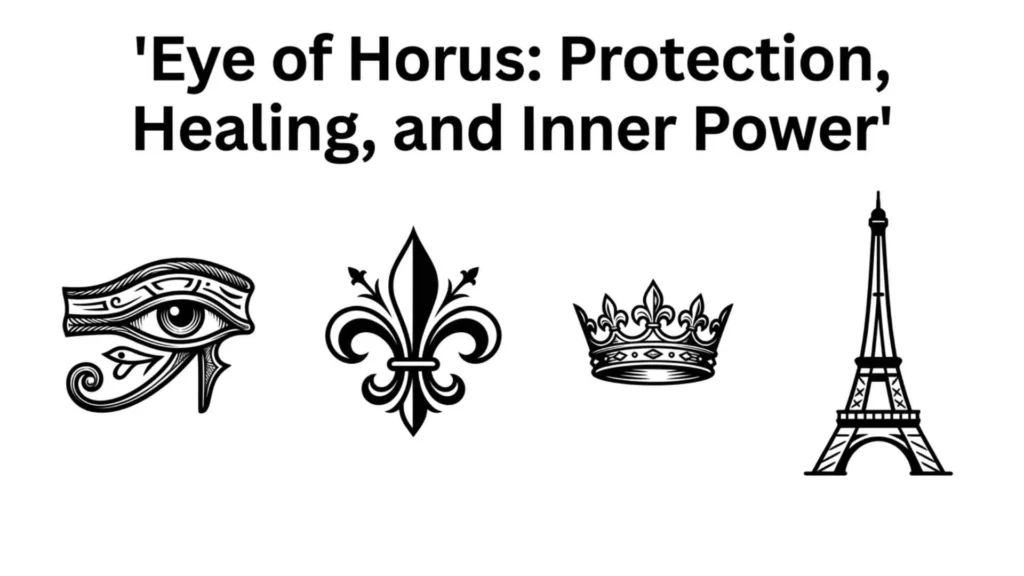
The Eye of Horus is another famous symbol with deep emotional meaning and spiritual protection.
Eye of Horus
This symbol represents the eye of the falcon god Horus, who lost and regained his eye in mythology. Because of this story, the symbol became a powerful sign of healing, restoration, and protection.
Ancient Egyptians used it as an amulet to protect against evil and illness. It was also used in mathematics and measurement systems, showing its importance in both spiritual and practical life.
Emotionally, the Eye of Horus represents clarity, awareness, and inner vision. It encourages people to trust intuition and see beyond illusions.
In psychology, it can represent self-awareness and emotional healing after trauma.
Across cultures:
- In Western culture, it is sometimes compared to the “all-seeing eye”
- In Asian traditions, it reflects awareness and spiritual insight
- In African beliefs, it represents ancestral protection
Today, it is widely used in jewelry and tattoos as a symbol of protection and strength.
Scarab Beetle: Transformation and Rebirth Energy
The scarab beetle is one of the most symbolic creatures in ancient Egyptian culture.
Scarabs
Ancient Egyptians observed how the scarab beetle rolled dung into a ball, which they connected to the sun moving across the sky. This led to its meaning as a symbol of creation, rebirth, and transformation.
The scarab was often placed in tombs to help guide souls into the afterlife. It represented the cycle of life, death, and rebirth.
Emotionally, the scarab symbolizes change, personal growth, and new beginnings. It reminds people that transformation is a natural part of life.
Psychologically, it represents resilience and the ability to rebuild after challenges.
Cultural meanings vary:
- In African traditions, insects often represent survival and adaptation
- In Asian symbolism, transformation is linked to rebirth and karma
- In Western culture, beetles are less symbolic but still represent nature’s cycles
The scarab remains one of the strongest egyptian mythology symbols connected to life cycles.
Egyptian Hieroglyphics: The Language of Symbols and Sacred Writing
Hieroglyphics are not just writing. They are a complete symbolic system combining art, language, and spirituality.
Egyptian hieroglyphics used hundreds of symbols to represent sounds, words, and ideas. Some symbols represented objects, while others represented abstract concepts like love, power, or eternity.
Priests and scribes used hieroglyphics in temples and tombs to record prayers, stories, and royal achievements.
Emotionally, hieroglyphics represent communication with the divine. Each symbol was believed to carry spiritual energy, not just meaning.
Psychologically, they show how humans naturally connect images with ideas, long before modern language systems developed.
Today, hieroglyphics are studied to understand ancient Egyptian culture and mindset, revealing how deeply symbolic their world was.
Egyptian Symbols in Modern Culture, Art, and Fashion
Egyptian symbols are not stuck in the past. They are everywhere in modern design, fashion, and pop culture.
Jewelry featuring the Ankh or Eye of Horus is popular for spiritual protection. Tattoos using Egyptian symbols often represent strength, mystery, or personal transformation.
In art and design, Egyptian motifs are used in architecture, branding, and even movies.
People are drawn to these symbols because they feel timeless and powerful. They carry emotional depth that modern symbols often lack.
In the USA and Europe, they are often used for aesthetic and spiritual identity. In Asia, they are linked to energy balance and mindfulness. In Africa, they are connected to heritage and ancestral pride.
This global influence proves that ancient egypt symbols still speak to the human spirit today.
Psychological Meaning of Egyptian Symbols and Their Universal Appeal
Egyptian symbols are not only historical. They also connect deeply with human psychology.
Symbols like the Ankh and Eye of Horus represent universal human desires: life, safety, healing, and understanding.
They work because the human brain naturally responds to visual meaning. Symbols bypass language and connect directly to emotion and memory.
Psychologically:
- Life symbols create hope and motivation
- Protection symbols reduce fear and anxiety
- Transformation symbols encourage personal growth
This is why egyptian symbol meanings still feel powerful today, even after thousands of years.
Across cultures, humans always create symbols to understand life. Egyptian symbols simply became some of the most refined and lasting examples.
Did You Know? Fascinating Facts About Egyptian Symbols
- Many Egyptian symbols were inspired by nature, especially animals and the sun
- Gold was used in sacred symbols because it represented eternal energy
- Some symbols were only meant for royalty and priests
- Symbols were believed to have real magical power, not just meaning
- Even colors in Egyptian symbols had meanings, like green for rebirth and blue for life
These details show how deeply symbolic thinking shaped ancient Egyptian life.
FAQs About Egyptian Symbols
1. What are Egyptian symbols?
Egyptian symbols are ancient visual signs used in Egypt to represent ideas, gods, nature, and spiritual beliefs.
2. What is the most famous Egyptian symbol?
The Ankh, Eye of Horus, and scarab beetle are among the most famous symbols.
3. What do Egyptian symbols represent?
They represent life, protection, power, rebirth, and connection to the divine.
4. Are Egyptian symbols still used today?
Yes, they are widely used in jewelry, tattoos, art, and spiritual practices.
5. What is the meaning of the Eye of Horus?
It represents protection, healing, and spiritual awareness.
6. Why are Egyptian symbols important?
They help us understand ancient beliefs about life, death, and the universe.
7. Can Egyptian symbols bring protection?
Many people believe they carry spiritual energy and protective meaning, even today.
Conclusion
Egyptian symbols continue to inspire curiosity because they connect ancient wisdom with modern human emotions. They are not just historical artifacts but powerful expressions of life, protection, and transformation.
From the Ankh to the Eye of Horus, each symbol tells a story that still feels relevant today.
Their universal meanings show how deeply humans have always searched for meaning and connection.
Even after thousands of years, these symbols remain alive in culture, art, and spirituality around the world.

Nicholas Allen is a passionate writer and symbolism researcher who explores the hidden meanings behind ancient signs, spiritual icons and cultural symbols from around the world. His work focuses on making complex symbolism easy to understand for modern readers.
He is the author of “Mystic Signs and Their Hidden Meanings”. Through his writing, Nicholas helps readers discover the stories, beliefs and mysteries connected to symbols across history and different cultures.