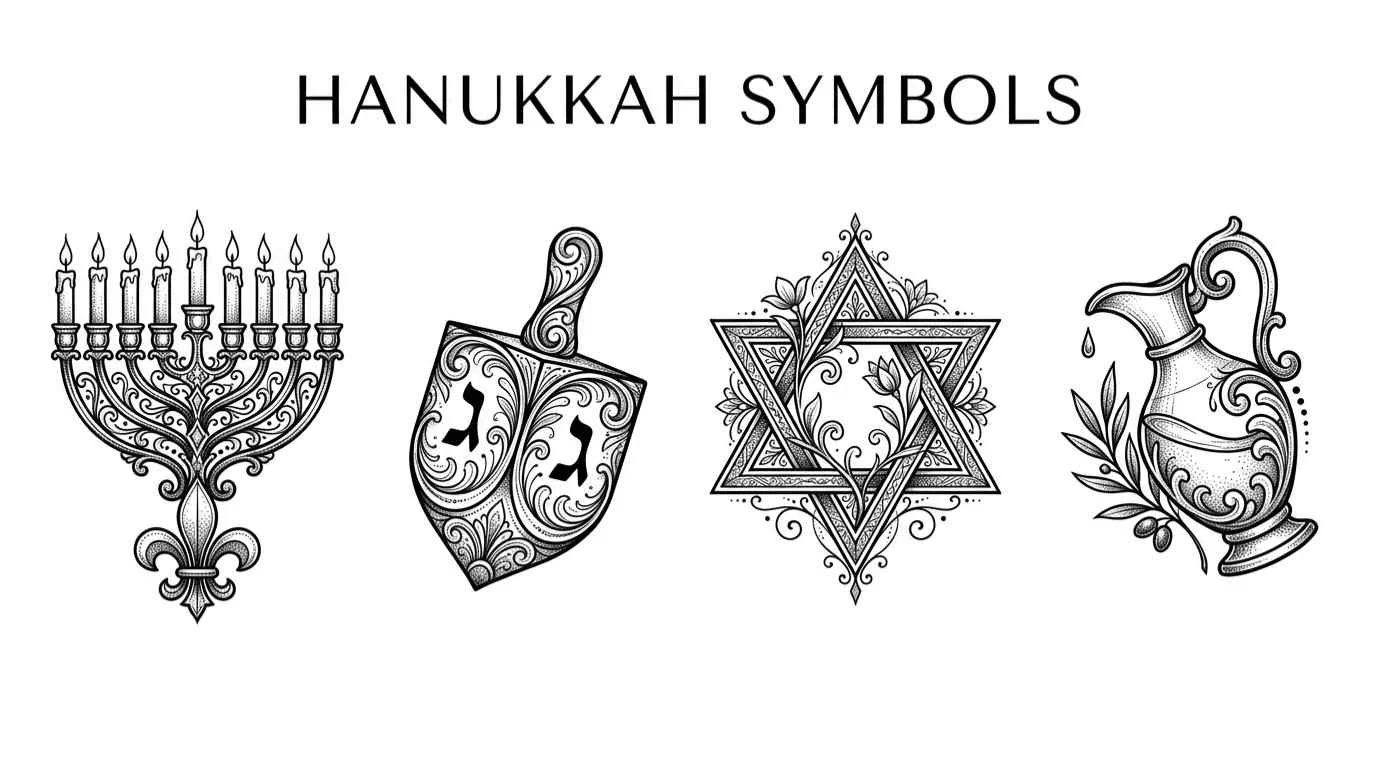
There is something deeply moving about the glow of candles in the dark. Hanukkah symbols are not just decorations or rituals. They are living reminders of hope, resilience, and identity. From the flicker of the menorah to the spinning of the dreidel, each symbol carries a story that reaches across centuries and cultures. Whether you grew up celebrating Hanukkah or are just discovering it, these symbols have a way of speaking directly to the heart.
Let’s explore the deeper meanings behind Hanukkah symbols, uncover their origins, and understand why they still matter so much today.
🕎 The Menorah: A Flame That Refuses to Go Out
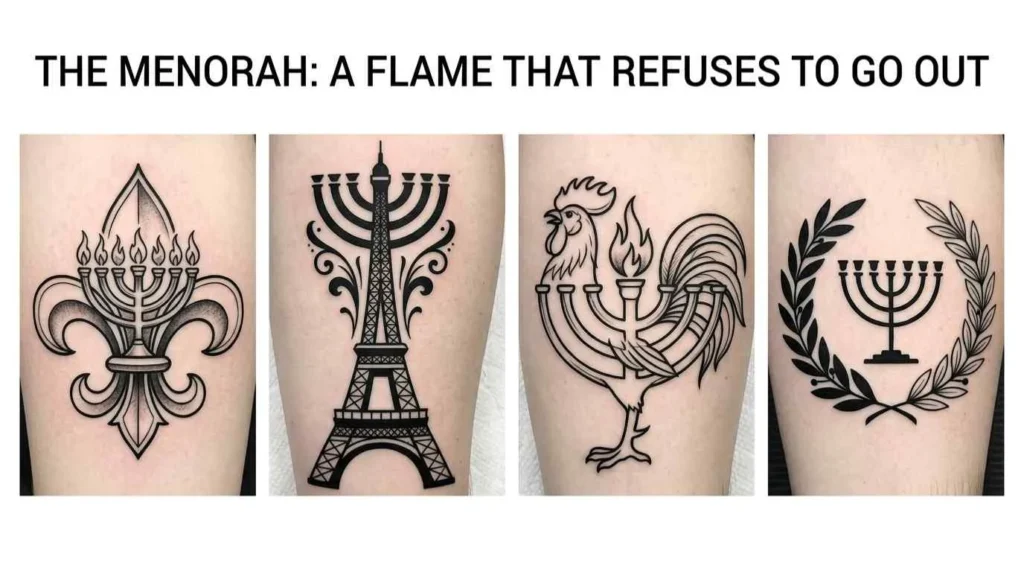
The most recognized of all Hanukkah symbols is the menorah, also called the Hanukkiah. It holds nine branches, one for each night of Hanukkah, plus the shamash, the helper candle.
Meaning and Symbolism
The menorah represents light in darkness. It reflects the miracle where a small amount of oil lasted eight days in the ancient temple. Emotionally, it symbolizes endurance and faith even when circumstances feel impossible.
Psychological Connection
Lighting the menorah can feel calming and grounding. Watching the flames grow each night gives a sense of progress and hope. It reminds people that even small acts can create lasting impact.
Cultural Comparisons
- In the USA, lighting the menorah often becomes a family-centered ritual emphasizing togetherness
- In Europe, it represents historical survival and Jewish identity through hardship
- In Asia, the symbolism of light overcoming darkness resonates with festivals like Diwali
- In parts of Africa, light rituals also symbolize life, guidance, and renewal
Did you know?
The menorah must be placed where it can be seen publicly, symbolizing the importance of sharing light with others.
🕯️ The Shamash: The Quiet Helper
The shamash is the candle used to light all the others. It stands slightly higher or apart from the rest.
Meaning and Symbolism
The shamash represents service and humility. It gives light without losing its own.
Emotional Insight
This symbol speaks to the importance of helping others. It reminds us that supporting others does not diminish our own strength.
Global Perspective
- In many cultures, the concept of a “helper” figure exists, such as guides, mentors, or spiritual leaders
- In African traditions, elders often play a similar role, sharing wisdom and guiding the community
🌀 The Dreidel: A Game with Hidden Meaning
The dreidel is a spinning top with four Hebrew letters. It is one of the most playful Hanukkah symbols.
What the Letters Mean
Each side represents a Hebrew letter that stands for a phrase meaning “A great miracle happened there.”
Symbolism Behind the Game
At first glance, it seems like a simple game. But historically, it was used as a disguise for studying sacred texts when it was forbidden.
Emotional and Psychological Meaning
The spinning dreidel represents uncertainty and chance. It reminds us that life is unpredictable, yet meaningful outcomes can still emerge.
Cultural Comparisons
- In Asia, spinning objects like prayer wheels symbolize cycles of life
- In Europe, games of chance have long represented fate and destiny
- In the USA, the dreidel is often seen as a fun educational tool for children
Did you know?
Different regions use slightly different Hebrew letters on the dreidel, depending on whether it is used in Israel or outside it.
🍩 Fried Foods: The Taste of the Miracle
Foods like latkes and sufganiyot are essential Hanukkah symbols because they are fried in oil.
Symbolic Meaning
The oil represents the miracle of the temple. Eating these foods connects people to that story in a physical, sensory way.
Emotional Connection
Food creates memory. The smell of frying latkes or the sweetness of jelly-filled doughnuts often brings back family moments and warmth.
Cultural Variations
- In the USA, potato latkes are most popular
- In Israel, sufganiyot filled with jam or cream dominate
- In Europe, different fried pastries reflect local traditions
- In African Jewish communities, unique oil-based dishes are prepared
Did you know?
Oil is one of the oldest symbols of blessing and abundance across many cultures worldwide.
💰 Hanukkah Gelt: More Than Just Chocolate Coins
Gelt traditionally refers to money given during Hanukkah, now often represented by chocolate coins.
Meaning and Symbolism
Gelt symbolizes reward, generosity, and the value of education. Historically, it was given to teachers and students.
Emotional Insight
Receiving gelt creates excitement, especially for children. It connects the holiday to joy and appreciation.
Cultural Comparisons
- In Europe, gift-giving during winter holidays has long traditions
- In Asia, money gifts symbolize prosperity and good fortune
- In African cultures, sharing wealth strengthens community bonds
🎁 Gifts and Giving: A Modern Symbol of Love
Gift-giving has become more common in Hanukkah celebrations, especially in Western countries.
Symbolism
While not originally a core tradition, gifts now represent love, gratitude, and connection.
Emotional Meaning
Giving a gift creates a sense of closeness. It shows thoughtfulness and strengthens relationships.
Cultural Perspective
- In the USA, Hanukkah gift-giving has grown alongside other winter holidays
- In Europe, traditions vary but often remain simpler
- Across cultures, giving during festivals symbolizes unity and generosity
✡️ The Star of David: Identity and Protection
Although not exclusive to Hanukkah, the Star of David often appears during the holiday.
Meaning and Symbolism
It represents Jewish identity, unity, and spiritual protection.
Psychological Meaning
Symbols of identity provide a sense of belonging. The Star of David reminds people of their roots and shared history.
Cultural Comparisons
- In Europe, it has deep historical significance tied to Jewish heritage
- In the USA, it is widely recognized as a symbol of faith
- In other cultures, similar geometric symbols represent balance and harmony
📖 The Hanukkah Story: The Symbol Behind All Symbols
At the heart of all Hanukkah symbols is the story of resilience. A small group stood up for their beliefs and reclaimed their sacred space.
Core Message
The story represents courage, faith, and the power of standing firm in one’s identity.
Emotional Impact
It inspires strength during difficult times. It reminds us that even small victories matter.
Global Perspective
Across the world, stories of resistance and hope exist in every culture. Hanukkah’s message connects with anyone who has faced challenges and kept going.
🌍 Universal Meaning of Hanukkah Symbols
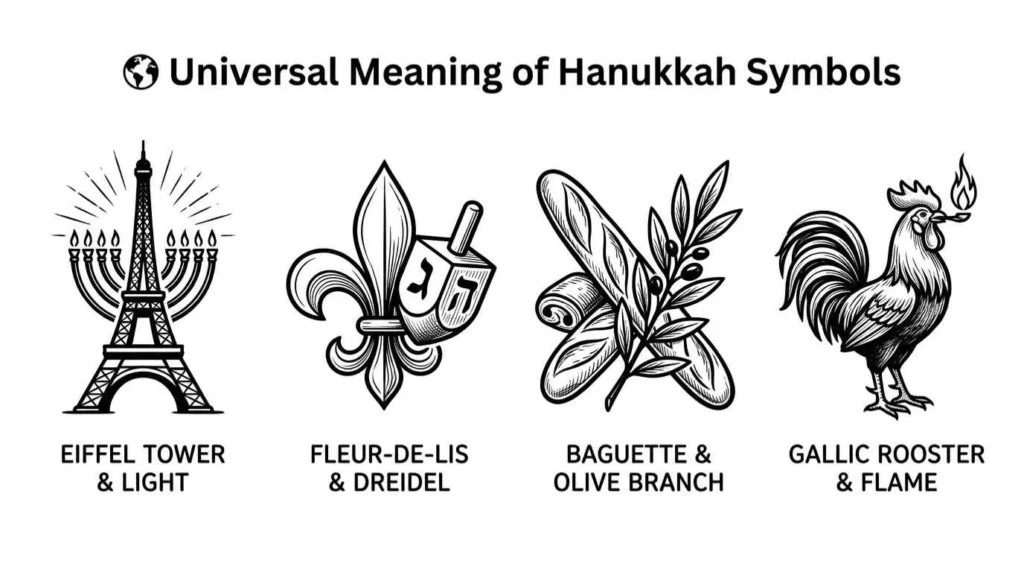
While Hanukkah is a Jewish holiday, its symbols carry universal themes:
- Light over darkness
- Hope over despair
- Faith over fear
- Community over isolation
These ideas resonate across continents, religions, and cultures.
❓ FAQs About Hanukkah Symbols
1. What is the most important Hanukkah symbol?
The menorah is considered the most important symbol because it represents the miracle of light.
2. Why is oil significant in Hanukkah?
Oil symbolizes the miracle where a small amount lasted eight days in the temple.
3. What does the dreidel represent?
The dreidel represents both the miracle and the hidden history of preserving faith during difficult times.
4. Are Hanukkah symbols used worldwide?
Yes, but traditions vary by region, reflecting local culture and history.
5. Why are gifts given during Hanukkah?
Gift-giving is a modern addition that emphasizes joy, family connection, and generosity.
6. What does the shamash candle symbolize?
It symbolizes service, kindness, and helping others.
7. Is the Star of David a Hanukkah symbol?
It is not exclusive to Hanukkah but is often associated with Jewish identity during the holiday.
🌟 Conclusion: A Celebration That Lights the Soul
Hanukkah symbols are far more than tradition. They are emotional anchors that connect people to history, faith, and each other. Each candle lit, each dreidel spun, and each shared meal carries a message of hope that feels just as relevant today as it did centuries ago.
In a world that can often feel uncertain, these symbols remind us that light still exists, even in the darkest moments. And sometimes, all it takes is a single flame to begin again.
Nicholas Allen is a passionate writer and symbolism researcher who explores the hidden meanings behind ancient signs, spiritual icons and cultural symbols from around the world. His work focuses on making complex symbolism easy to understand for modern readers.
He is the author of “Mystic Signs and Their Hidden Meanings”. Through his writing, Nicholas helps readers discover the stories, beliefs and mysteries connected to symbols across history and different cultures.