
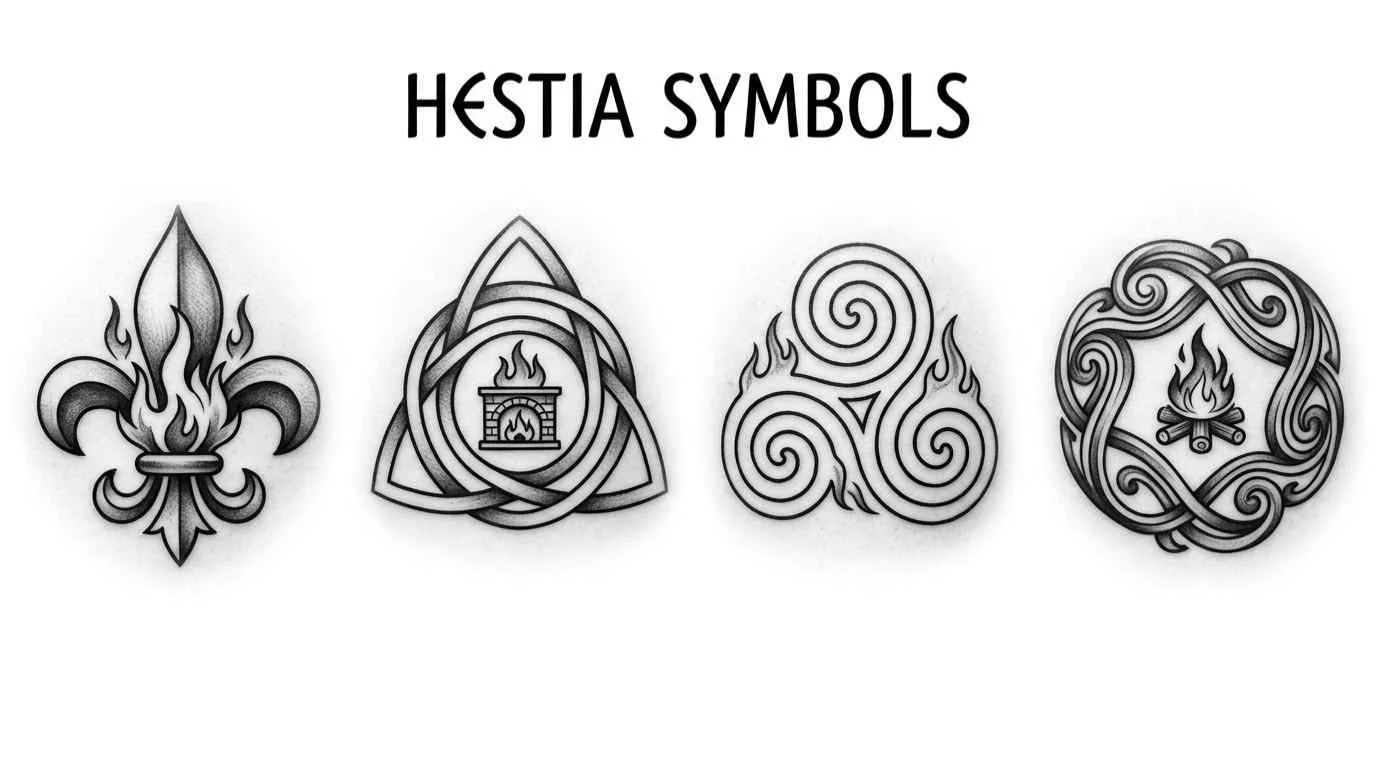
There is something deeply comforting about a warm home, a glowing fire, and a place where you feel safe. The idea behind Hestia symbols connects directly to that feeling. These symbols are not just ancient markings from Greek mythology, they represent peace, stability, and the quiet strength of belonging. From sacred flames to circular hearths, each symbol linked to Hestia carries emotional depth that still resonates in modern life.
If you have ever longed for calm, balance, or a sense of inner home, understanding these symbols can feel surprisingly personal. Let’s explore what they truly mean, where they come from, and why they still matter today.
Hestia Symbols and Meanings
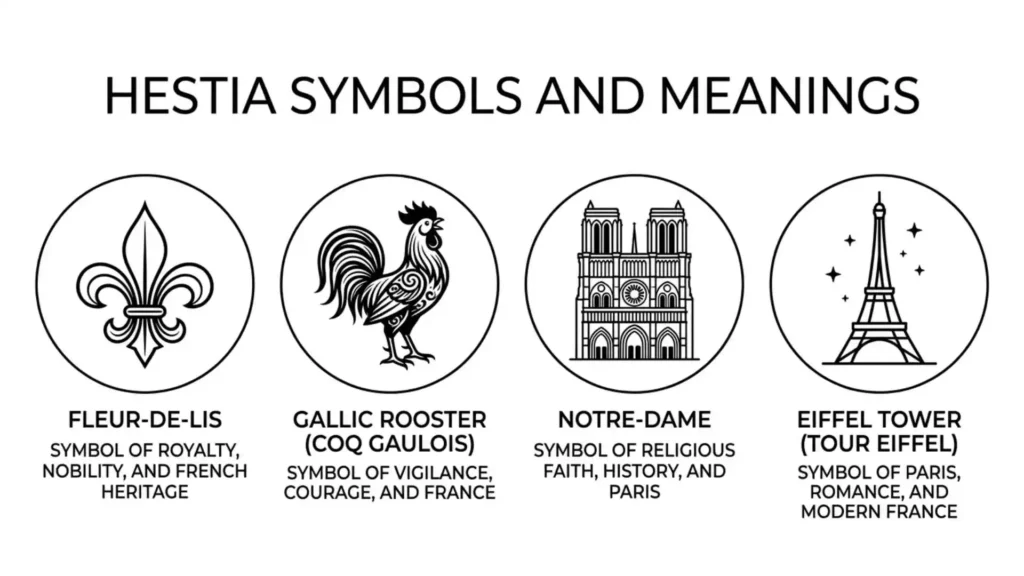
Hestia has many important symbols in Greek mythology. These symbols represent safety, peace, and family life.
Common Hestia Symbols
- Hearth Fire – Represents warmth, home, and family love
- Flame – Symbol of eternal life and spiritual purity
- Kettle – Connected to cooking, care, and hospitality
- Veil – Shows modesty and wisdom
- Circle – Represents unity and protection
The sacred fire of Hestia was never allowed to go out in ancient Greek homes and temples. It was a sign of protection and divine presence.
Semantic Keywords
home protection, family connection, sacred flame, domestic goddess, spiritual warmth
Hestia Symbols and Animals
Hestia is not strongly linked with many animals like other Greek gods, but a few animals are connected to her peaceful energy.
Animals Connected to Hestia
- Donkey – Symbol of hard work and loyalty
- Pig – Connected to home life and family meals
- Bee – Represents harmony, order, and community
These animals reflect Hestia’s caring and calm nature.
LSI Keywords
Greek goddess animals, sacred animals, mythology symbols, peaceful goddess
Signs Hestia Is Reaching Out to You
Many people believe Hestia sends spiritual signs when she wants to guide or comfort someone.
Common Signs From Hestia
- Feeling calm near candles or fireplaces
- Wanting to spend more time at home
- Strong desire for peace and quiet
- Repeating dreams about fire or warm houses
- Feeling protected during hard times
- Interest in Greek spirituality or ancient gods
Hestia’s energy is gentle. Her signs often bring emotional comfort and inner peace.
NLP Keywords
spiritual signs, divine guidance, goddess energy, spiritual awakening, sacred fire signs
Hestia Facts
Here are some interesting facts about Hestia in Greek mythology.
Important Facts About Hestia
- Hestia is the oldest child of Cronus and Rhea
- She is sister to Zeus, Poseidon, and Hera
- Hestia never married
- She gave up her throne on Mount Olympus for peace
- Every Greek home honored Hestia first
- She is the goddess of the hearth and home
Hestia was deeply respected because she represented family unity and stability.
Semantic Keywords
Olympian gods, ancient Greece, Greek religion, mythology facts, goddess history
Hestia Friends
Hestia had peaceful relationships with many gods and goddesses.
Gods Close to Hestia
- Zeus – Respected Hestia greatly
- Hermes – Shared connections with home blessings
- Demeter – Both cared about family and community
- Artemis – Shared independence and purity
Hestia avoided conflict and stayed friendly with almost everyone on Mount Olympus.
LSI Keywords
Greek gods family, Olympian relationships, mythology characters, divine family
Hestia Offerings
People who worship Hestia often give simple and heartfelt offerings.
Best Offerings for Hestia
- Candles
- Bread
- Olive oil
- Homemade food
- Wine
- Incense
- Clean water
Keeping your home clean and peaceful is also considered a beautiful offering to Hestia.
NLP Keywords
Hestia worship, Greek goddess offerings, sacred rituals, altar offerings, devotional practice
What Are Hestia’s Powers?
Hestia has powerful spiritual abilities connected to home, peace, and sacred fire.
Hestia’s Main Powers
- Protecting homes and families
- Bringing peace and harmony
- Blessing sacred spaces
- Creating emotional warmth
- Guarding the hearth fire
- Supporting healing and comfort
Her powers are calm but strong. Hestia brings balance, safety, and emotional healing.
Semantic Keywords
divine powers, spiritual protection, home blessing, healing energy, peace goddess
Why Hestia Still Matters Today
Even today, many people connect with Hestia because she represents peace, family love, and emotional safety. In a busy world, her calm energy reminds people to slow down and enjoy the comfort of home.
Hestia teaches the importance of kindness, balance, and inner peace.
Final LSI Keywords
ancient Greek beliefs, goddess spirituality, sacred traditions, family goddess, spiritual peace
Who Is Hestia and Why Her Symbols Matter
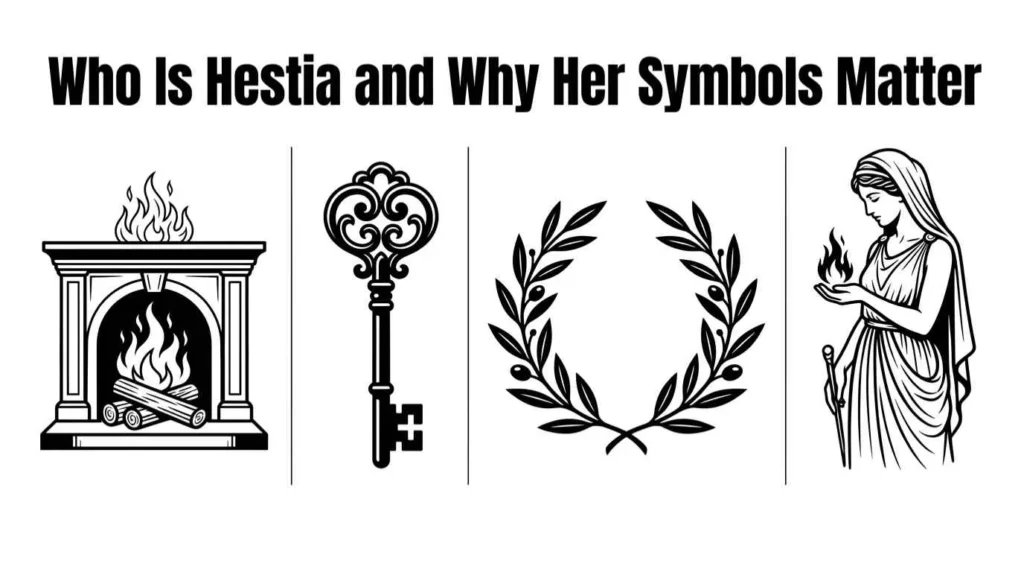
Hestia is the Greek goddess of the hearth, home, and domestic life. Unlike other dramatic gods, she represents stillness, warmth, and protection. She was known for avoiding conflict and choosing peace, making her one of the most emotionally grounded figures in mythology.
Her symbols reflect this calm energy. Instead of weapons or power displays, her imagery focuses on fire, circles, and sacred spaces. These are not aggressive symbols, they are nurturing ones.
Psychologically, Hestia represents inner stability. In a chaotic world, her symbols remind us to slow down and reconnect with what truly matters.
The Sacred Hearth: The Core Symbol of Hestia
The hearth is the most important of all Hestia symbols. In ancient Greece, every home had a central fire that was never allowed to go out. This fire was believed to be Hestia herself.
Emotional Meaning
The hearth symbolizes safety, warmth, and belonging. It represents the idea of “home” not just as a place, but as a feeling.
Cultural Perspective
- Europe: The hearth has long symbolized family unity and tradition
- Asia: Similar concepts exist in Feng Shui, where the kitchen represents nourishment and prosperity
- Africa: Fire circles often represent community bonding and storytelling
- USA: Fireplaces still symbolize comfort and family gatherings
Did you know? In ancient cities, a public hearth was kept burning continuously to represent the unity of the state.
The Eternal Flame: A Symbol of Continuity and Peace
Another powerful symbol associated with Hestia is the eternal flame. This flame was never extinguished, representing life, stability, and divine presence.
Psychological Meaning
The eternal flame reflects inner peace and emotional endurance. It is the quiet strength that keeps going even in difficult times.
Spiritual Interpretation
Many modern spiritual practices use candles or flames as a way to connect with calmness and focus. This traces back to Hestia’s symbolism.
Modern Relevance
You can still see eternal flames in memorials across the world, symbolizing remembrance and continuity.
The Circle: Wholeness and Sacred Space
The circle is a lesser-known but deeply meaningful Hestia symbol. It represents completeness, unity, and protection.
Emotional Meaning
A circle has no beginning or end, symbolizing balance and harmony. It reflects the idea of being emotionally whole.
Cultural Comparisons
- Asia: The Zen circle represents enlightenment and inner peace
- Africa: Circular gatherings symbolize equality and shared wisdom
- Europe: Ancient rituals often took place in circular formations
- USA: Circles are used in therapy and support groups to create safe spaces
Did you know? Many ancient temples dedicated to Hestia were circular in shape to reflect her energy of unity.
The Veil: Modesty, Privacy, and Inner Strength
Hestia is often depicted wearing a veil. While simple, this symbol carries deep meaning.
Symbolic Meaning
The veil represents modesty, introspection, and emotional boundaries. It shows that strength does not always need to be visible.
Psychological Insight
In today’s world, where everything is shared publicly, the veil reminds us of the importance of privacy and inner reflection.
Cultural Connections
- Middle East and Asia: Veils often symbolize dignity and respect
- Europe: Historically linked to purity and spiritual devotion
- Modern Western culture: Represents personal space and self-respect
The Kettle and Domestic Tools: Everyday Sacredness
Hestia is also linked to simple household objects like kettles, pots, and cooking tools.
Meaning Behind These Symbols
They represent nourishment, care, and the sacred nature of daily life. Cooking and sharing food were seen as acts of devotion.
Emotional Connection
Preparing a meal for someone is one of the most universal ways to show love. These symbols remind us that small acts matter.
Global Perspective
- Asia: Cooking is deeply tied to family honor and tradition
- Africa: Shared meals strengthen community bonds
- USA and Europe: Kitchens are often called the heart of the home
Did you know? In ancient Greece, guests were welcomed with food as a sacred duty linked to Hestia.
The Donkey: A Surprising Symbol of Humility
The donkey is sometimes associated with Hestia, though less commonly.
Symbolic Meaning
It represents humility, patience, and service. These qualities align with Hestia’s quiet and steady nature.
Emotional Insight
In a world that often celebrates loud success, the donkey reminds us of the power of consistency and kindness.
Cultural Comparisons
- Africa and Asia: Donkeys symbolize hard work and resilience
- Europe: Often linked to humility in religious contexts
- USA: Represents persistence and determination
Fire Rituals: Living Symbols of Hestia Today
Even today, fire rituals continue to reflect Hestia’s symbolism.
Examples
- Lighting candles for meditation
- Gathering around bonfires
- Celebrating festivals with fire
Emotional Meaning
Fire rituals create a sense of connection, both with others and within ourselves.
Psychological Impact
Watching a flame can reduce stress and improve focus. This is why candles are often used in relaxation practices.
The Deeper Psychological Meaning of Hestia Symbols
Beyond mythology, Hestia symbols connect to human psychology in powerful ways.
Inner Stability
They remind us to create a “home” within ourselves, a place of calm and balance.
Emotional Safety
Symbols like the hearth and circle represent boundaries and protection.
Mindfulness
The simplicity of these symbols encourages us to slow down and appreciate the present moment.
Hestia Symbols in Modern Life
You do not need to live in ancient Greece to connect with these symbols.
How to Use Them Today
- Create a cozy space in your home
- Light candles for relaxation
- Cook meals with intention
- Spend time in quiet reflection
Why They Still Matter
In a fast-paced world, Hestia symbols offer something rare, peace.
FAQs About Hestia Symbols
1. What are the main Hestia symbols?
The hearth, eternal flame, circle, veil, and domestic tools are the most important symbols associated with Hestia.
2. What does the hearth symbolize in Hestia’s mythology?
It represents home, warmth, safety, and family unity.
3. Why is fire important to Hestia?
Fire symbolizes life, continuity, and divine presence. It was believed to be her living essence.
4. How do Hestia symbols relate to modern life?
They reflect ideas of comfort, mindfulness, and emotional balance that are still relevant today.
5. What is the psychological meaning of Hestia symbols?
They represent inner peace, stability, and the importance of creating a safe emotional space.
6. Are Hestia symbols used in other cultures?
Yes, similar ideas appear globally, especially in traditions involving fire, home, and community.
7. Can I use Hestia symbols in daily life?
Absolutely. Simple actions like lighting a candle or creating a peaceful home environment reflect her symbolism.
Conclusion
Hestia symbols are quiet but powerful. They do not demand attention, yet they shape some of the most meaningful parts of human life, home, warmth, connection, and peace. In every glowing flame or shared meal, her presence can still be felt. These symbols remind us that true strength is not always loud. Sometimes, it is found in stillness, in care, and in the simple act of creating a space where we feel safe. When life becomes overwhelming, returning to these symbols can help you reconnect with what truly matters.

Nicholas Allen is a passionate writer and symbolism researcher who explores the hidden meanings behind ancient signs, spiritual icons and cultural symbols from around the world. His work focuses on making complex symbolism easy to understand for modern readers.
He is the author of “Mystic Signs and Their Hidden Meanings”. Through his writing, Nicholas helps readers discover the stories, beliefs and mysteries connected to symbols across history and different cultures.